
Social Media Growth Strategy for Home & Garden Independent Sites: Using FlowNib for AI Content Adaptation and Cross-Platform Distribution
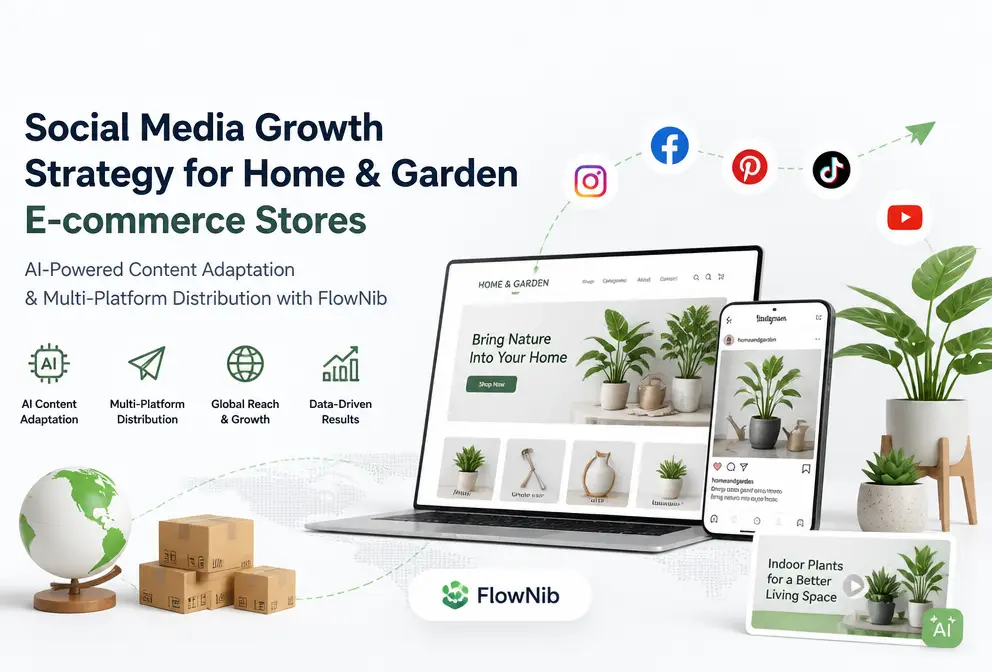
Manually copy‑pasting is something every marketer knows how painful it is. For home and garden niche independent sites, it’s even worse—you’ve taken a series of spring new‑product photos, prepared product images, lifestyle shots, and short‑video assets, but Instagram requires square cropping and a story‑like caption, TikTok needs a 15‑second fast‑paced hook, Pinterest needs a long image, and Facebook prefers an activity link to drive traffic. Each platform has its own format requirements, character limits, and tone preferences; a single piece of content must be adapted five times, and each iteration can easily lose the brand’s own voice. Even more challenging is that if the content style fragments across channels, the “grass‑planting” (awareness) effect drops dramatically—users see a light‑hearted, funny style on TikTok but can’t find the corresponding product vibe on the website, so conversion breaks naturally. This article draws from real operational experience of home‑category independent sites, dissecting how AI‑driven automated rewriting and cross‑platform distribution can make the same set of assets work simultaneously across multiple short‑video and social channels, turning content investment into measurable sales conversion.
The Particularity of Home & Garden Social Media Content
The home & garden category relies more on high‑quality visual content than other categories. A refined plant‑display photo or a 15‑second balcony makeover clip often sparks purchase desire more than long‑form copy. However, user preferences for visual content differ greatly across platforms: Instagram loves polished composition and storytelling, ideal for showcasing an “ideal home” atmosphere; TikTok demands fast‑paced, hook‑heavy short videos that address user anxieties (e.g., “What if my plants always die?”); Pinterest’s search‑driven nature has driven a >30 % annual search volume increase for home & garden items, with users actively seeking scene inspiration—a well‑designed Pin can generate months or even years of tail traffic.
A friend’s home‑brand independent site initially tried to cover Instagram, TikTok, Pinterest, Facebook, and YouTube. Publishing manually every day not only consumed massive time but also led to inconsistent style and unstable frequency, causing the accounts to be flagged as low‑quality. After three months, follower growth stalled and some accounts were throttled. Our retrospective showed the problem wasn’t the content itself but the lack of adaptation to each platform’s algorithmic traits—TikTok needs a hook in the first three seconds, Instagram requires emotive scene descriptions, Pinterest demands keyword‑rich descriptions and tags. Most independent sites treat Pinterest merely as an image gallery, overlooking the SEO‑friendly “Board” organization, thus wasting potential tail traffic.
Therefore, I recommend operators focus on 3–4 platforms rather than spreading too thin. If you want to systematically plan Pinterest’s content calendar, consider using a tool like Later — a content scheduling tool to set your publishing rhythm.
Key to Boosting Short‑Video “Grass‑Planting” Conversion
Short videos (Reels, TikTok, YouTube Shorts) exhibit extremely high interaction for home & garden product awareness. Data shows that after introducing short‑video “grass‑planting,” average click‑through conversion rates for home & garden independent sites increase by about 35 % compared with static images, especially “unboxing” and “installation process” content, where completion rates often exceed static images by severalfold. Yet each platform’s algorithm differs: TikTok emphasizes completion rates and engagement weight, driven by user behavior; Instagram Reels favors interest‑based hashtag distribution; YouTube Shorts’ recommendation logic relies more on watch time and search relevance.
I’ve seen many independent site owners produce high‑quality videos but miss the mark because of wrong timing or frequency, causing the algorithm’s “cold‑start” period to waste the content. For home & garden, weekend mornings from 10 am to 12 pm are peak browsing times for inspiration, yet many marketers habitually publish en masse on Monday afternoons, missing the optimal traffic window.
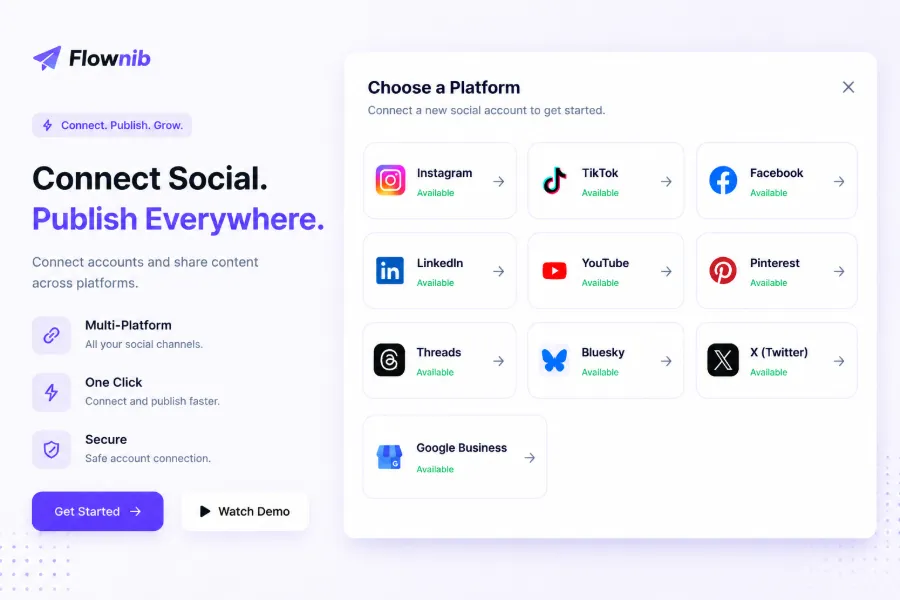
The real pain point is that AI automatic rewriting plays a crucial role here. When a 30‑second balcony makeover video is to be distributed across platforms, AI must preserve the brand’s unified tone while restructuring captions for each platform—TikTok needs a strong hook and emotional resonance, Instagram’s description should naturally embed tags and storytelling, Pinterest’s Pin description must contain search keywords. This is exactly the core logic of Flownib: AI analyzes the original content, understands its core message, then automatically rewrites it into each platform’s unique style, character limits, and audience expectations. This isn’t a simple truncation or concatenation; it retains the full emotional integrity while adjusting structure.
When you need to compare different AI scheduling tools, refer to this comparison of major AI scheduling tools for suitability assessment.
Implementing One‑Shot Creation and Cross‑Platform Publishing with FlowNib
From drafting, AI optimization, preview, timing selection, one‑click distribution, to tracking, this end‑to‑end workflow is compressed into minutes in Flownib. Setup takes about 2 minutes, API uptime is 99.99 %, and the platform has already published over 500 k posts.
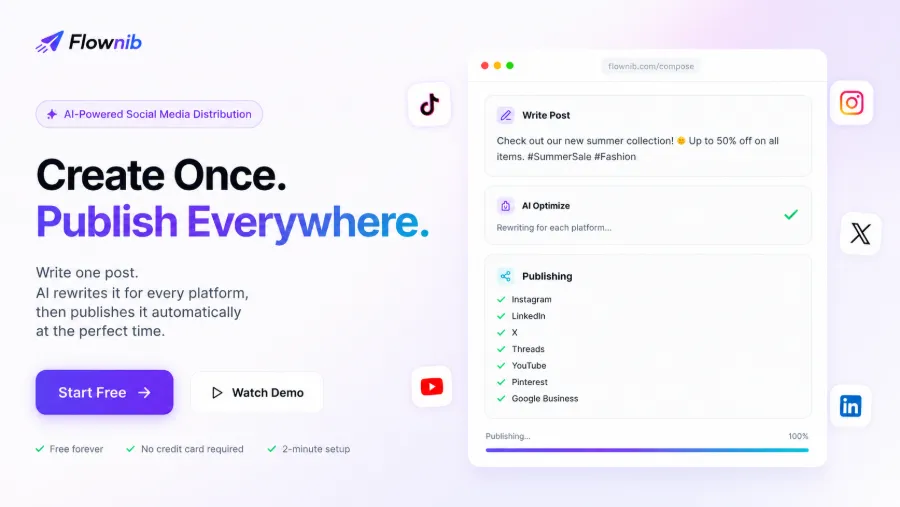
The actual workflow looks like this: you write a draft in Flownib’s editor—for example, a post about “Spring Balcony Plant Pairings” with three product images and a 15‑second short video. AI instantly generates platform‑specific captions—Instagram emphasizes pairing aesthetics and brand story, TikTok compresses the core message into a sub‑10‑second fast‑paced hook, Pinterest adds keyword‑optimized description and tags, and Weibo/X retain concise product selling points. You can preview each version before publishing to confirm tone and keyword accuracy.
The content calendar is another feature that dramatically reduces operational fatigue. Previously I used Excel to schedule, then copy‑pasted each caption into each platform. Now Flownib’s visual content calendar shows all published and scheduled posts, allowing drag‑and‑drop time adjustments on a single interface, and even auto‑selects the optimal publishing moment based on user activity peaks. For home & garden independent sites, this is highly valuable because seasonal and promotional nodes (spring refresh, holiday home décor) heavily influence content rhythm; missing a holiday window can jeopardize an entire season’s sales forecast.
Multi‑account management is also a common pain point. Many brands have a main Instagram or Pinterest account plus multiple regional sub‑accounts, making manual login switching cumbersome. Flownib’s unified dashboard consolidates all accounts into one view, with independent management per platform. Operators considering different plans can check the FlowNib pricing and feature breakdown to match their needs.
Tool Collaboration: Building a Full‑Channel Marketing Loop
Social media distribution alone cannot form a complete growth loop. If the landing page experience is poor or SEO exposure is insufficient, the impact of social traffic diminishes. Combining social distribution with SEO content optimization and landing‑page enhancement creates a loop: “Content Creation → SEO Exposure → Social Grass‑Planting → Landing‑Page Conversion → Data Review.”
In practice, the seonib SEO content optimization tool handles keyword research and blog optimization, helping home & garden independent sites gain more organic visibility on Google and Bing. The veonib video generator focuses on product video creation. Flownib serves as the social‑media automation bridge.
For example, a shoe‑category independent site I worked with used seonib for blog optimization, veonib for product videos, and Flownib for automated social distribution over three months. Social‑driven organic search traffic rose by 60 %. The core logic: social likes and comments provide short‑term exposure, but sustainable traffic comes from search results. When a user sees a home product on Pinterest and then searches the brand on Google, a well‑optimized blog that ranks high dramatically boosts conversion probability.
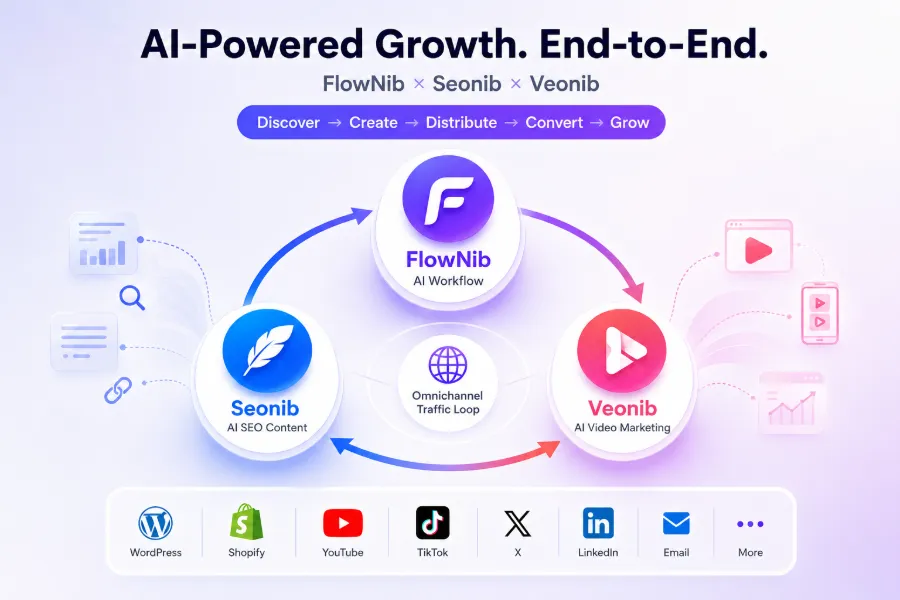
When using the three tools together, watch out for the timeliness of the data loop. See this full‑channel marketing loop case study for independent sites.
FAQ
Q1: Which social platforms should a home & garden independent site prioritize?
Prioritize Instagram, Pinterest, and TikTok. Instagram showcases brand aesthetics and product scenes, Pinterest solves long‑tail SEO traffic, and TikTok drives short‑video awareness and virality. If resources are limited, start with Pinterest and Instagram, as their content shelf life is longer.
Q2: Does FlowNib’s AI rewriting retain the brand’s own tone and keywords?
Yes. During rewriting, AI analyzes the original input, extracts core information and brand‑tone characteristics, then adjusts structure and length per platform while preserving core keywords and emotional tone. In practice, product names, brand names, and key selling‑point terms are not arbitrarily replaced.
Q3: Is the free plan sufficient for a newly launched home‑garden independent site?
It is sufficient. The free plan includes 3 social accounts and 6 posts, which covers a startup publishing 10–15 pieces of content per month. If you exceed 3 accounts or increase posting volume, upgrading to the Starter plan ($11 / month) becomes more efficient, offering unlimited accounts and up to 100 posts per month.
Share Article