How to Centralize Management of Multiple Social Media Accounts on a Single Platform
The daily operations of a cross‑border e‑commerce team often involve a stack of tabs: the Instagram image dimensions have just been adjusted, then you have to switch to X to trim the character count, LinkedIn requires a more formal tone, and TikTok needs a completely new opening. An operator juggling five or six platform accounts spends most of the day copying and pasting and reformatting for each platform, leaving little time for actual content creation.
Putting multiple social media accounts into a single platform for centralized management isn’t about saving a few clicks; it’s about completely eliminating the “re‑posting” burden from daily work. A qualified multi‑platform management solution can typically save a team about 15 hours of repetitive work each week, while reducing hidden losses caused by formatting errors, missed posts, and time‑zone mismatches. This article breaks down a practical centralized management method, covering evaluation criteria, workflow construction, and data tracking.
The Fragmented Dilemma of Multi‑Platform Operations: Dual Costs of Time and Errors
Each platform’s rules force operators to perform repetitive tasks. Instagram has clear preferences for image dimensions and hashtag counts; X imposes a hard 280‑character limit; LinkedIn favors longer, more complete text; TikTok requires the video content and title rhythm to match perfectly. A cross‑border e‑commerce team also has to contend with language differences across markets such as English, Japanese, and German— the same product is described very differently in different regions.
The problem with manual, platform‑by‑platform publishing isn’t just speed. Operators often lose information during format conversion: the main subject gets cut off after image cropping, hashtags exceeding platform limits are stripped entirely, and forgetting to convert time zones results in posts being published late at night in the target market. These errors are rare in single‑platform operations, but once the number of accounts exceeds three, they occur almost every week.
A pet‑product e‑commerce team that expanded overseas once relied entirely on manual publishing. Operators had to switch back and forth among five platforms each day, repeatedly adjusting copy and image dimensions, which alone consumed more than half a day of repetitive work per week. Even worse, they tried using an automation tool based on unofficial APIs for bulk publishing; after a few days, multiple accounts triggered the platforms’ risk‑control mechanisms, the functionality was limited, and they had to shut it down urgently. This experience taught them that tool selection cannot be based solely on feature lists; the compliance of the API directly determines account safety. A similar automation approach is detailed in the Pet Product Sellers’ Automation Case Study.
Evaluating Whether a Unified Management Solution Is Qualified: Core Capability Breakdown
When choosing a unified management tool, the first thing to look at is the connection method. Using official APIs to integrate with platforms ensures stability and compliance; unofficial interfaces can achieve similar functions but may break or trigger account restrictions when platform rules change. Mainstream solutions typically cover about ten major social platforms, and official APIs boast up‑to‑99.99% uptime—these two metrics serve as hard criteria for selection.
Multi‑account management is equally critical. Binding multiple accounts on the same platform is common for cross‑border e‑commerce—a brand may have Instagram sub‑accounts for several countries. A unified dashboard can view and manage these accounts simultaneously, avoiding repeated logins and switches. AI content rewriting is another dividing line: a good solution automatically adapts content to each platform’s character limits, tone conventions, and audience expectations, rather than simply copying the same text to every platform.
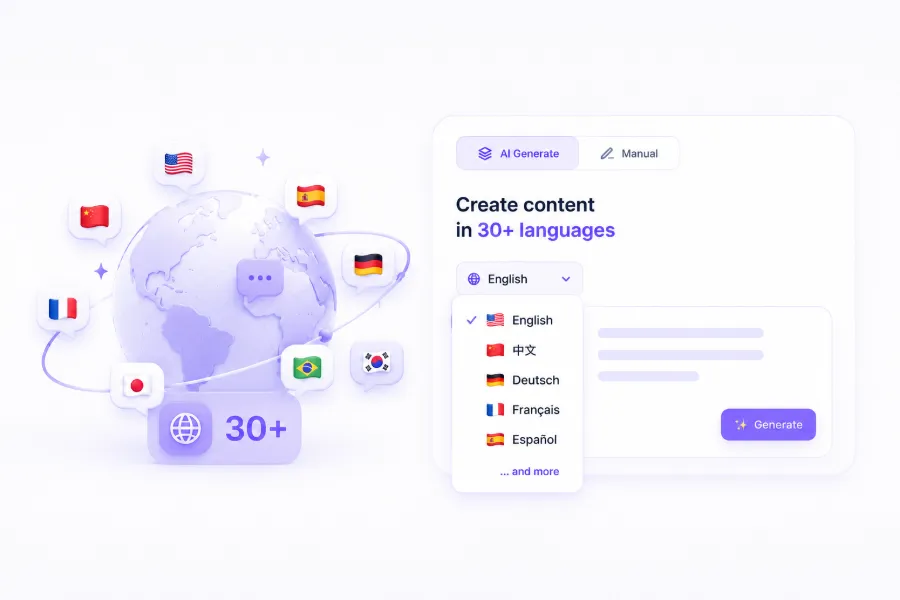
Compared with generic scheduling tools, a solution aimed at multiple global markets also needs additional differentiation capabilities, such as multilingual content adaptation, cross‑time‑zone scheduling, and planning around overseas marketing milestones. These functions are absent from native single‑platform schedulers and are key to determining whether a solution is truly “unified.” General tools like Buffer’s resource center offer many operational references, but for multilingual and cross‑time‑zone scenarios, Buffer’s Social Media Operations Resource Center (https://buffer.com/resources/) serves more as a methodological supplement.
| Operation Mode | Content Adaptation | Multi‑Account Management | Scheduling Capability | Error Risk |
|---|---|---|---|---|
| Manual multi‑tab operation | Manual rewrite per platform | None, requires repeated logins | Basically none | High – frequent format errors and missed posts |
| Native single‑platform scheduling | Independent editing per platform | Limited | Within a single platform | Medium – no cross‑platform coordination |
| Unified management platform | AI automatic adaptation | Unified dashboard | Cross‑platform unified scheduling | Low – centralized review |
From Creation to One‑Click Publishing: Building a Unified Workflow
The first step in building a unified workflow is to break the habit of “writing separately for each platform.” Operators only need to draft a single core piece of content, and AI automatically rewrites it according to each platform’s style—Instagram emphasizes visuals and hashtags, LinkedIn maintains a professional tone, X compresses to the character limit. After rewriting, a preview must be performed before publishing to verify that the AI adaptation has not distorted the content; this step cannot be skipped.
Once verified, a one‑click distribution to all connected accounts completes the whole process in a few seconds. From connecting an account to initiating publishing, the full setup typically takes about two minutes, provided the account has been authorized via the official API. When scheduling posts, the logic for selecting the optimal time is not “always at 9 AM,” but rather scheduling according to the active periods of each platform’s target audience.
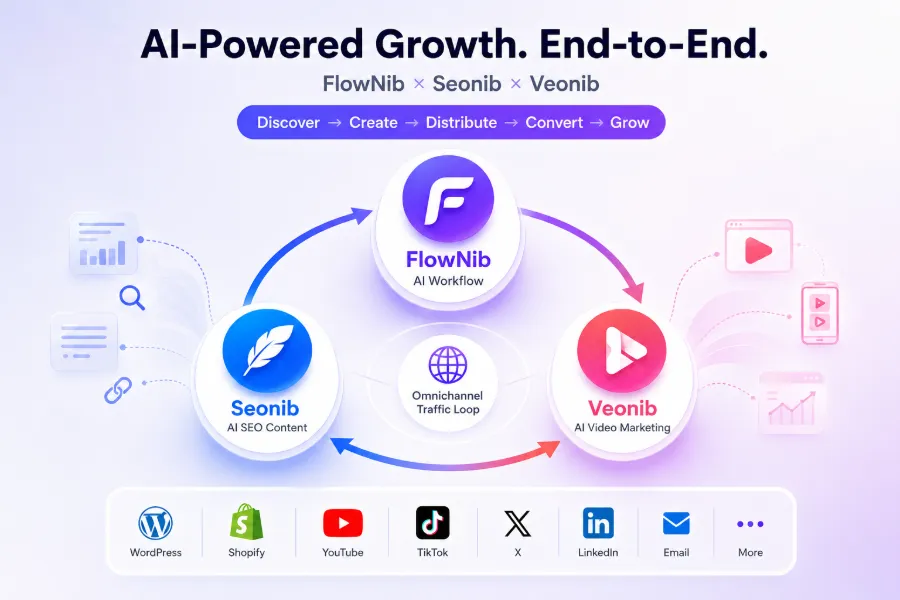
Team collaboration and content review can also be embedded in this workflow. After an operator drafts the initial copy, it is submitted to a reviewer for approval before entering the publishing queue. For example, the workflow of a certain unified management tool, Flownib, integrates drafting, AI adaptation, preview, scheduling, and publishing in a single interface, so the team does not need to switch between multiple tools, and review records and publishing history are stored in a unified backend. Teams new to this model should first compare their requirements against the 2026 comparison of mainstream social media scheduling tools before selecting a solution, which will save many detours.
Content Calendar, Data Tracking, and Global Market Adaptation
A content calendar is the foundation for visualizing the publishing schedule across all platforms in one place. Operators can see in a single view what needs to be posted on Instagram, LinkedIn, and TikTok this week, which pieces are already scheduled, and which are still under review. Such a global perspective is virtually impossible to achieve in a manual mode—no matter how many tabs you have, it’s hard to simultaneously keep track of the publishing rhythm of five platforms.
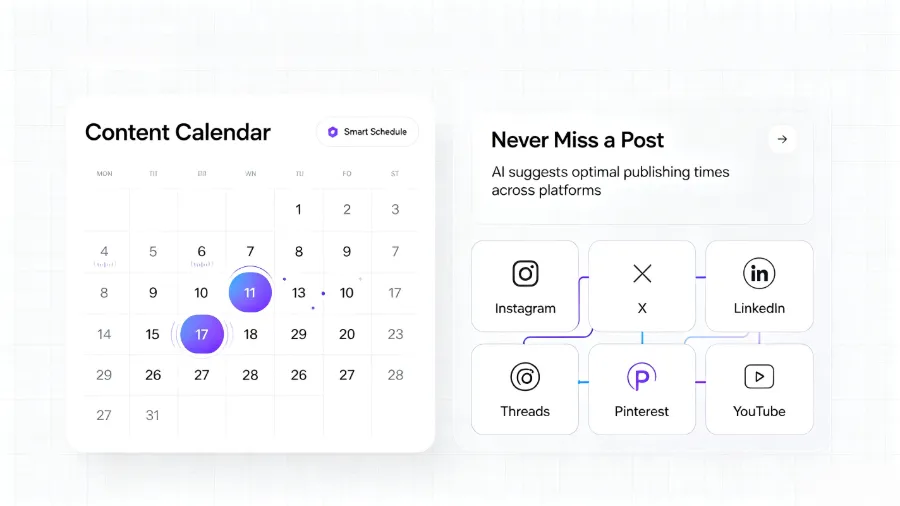
When targeting global markets, the content calendar must also support multilingual adaptation. A centralized management solution can cover major language markets such as English, Chinese, Japanese, German, and French; after the operator drafts a core piece, AI automatically generates corresponding versions according to each market’s language conventions, eliminating the need for duplicate creation. Cross‑time‑zone scheduling is most evident here: a team targeting North America and Europe that only posts in the afternoon Beijing time will see a drastic drop in reach among European audiences. A 24‑hour automatic scheduler that selects the optimal publishing window boosts overseas audience reach more effectively than simply increasing posting frequency.
Publishing records and performance tracking constitute the final stage of this workflow. For each platform and each post, the time of publishing and its performance are stored in the unified backend. Operators can review monthly to see which platform yields the highest engagement rates and which time slots achieve the best reach. Annual planning around global marketing events such as Black Friday and the Christmas season can also be pre‑scheduled in the content calendar. The stability of official API publishing is the foundation of this closed loop; Meta’s official developer documentation on API limits and publishing rules is worth reading carefully before integration. Tools like Flownib can integrate publishing records and performance tracking precisely because official API direct connections provide complete data integrity—unofficial interfaces often cannot retrieve full publishing status feedback.
FAQ
How much time can actually be saved by centralizing multiple social accounts on one platform?
Most teams report saving 10 to 15 hours per week. This figure comes from eliminating copy‑and‑paste, format adjustments, and per‑platform logins, assuming the team is willing to abandon the habit of writing separately for each platform and to manually confirm AI‑rewritten content.
Do unified management tools support binding multiple accounts per platform?
Yes. Mainstream solutions allow multiple accounts per platform to be bound within the same dashboard, such as a brand managing Instagram sub‑accounts for several countries. The number of bound accounts depends on the specific plan; free tiers typically limit it to three accounts.
Given the large stylistic differences across platforms, is AI‑rewritten content reliable?
AI rewriting adjusts character count, tone, and structure according to platform rules, but a manual preview is required before publishing. Especially for brand tone or promotional information, at least one review is recommended before posting. AI is reliable for format adaptation, though occasional fine‑tuning of tone details may be needed.
Will centralized publishing affect how platforms assess and throttle accounts?
Publishing via official APIs does not trigger throttling, as platforms explicitly support official interfaces. The risk mainly comes from automation tools using unofficial APIs, which may be flagged as abnormal behavior. Choosing a solution that connects through official APIs offers greater account safety.
Can scheduled publishing cover audiences across different global time zones?
Yes, provided the scheduling logic sets times according to the active periods of each target market rather than using a single universal time. Cross‑time‑zone scheduling is a core capability for global markets; a good solution automatically recommends publishing times based on each platform audience’s activity patterns.
Share Article