One Creation, Multi-Platform Distribution: Using AI to End Repetitive Social Media Content Repurposing

You spent an hour writing an Instagram post, then another half hour adapting it to LinkedIn’s tone, and another twenty minutes compressing it into X’s 280‑character limit—five platforms, five rewrites. This isn’t content creation; it’s manual labor.
Industry data shows that a typical content team spends 15 hours per week manually tweaking and publishing cross‑platform content. Those 15 hours could be used for brainstorming topics, analyzing data, and engaging with fans, but they’re all consumed by copy‑pasting and formatting.
The biggest hidden cost of cross‑platform publishing isn’t time, it’s cognitive switching. Every time you shift from Instagram’s visual mindset to LinkedIn’s professional context, then to X’s fast‑paced short‑form style, your brain has to recalibrate. The more often you switch, the greater the creative fatigue, and the harder it becomes to maintain content quality.
This article explains how AI rewriting technology can turn “write once, manually paste five times” into “write once, AI automatically adapts to all platforms,” turning cross‑platform publishing from repetitive labor into a single operation.
Why does the same piece of content need to be rewritten for each platform?
Different platforms have varying character limits, content formats, and audience expectations, which means you can’t just paste the same paragraph everywhere.
Instagram is visual‑first. A good image plus a short caption is enough; long text hurts the browsing experience. LinkedIn demands professionalism and depth; users expect industry insights and actionable advice, not casual ramblings. X’s 280‑character limit (some users have expanded to 4,000 characters) is naturally suited for short, punchy statements, while long text feels out of place. Threads sits between the two, with a stronger conversational feel and a more casual tone. Pinterest is a visual search engine; copy must complement images for SEO. YouTube relies on keyword density in titles and descriptions. TikTok’s rhythm is the fastest; copy must match the video tempo. Google Business requires localized information and real‑time updates.
Common pitfalls of manual cross‑platform publishing include: formatting errors (Instagram links displayed oddly on LinkedIn), tone inconsistencies (the same content being too formal on X and too serious on Threads), and the most fatal—time waste. In 2023, a brand forgot to adjust an Instagram link format, causing the entire promotion link to break and losing about two weeks of the campaign window. Such low‑level mistakes are almost unavoidable with manual operations.
The “write once, publish everywhere” concept appeared in the 2010s, but early technical solutions relied on template substitution and simple copying, lacking true semantic understanding. The real challenge is: how to keep brand tone consistent while naturally adapting content to each platform’s “cultural grammar” — LinkedIn’s formality versus Threads’ casualness are two completely different social protocols. AI must understand not just word count differences but contextual differences.
If you run an international independent site, the pain points of manual distribution become even more apparent. This case study on AI global social media distribution may provide some insight: “Must‑Read for International Independent Sellers: How Delicious Uses AI to Master 2026 Global Social Media Distribution.”
How does AI achieve “one creation, multi‑platform publishing”?
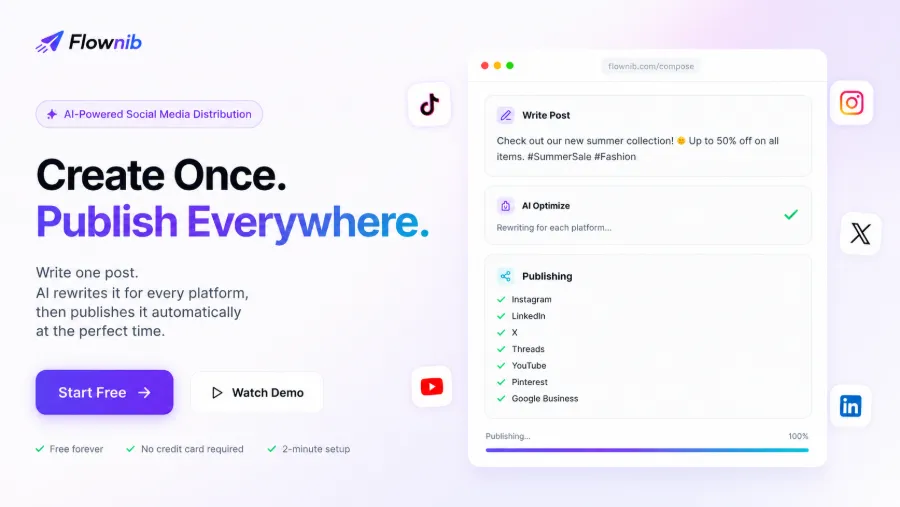
AI rewriting isn’t simply compressing or expanding word count. It first analyzes the original text’s semantics—core information, tone (formal or relaxed), and any keywords or brand terms that must be retained—then identifies the target platform’s stylistic features, and finally automatically adjusts word count, tone, punctuation, and paragraph structure.
For example, the same product launch copy might be rewritten by AI for Instagram as: “Summer sale is here! Up to 50% off on all items. 🌞 #SummerSale #Fashion” and for LinkedIn as: “We’re excited to announce our summer collection launch, with discounts up to 50% across all product lines. Explore the new arrivals today.” The word count, tone, and emoji usage differ completely, but the core message—“summer promotion, up to 50% off”—remains the same.
This is fundamentally different from simple translation or template substitution. Translation changes language, not style; template substitution swaps variables, not structure. AI rewriting reorganizes expression based on an understanding of content intent.
Flownib’s AI rewriting engine supports official APIs for ten major social platforms, with 99.99 % uptime. This means the rewriting and publishing process is rarely interrupted by technical failures. While rewriting, brand tone can be kept consistent through preset rules—whether to use emojis, whether to write in first person, product name capitalization, etc.
From Draft to Publish: What Does an AI‑Driven Workflow Look Like?
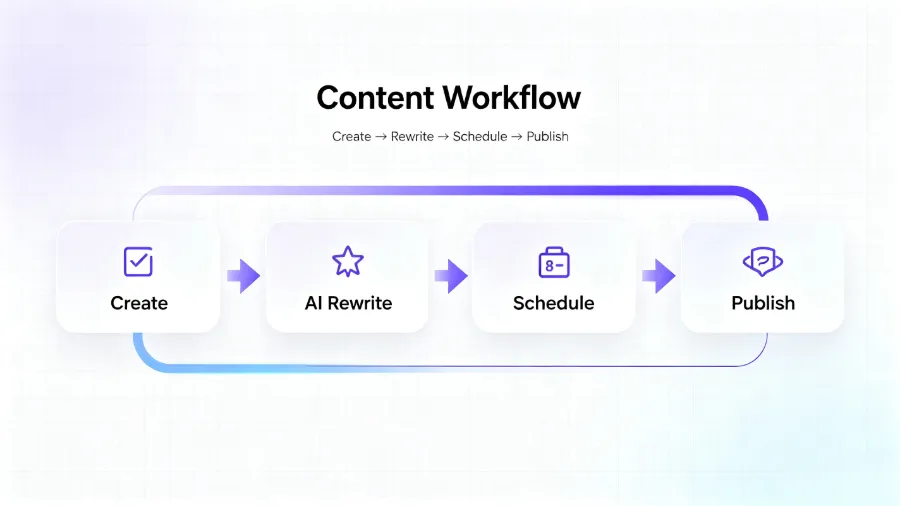
The full workflow breaks down roughly as follows:
Drafting – Write directly in the AI input box or let AI generate a first draft from keywords. This step is no different from ordinary content creation.
AI Optimization – The system automatically generates rewritten versions for each connected platform. Instagram, LinkedIn, X, Threads… each version is generated in parallel in the background, usually taking no more than 30 seconds.
Preview & Review – Before publishing, you can inspect each platform’s rewritten result and manually adjust any unsatisfactory parts. This step is crucial—AI isn’t perfect; it may sometimes make brand‑specific terminology too colloquial, requiring human correction.
Select Publish Time – You can set a manual time or let AI recommend the optimal time based on historical interaction data.
One‑Click Publish – All platforms publish simultaneously, without switching tabs or copy‑pasting.
Performance Tracking – After publishing, all data automatically aggregates into the content calendar.
The entire process takes about two minutes to connect accounts and set up, then you can start publishing. From draft to full‑platform release, a proficient user can finish within ten minutes.
In practice, you’ll find the biggest efficiency gain doesn’t come from AI rewriting itself, but from “not having to switch contexts.” Previously, writing Instagram content put your brain in visual mode; switching to LinkedIn required a mental shift to professional mode, each switch consuming 5–10 minutes of cognitive energy. AI rewriting turns that switch into background processing; you only need a quick glance during preview to confirm the core message is intact.
If you’re interested in the detailed workflow, check out this creator case study: “One piece of content, ten platforms—how I doubled revenue with FlowNib.” Also, Hootsuite’s official blog has many articles on cross‑platform publishing strategies.
After Cross‑Platform Publishing, How Do You Track Results?
Publishing is only half the battle; tracking results determines future strategy.
The visual content calendar lets you see all published and scheduled posts at a glance. Which platform posted what, when, and the engagement metrics—all on a single dashboard. Multi‑account management is also on the same interface—if you run both a brand account and a founder’s account, you don’t need to log in and switch repeatedly.
Flownib has published over 500,000 posts, and this data accumulation gives the system a clearer understanding of each platform’s interaction patterns. For example, a brand discovered that the same product content had a 3.2 % engagement rate on Instagram but only 0.8 % on LinkedIn, yet the conversion rate on LinkedIn was higher. Such cross‑platform comparisons were almost impossible in the manual‑publish era.

Core metrics for tracking performance include: engagement rate (likes, comments, shares), reach (how many people saw it), click‑through rate (link clicks), and the most critical conversion data (if links carry tracking parameters). Different platforms prioritize different metrics—Instagram values engagement, LinkedIn values reach and professional comments, X values retweets and hashtag participation.
When adjusting future content strategy based on data, a common oversight is focusing on a single data point instead of trends. A piece that performs exceptionally well on one platform might simply have hit a timely hotspot, not indicate that the platform is ideal for that type of content. Observe at least two weeks of data before making adjustments.
Flownib’s key differentiator from mainstream tools is its AI Agent capabilities—it’s not just a publishing tool but can automatically suggest rewriting strategies based on historical data. If you’re using other automation tools, you may notice they lack this feature.
FAQ
Q1: Will AI‑rewritten content lose the original tone?
It won’t disappear completely, but a human preview is required. AI strives to preserve the core tone and brand terminology, but when adapting to platform style the tone may shift slightly. For example, humor in the original may be toned down in the LinkedIn version. Check the results during preview and make manual tweaks if needed.
Q2: Which social platforms are supported?
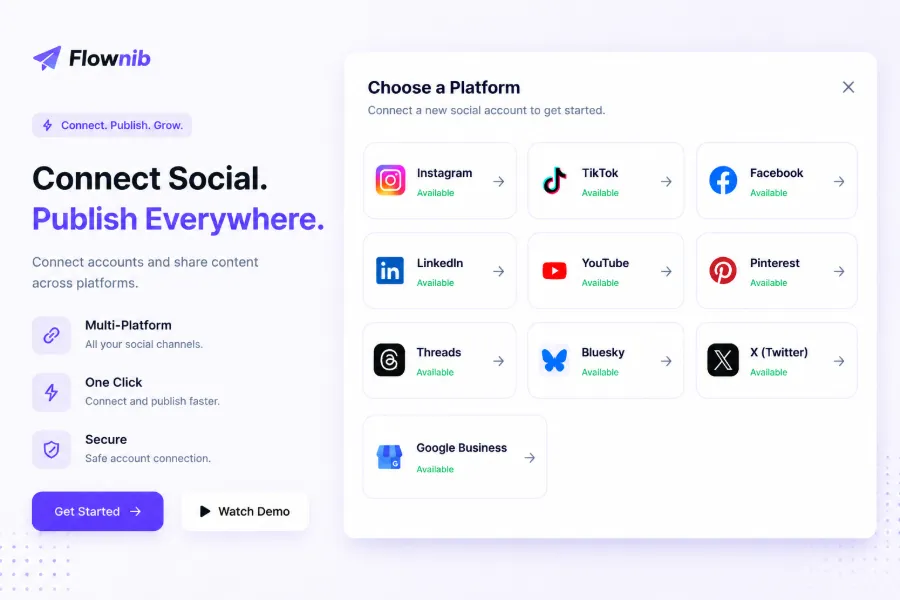
Instagram, X (Twitter), LinkedIn, TikTok, Facebook, Threads, Pinterest, YouTube, Bluesky, and Google Business—ten platforms in total, all connected via official APIs.
Q3: How many posts can the free plan publish?
The free plan includes three social accounts and six posts, with no credit‑card required. It’s suitable for small‑scale testing or individual creators.
Q4: How long does it take to set up and connect accounts?
Average of two minutes. Each platform requires a one‑time authorization; subsequent publishing needs no repeated logins.
Q5: Can I schedule posts? Does AI recommend the best publishing time?
Yes, you can manually set a time or let AI recommend the optimal time based on your account’s historical interaction data. The recommendation logic is based on each platform’s independent engagement peaks, not a one‑size‑fits‑all schedule.
Share Article