
How DTC Apparel Brands Can Use AI Systems to Scale Social Media Traffic
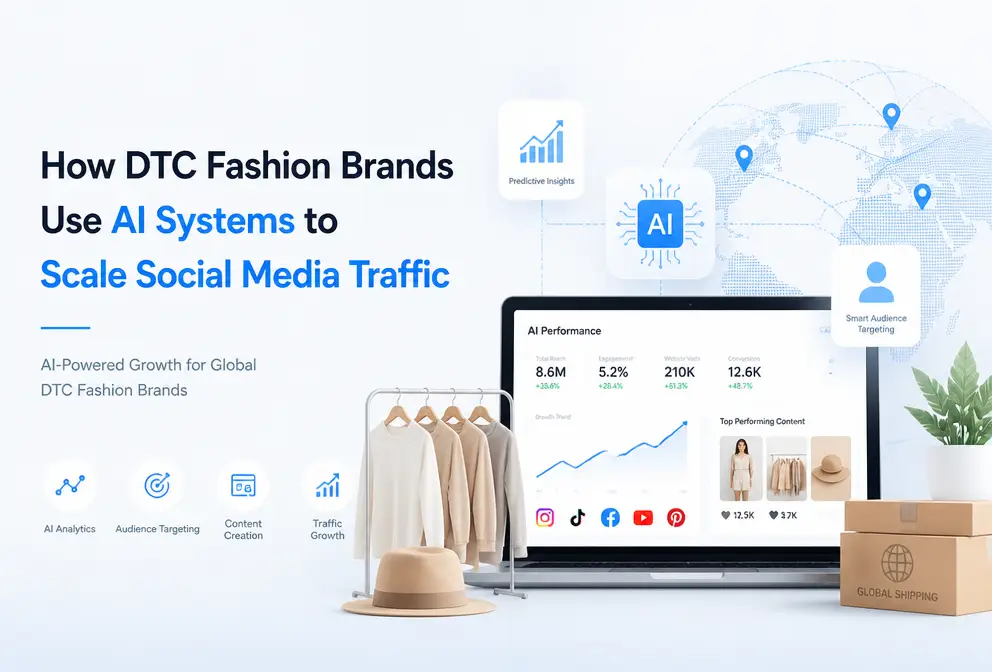
Most DTC apparel brands encounter the same dilemma in the early stages: a team of only two or three people must simultaneously manage Xiaohongshu, Douyin, Instagram, TikTok, and other platforms. Manually copying and pasting content consumes a lot of time, and each platform’s copy style and character limits differ, causing distortion during distribution. Last year, while reviewing the social media performance of an independent women’s clothing brand in Shenzhen, I found that their operators had to switch between four platforms every day; just adjusting copy formats and re‑editing images took 12–15 hours per week—without even counting the time spent creating original content. This article starts from the actual operational workflow and explores how a “create once, publish everywhere” strategy can achieve scalable social media traffic growth without adding headcount.
Content Production Bottleneck: From Manual Transfer to Systematic Output
You run a three‑person DTC apparel team but have to maintain four social platforms. The weekly routine looks like this: first write a Xiaohongshu post on the computer, then manually copy it to Douyin, only to find it exceeds the character limit and you have to cut half the content; then paste it to Instagram, discover there’s no English copy and you scramble to translate it; finally post to TikTok, realize the format is completely wrong, and have to rewrite a segment. By the time the process ends, you’ve spent almost two hours on the same topic.
The problem with this “manual transfer” model isn’t just low efficiency; it also makes it hard to maintain content consistency. A piece that gets high engagement on Douyin may see its interaction rate halve when repurposed for Instagram Reels because of different copy styles and hashtag conventions. The most extreme case I’ve seen is a DTC brand that tried to manually sync updates across six platforms; after two months the operations team completely collapsed—content frequency dropped from five posts a day to just two per week, and the initial traffic base built on social media almost vanished. The consequence is that platform algorithms reduce recommendation volume as account activity declines, and when the team finally regains momentum, it’s very hard to recover natural traffic.
User demographics and consumption habits differ dramatically among Instagram Reels, TikTok, Pinterest, and Xiaohongshu. Xiaohongshu users favor long text‑plus‑image notes, TikTok prefers 15‑30 second short videos with brief captions, while Pinterest’s image‑to‑text ratio and title conventions are entirely different. If you rely on manual adaptation for each platform, the time cost grows linearly with the number of platforms.
Product Selection and Content Strategy: How AI Helps with Early Preparation
The product selection stage sets the ceiling for content performance. My approach is to pull sales data from the past 30 days, identify best‑selling items with high repeat‑purchase rates and strong organic discussion on social media, and then plan content around those products. With a clear product focus, the next step is to batch‑generate copy drafts tailored to each platform.
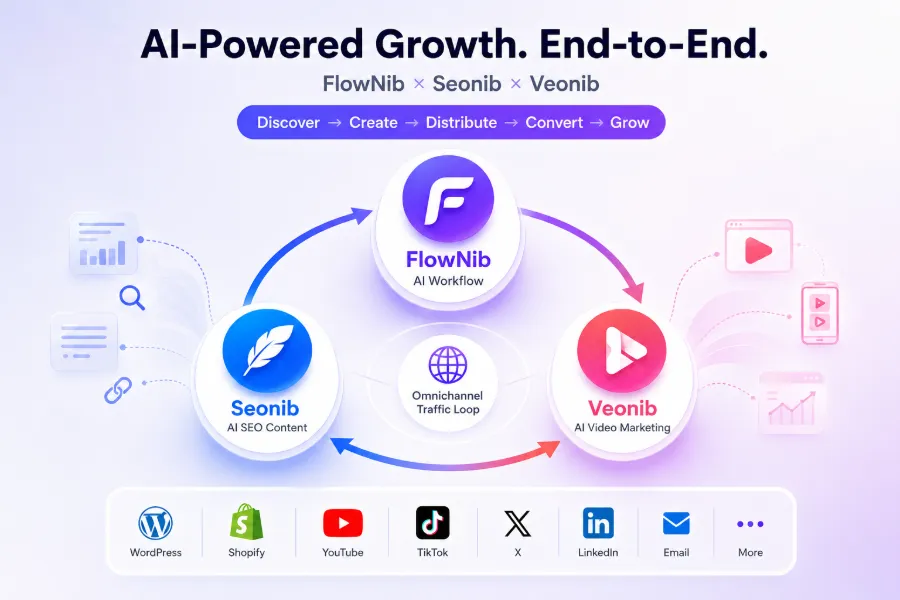
This is where we use the AI rewriting capabilities of Flownib. You simply provide a core piece of content—e.g., a short video recommending a summer dress—and the AI automatically produces multiple copy variants based on each platform’s style, character limits, and audience preferences. According to our team’s tests, after a single content creation session the AI can generate eight different copies covering six platforms within two minutes. Compared with manual rewrites, this speed increase is orders of magnitude. One important note: AI rewriting isn’t just synonym substitution. When combined with site‑network SEO tools like Seonib or unified video distribution tools like Veonib, you can achieve dual exposure—search engine and social platforms—for a single piece of content. For example, a Xiaohongshu outfit note can be AI‑rewritten and simultaneously posted to X (Twitter) and Threads, while also being distributed via a site network to various Google Business Profile pages, giving the content simultaneous visibility across multiple channels.
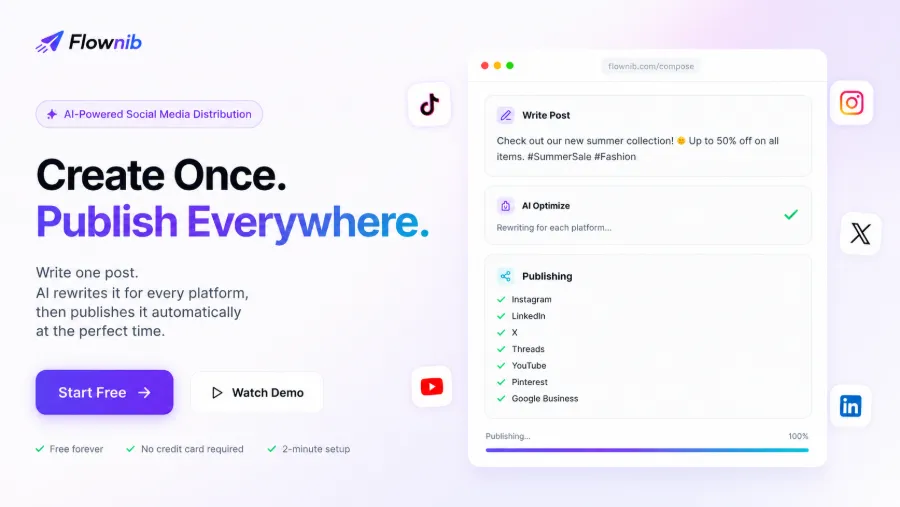
Maintaining a unified brand voice is an often‑overlooked issue. When a team publishes on multiple platforms, inconsistent interpretations of the brand tone can fragment the brand image across channels. I recommend embedding the brand voice guidelines directly into the AI prompt template, ensuring every rewrite follows the same framework. Copy on X and Threads can be more relaxed, while YouTube Shorts copy needs stronger rhythm and hooks—these nuances are more reliably handled by AI than by human memory.
Scheduled Publishing and Content Calendar: From Reactive Updates to Proactive Planning

The rhythm of content publishing is more important for DTC apparel brands than many realize. Early on I made the mistake of posting only when inspiration struck and staying silent when I didn’t have ideas; the platform algorithms gradually lowered the recommendation weight because of inconsistent posting frequency. I later realized that a content schedule is not a luxury but a survival strategy.
A case in point: a DTC shoe brand used a content calendar to increase weekly posts from 7 to 21, boosting exposure by about 180%. This growth presupposes a rich content asset library, not just a higher posting frequency. For a comparison of different tools, see the Flownib vs. Buffer vs. Hootsuite review.
Multi‑Account Management: Unified Voice Across Markets
When a DTC brand expands into multiple countries or regions, the complexity of managing multiple accounts spikes dramatically. An apparel brand targeting Europe might run 12 social accounts across five markets—an Instagram main account for the U.S., a UK sub‑account, a German‑language Facebook Page, a French‑language LinkedIn Page, etc. While the content direction may vary, the brand image must stay consistent.
In managing such multi‑account structures, I use a unified dashboard to monitor publishing status and engagement data for all accounts. A core lesson: don’t maintain separate content workflows for each account, otherwise operational costs increase linearly with the number of accounts and eventually exceed the team’s capacity. By integrating each platform’s official API, you can preview, edit, and publish content for all accounts from a single interface.
If you want to understand API support differences before choosing a tool, refer to the Flownib vs. Publer vs. Planoly official API comparison. The article breaks down each tool’s performance regarding official API integration. Compared with mature industry tools like Buffer, Flownib’s advantage lies in its faster support for emerging platforms such as Bluesky and Threads—an important differentiator for DTC brands looking to capture early‑stage traffic.
When managing multiple accounts, language and time‑zone considerations are also crucial. In the content calendar, I create a separate column for each market, and the AI adapts copy to the target market’s linguistic habits and cultural context, rather than performing a simple machine translation. An English product description entering the French market, for example, needs not only translation but also localized hashtags and expressions.
From Distribution to Conversion: Closed‑Loop Collaboration Between AI Tools and E‑commerce Systems
Publishing content is only the first step; the real value lies in converting social media traffic into e‑commerce orders. DTC brands have the advantage of owning data and a complete transaction pipeline; not leveraging this wastes potential.
My method is simple: embed UTM‑parameter links in every piece of content so that when users click from Instagram or Xiaohongshu they land directly on the product page of the standalone site. Analyzing conversion data from these traffic sources feeds back into the next round of product selection and content direction. For instance, directing Instagram traffic straight to product pages in a quarter raised conversion rates by 32% compared with ordinary traffic‑driving methods. The figure alone isn’t astonishing, but when you aggregate traffic data from multiple platforms into a single dashboard, you uncover many optimization points—e.g., which type of content drives the best Pinterest referrals, or which hashtags on Xiaohongshu keep users engaged longer.
Interestingly, cross‑platform AI rewriting also serves another purpose: when you post on Google Business Profile, the AI‑processed, simultaneous posts are indexed by search engines, meaning a single piece of content can be discovered both on social platforms and in search results. You can learn more about the design and real‑world application of a cross‑border AI full‑traffic closed‑loop architecture in the Medium article.
The final step of the data loop is UGC comment management. Comments, questions, and feedback on social media hide valuable insights about product pain points and customer needs. By extracting this unstructured data and cross‑referencing it with sales data, you can discover unexpected product improvement ideas and content topics.
FAQ
Q1: Which platforms should a newly launched DTC apparel brand start with?
In the early stage, I recommend focusing on one or two platforms, perfecting the content‑to‑conversion loop before expanding horizontally. For cross‑border DTC apparel, Instagram and Pinterest offer the best ROI because their content formats naturally suit fashion showcase and users have strong purchase intent. Xiaohongshu is ideal for the Chinese market, while TikTok works for fast‑paced short‑video content, but each platform requires its own strategy adaptation.
Q2: Will AI‑generated content lose the brand’s personality?
Yes, if you don’t deliberately control it. The key is to feed the brand voice, common vocabulary, and content restrictions into the AI prompt framework in advance. After multiple iterations and fine‑tuning, AI‑rewritten copy can maintain a consistent brand tone, but you should allocate a 2‑to‑4‑week testing period to reach a stable state.
Q3: How do you handle language differences across markets in multi‑account management?
I create separate columns for each market in the content calendar, and the AI performs localized rewrites based on the target market, not just literal translation. This includes adjusting hashtags and expression habits to fit local culture.
Q4: Can AI tools directly help with data analysis and product selection?
Most AI social tools still focus on content generation and publishing; data analysis typically requires integration with Google Analytics or the e‑commerce backend. Some AI tools offer simple engagement dashboards, but deep product‑selection analysis still needs human involvement—e.g., combining sales data with social comments to spot trends. The most feasible way to link AI‑generated content records with sales data is to periodically export data manually and perform cross‑comparison.
Share Article