From Single SEO to Omnichannel Traffic: A New Paradigm for Cross‑Border Trade Operations
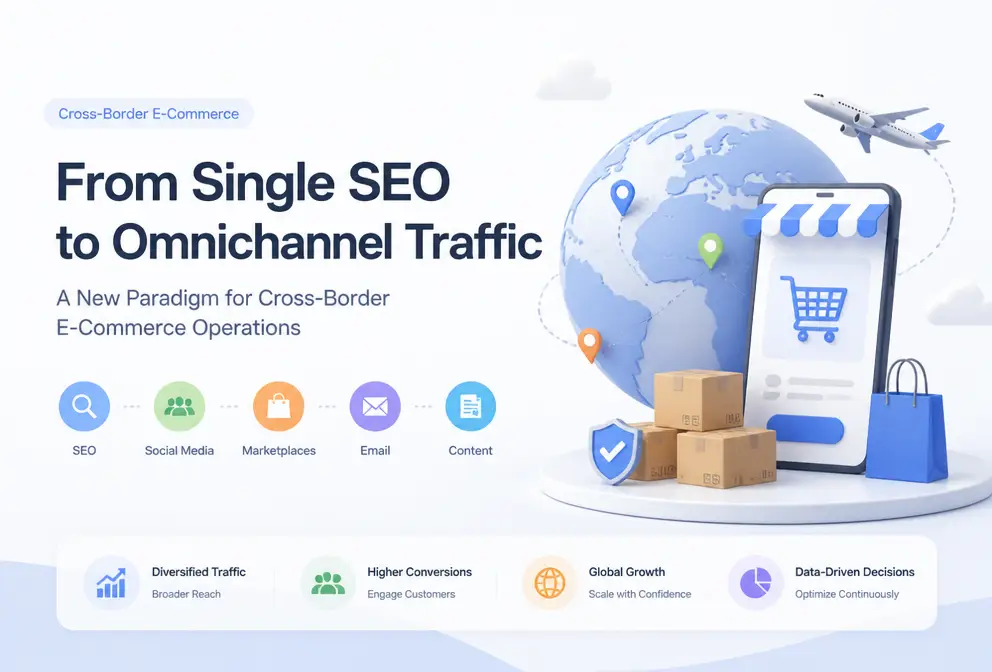
In the past five years, the main traffic lifeline for cross‑border sellers has been almost crushed by Google SEO—spending three months to nurture a keyword ranking, only for a single core algorithm update to cause an abrupt plunge in site traffic. The risk of relying on a single channel is becoming increasingly apparent, and operators who truly understand how to break out have begun treating content as a distributable asset, using social media channels for omnichannel traffic allocation. This article reviews that migration path and dissects the operational value of AI‑powered social media distribution tools within it.
Why “Betting on SEO” Is No Longer a Safe Card for Cross‑Border Business
Cross‑border independent sites have traditionally revolved around keyword rankings from site building to order fulfillment. Operators monitor Google Search Console click‑through rates daily, spending most of their effort on internal linking adjustments and meta description rewrites. This deep dependence works when algorithms are stable, but a core Google update in March 2024 directly affected about 40 % of global SERPs. One team I worked with derived 60 % of its site traffic from five core long‑tail keywords; within two weeks of the update, all those keywords fell out of the top 30, and overall traffic dropped 80 %. It took them two months to recover to 30 % of the original traffic, during which ad spend had to double.
The fragility caused by a single traffic channel is not limited to ranking fluctuations. Google Ads competition costs rise roughly 15 % per year, and user acquisition paths are narrowing. The speed at which one operator can maintain a site becomes the growth ceiling—adding another site requires another operator, and personnel and content costs grow linearly. Since the end of 2023, more cross‑border teams have realized that persisting with on‑site optimization is less effective than treating off‑site distribution as a new growth axis.
The Underlying Logic of Omnichannel Traffic — Content Is an Asset, Distribution Is Compounding
Omnichannel is not about creating multiple accounts and duplicating content; it’s about generating compound exposure for the same piece of content across multiple platforms. A product review can be turned into an Instagram carousel, an X thread, a LinkedIn professional post, and a Threads poll—each attracting a different audience segment, all ultimately directing traffic to the independent site. The key is that each platform’s tone must be re‑adapted: LinkedIn requires formal structure and industry data, TikTok favors fragmented clips, and X needs short, punchy viewpoints.
According to an industry benchmark, brands that distribute across multiple platforms achieve an average customer acquisition cost (CAC) 37 % lower than a pure‑SEO strategy. After gaining exposure on several platforms, a portion of users directly search the brand name and land on the site, bypassing expensive search bidding. A U.S. DTC home‑goods brand reduced its site traffic share from 85 % to 45 % while its overall traffic doubled—because it distributed product story clips to YouTube, Instagram Reels, and Pinterest, each platform bringing a different visitor profile.
The core tension in achieving this compounding effect lies in platform tone differences and human bottlenecks. One person cannot simultaneously maintain original content for five accounts, let alone manually adjust formats, meet character limits, and schedule posts daily. That’s why content reuse rate becomes a key metric for omnichannel operations.
The Turning Point of Tool Intervention — From Manual Transfer to AI‑Automated Distribution
The pain points of manual cross‑platform publishing are very concrete: after copy‑pasting, forgetting to resize images, X truncating over‑length posts, LinkedIn scheduling posts at midnight when users are offline. These issues are tolerable once or twice, but when operators need to post three to five pieces of content across five accounts daily, error and omission rates rise sharply.
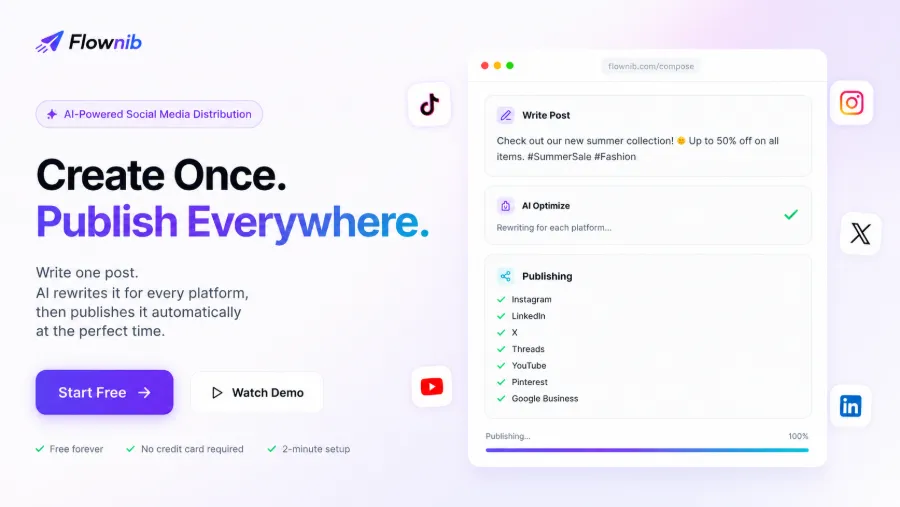
AI addresses two core nodes: content rewriting and publishing scheduling. On the rewriting side, AI must automatically adjust to each platform’s character limits, tone preferences, and structural habits—posting the same promotional message, Instagram needs a story‑like description with emojis, X demands an ultra‑short call‑to‑action, and LinkedIn requires a professional value statement. On the scheduling side, AI selects the optimal active time for each account based on historical interaction data.
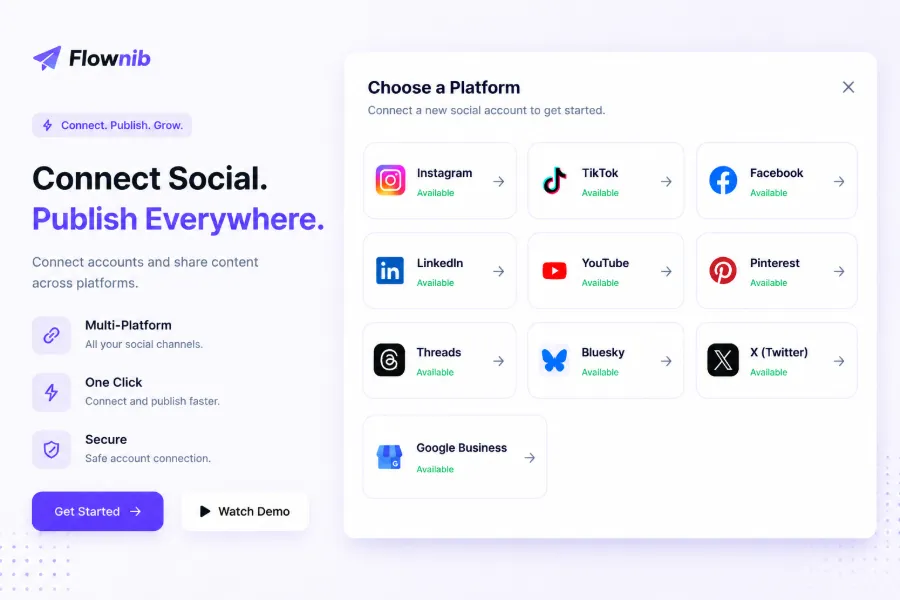
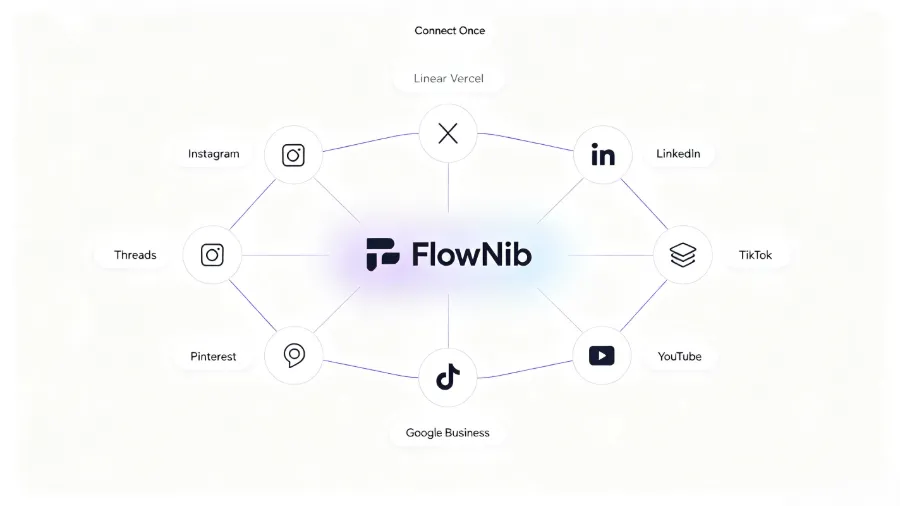
The actual workflow of Flownib demonstrates this chain: after drafting a piece of content, AI automatically rewrites and schedules it for Instagram, X, LinkedIn, Threads, and other platforms. According to user test data, using an AI distribution tool multiplies daily cross‑channel post volume by four and results in an average of 3.6 rewrites per piece of content.
It’s important to note that high‑frequency AI rewriting can cause operators to overlook each platform’s algorithmic preferences—Instagram gives higher weight to original images than reshared content, X favors timely interactive posts. If you rely entirely on AI without platform‑specific strategic thinking, distribution efficiency can actually be diluted. For a comparative analysis of different tools, see the 2026 Global AI Social Scheduling Tools Comparative Review, which breaks down API stability, rewriting fidelity, and other dimensions.
Multi‑account management scenarios best illustrate the value of tools. A cross‑border team operating three brands, each with five social accounts, traditionally needs at least three people dedicated to daily posting. With a centralized distribution platform, a single operator can handle all cross‑platform scheduling. Teams that have tested this reported a jump from 60 to 240 pieces of content per person per month, with error rates dropping by nearly 70 %. Real‑world operational data can be found in the Flownib case study on helping creators boost social traffic, which documents usage details for different account types.
Implementing Omnichannel Operations — First Build the Calendar, Then Deploy AI Distribution
A content calendar is the command center for omnichannel distribution. Before launching any AI distribution tool, teams should define a weekly platform content mix: Monday Instagram flagship story, Tuesday LinkedIn industry insight, Wednesday X short opinion + Threads extended discussion, Thursday Pinterest inspiration board, Friday YouTube short update, weekend user interaction and comment replies. After determining each piece’s first‑publish platform, rewriting direction, and schedule, hand it over to the AI tool for execution.
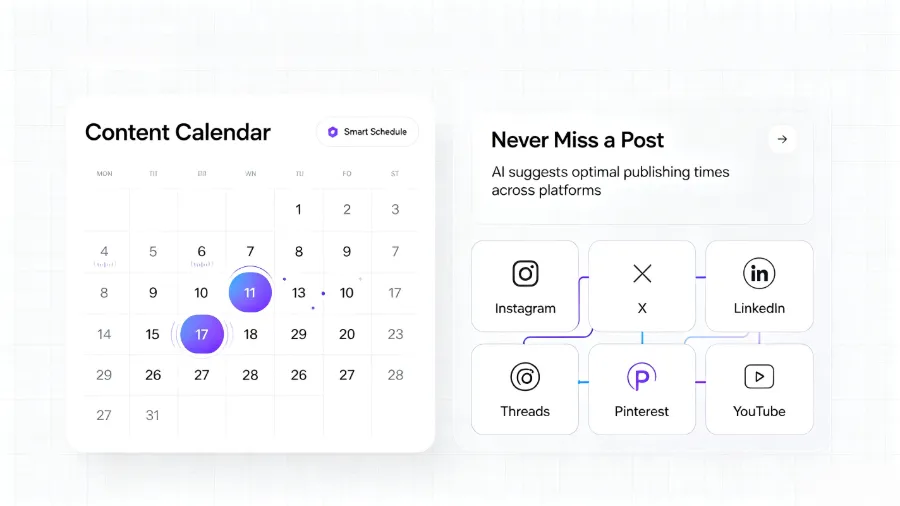
Flownib’s implementation of the content‑calendar layer is straightforward: from drafting to preview to scheduled publishing, the entire workflow occurs within a single interface. Operators only need to mark weekly content points on the calendar; AI automatically generates platform‑specific versions based on each channel’s characteristics. This shifts the team’s mindset from “content output” to “content as a seed asset”—the daily output is no longer a task for a single channel but a master copy that can grow into multiple forms across platforms.
A common pitfall is distributing without tracking. Some teams push content out and then ignore it, only to discover at month‑end that Instagram posts had good engagement but drove no site visits, while LinkedIn thought‑lead posts, though low‑engagement, generated high‑quality inquiries. Without an attribution chain, distribution becomes wasted effort. Pairing an AI‑driven distribution plan with a weekly review can lift average monthly interaction rates by 22 %.
How to Measure Omnichannel Traffic Effectiveness — From Impressions to Attribution Chains
Key metrics for omnichannel distribution include: the share of impressions across platforms, the attribution path from each channel to the independent site, and the long‑tail value of each piece of content. Direct click data on social platforms does not map cleanly to site conversions because users may view a post, then search the brand name, or complete a purchase on a desktop.
In practice, three steps are needed: (1) add unified UTM parameters to all channel links, distinguishing medium and source; (2) create a dedicated landing page for each platform, ensuring the landing‑page URL is traceable; (3) maintain visual and copy consistency—using the same visual assets and tone so users can instantly recognize the brand regardless of entry point.
When evaluating LinkedIn distribution attribution, combine it with the dashboard provided by LinkedIn Marketing Solutions to track website visits and form submissions originating from that channel. For newer platforms like Threads, distribution value is reflected more in brand exposure and early‑stage user accumulation; you can directly consult the platform’s native Threads interaction metrics to decide whether to continue investing.
Brands that adopt an omnichannel distribution strategy see an average 15 % lift in direct traffic to their independent site. Once distribution becomes routine, the operator’s focus shifts from content production efficiency to content strategy quality—asking which material performs best on which platform, which rewriting direction drives more shares, and how to cross‑validate content hypotheses with cross‑platform data. This is the true advanced stage of omnichannel operation.
FAQ
Q1: Is there a difference between omnichannel traffic and publishing on all platforms?
Yes. Publishing on all platforms simply copies the same content to each channel, whereas omnichannel traffic emphasizes coordination and attribution between channels. The same batch of content must be presented with different narrative angles on each platform to reach distinct audiences, and you must be able to trace each piece’s contribution to the site.
Q2: For cross‑border trade, which platforms should be prioritized for omnichannel distribution?
Initially recommend Instagram (visual product showcase), LinkedIn (B2B customers and professional endorsement), X (real‑time hotspot interaction), and YouTube (product tutorials and unboxing). These four cover images, video, text, and social interaction, and each has mature traffic‑driving mechanisms.
Q3: Will AI‑rewritten content make posts on multiple platforms look identical?
If AI only performs simple synonym swaps, similarity will occur. A good rewriting mechanism adjusts structure according to platform rules—Instagram uses short sentences with emojis, X is ultra‑concise, LinkedIn employs paragraphs with data. The prerequisite is that operators set up platform‑specific templates, allowing AI to rewrite based on those templates rather than generating freely.
Q4: Is omnichannel distribution suitable for a one‑person cross‑border micro‑team?
Yes, but don’t launch too many accounts at the start. Begin with two platforms (e.g., Instagram and LinkedIn), posting two pieces of content each day, and use an AI tool to turn one core post into two versions. After a month, evaluate which platform performs better before adding more accounts. Handling 150 cross‑platform pieces per month is feasible for a single person.
Q5: After adopting an AI distribution tool, do we still need to do SEO?
Yes. Omnichannel distribution solves the breadth of traffic acquisition, while SEO addresses lasting depth. On‑site content optimization and search‑engine rankings remain foundational assets for the independent site. Direct visits and social signals generated by omnichannel distribution can indirectly boost SEO performance; the two are complementary, not substitutive.
Share Article