
Why Cross-Border Brands Need an AI-Ready Brand Profile
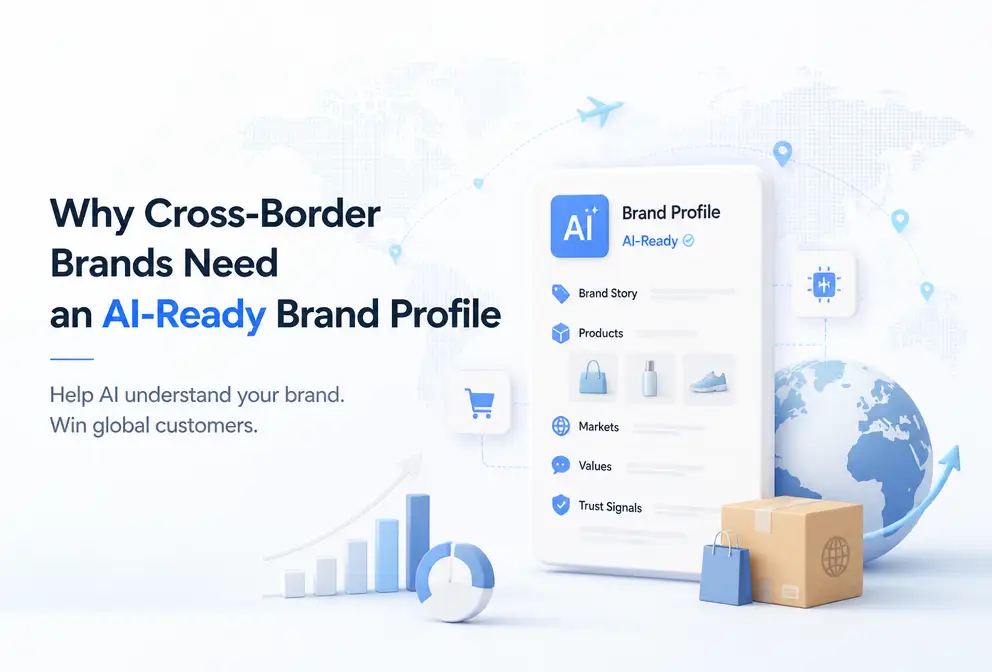
Cross‑border teams often start from the same file: copy the product description into English, Japanese, and German markets, then paste it into Instagram, LinkedIn, X, or Threads. After a few rewrites, the product selling points change, the promotional deadline is omitted, and one market still shows an expired delivery promise. It looks like synchronized publishing on the surface, but in reality it’s repeated corrections across multiple languages, audiences, and platforms.
An AI‑ready brand profile is not a static brand manual that sits in a shared folder and is opened once every six months. It is more like an operational infrastructure that AI can read, call, and update, and that constrains content generation and distribution: product facts are fields, promise boundaries are rules, market differences are tags, and publishing results can be written back.
Direct answer: Cross‑border brands need an AI‑ready brand profile because generic prompts cannot permanently retain product facts, market rules, and platform expression boundaries. A structured profile lets AI use the same set of information when generating, rewriting, reviewing, and publishing, while allowing each market to keep its own language and purchase motivations.
Why Cross‑Border Brands Can’t Rely Solely on Generic Prompts
A single prompt can say “Write a post for a German consumer about this outdoor lamp,” but it usually cannot carry the full background. Cross‑border e‑commerce content faces multiple languages, markets, platforms, and purchase stages; the target user may be comparing prices or just looking for installation advice. Instagram emphasizes visuals and quick comprehension, LinkedIn suits industry context, X leans toward short sentences and real‑time discussion, and platform tone does not automatically align just because the product is the same.
The operational team’s most common confusion is between brand voice consistency and identical platform copy. The former requires stable brand positioning, product facts, and promise boundaries; the latter often leads to unnatural duplication across platforms. AI needs to know which fields are immutable, such as rated parameters, applicable regions, and refund conditions, and which fields can be localized, such as salutations, opening styles, examples, and calls‑to‑action.
When structured data is missing, the problem is usually not that a sentence isn’t “pretty enough,” but that context is lost during hand‑off. Agencies receive an old version of product selling points, internal members remember a different promotional policy, and automation continues to use the earliest input for the target market. The result is inflated selling points, mixed‑up US and French markets, missing discount deadlines, and inconsistent brand voice. The smoother the translation, the harder the errors are to spot in time.
A brand profile should at least fix four core categories of information: product information, target users, brand positioning, and marketing goals. “Fixing” here does not mean locking content, but assigning each field a source, update schedule, and allowable range so AI doesn’t have to guess the brand background at the start of every task.
Market priority cannot be decided by “publish on every platform.” A sales cycle has limited content review time; covering ten channels does not mean every market deserves simultaneous investment. Teams can first consult the Social Platform Priority Guide, then write the priority markets into the profile, rather than letting the model infer them.
What an AI‑Usable Brand Profile Should Contain
Field design should precede language adaptation. The product and service section must be broken into four groups: core functions, applicable scenarios, price or promotional boundaries, and promises that cannot be made. For example, “suitable for small balconies” is a scenario judgment; “water‑resistance IP65” must have product documentation as a factual source; “same‑day delivery” must be accompanied by region, inventory, and timing conditions, not just saved as a marketing tagline.
Audience fields should not be just “global consumers.” Region, language, purchase stage, and common concerns need separate records. The Japanese market may care about size and usage etiquette, German users may first look at warranty and technical specs, and English‑language ads may jump straight to price comparison. Differences in salutations and expressions belong to localization rules, not to automatically filled‑in translation content.
Brand expression rules can be split into tone, common words, prohibited words, selling‑point priority, and the distinction between facts and opinions. Prohibited words are not just “no exaggeration”; they should be written as AI‑executable conditions, such as “do not use ‘zero risk’ or ‘permanent’,” and “do not rewrite user reviews into official performance promises.” This way, the model can flag conflicts during generation and review, rather than polishing every sentence into a similar ad tone.
Marketing goals determine which content path to take. Acquisition content must help strangers quickly understand the category; educational content should answer usage and comparison questions; conversion content must state price, inventory, and action limits; repeat‑purchase content can focus on accessories, maintenance, and after‑sales. If “marketing goal” is only a tag in the profile without corresponding content type and action path, it offers almost no constraint on the output.
Language adaptation should cover at least five major languages, each with its own language, region, and platform tone differences. Chinese, English, Japanese, German, and French are not five independent translation tasks; the same language varies by region in number formats, salutations, cultural connotations, and promotional phrasing. Teams can embed these rules into fields rather than creating a separate, unmaintained translation guide.
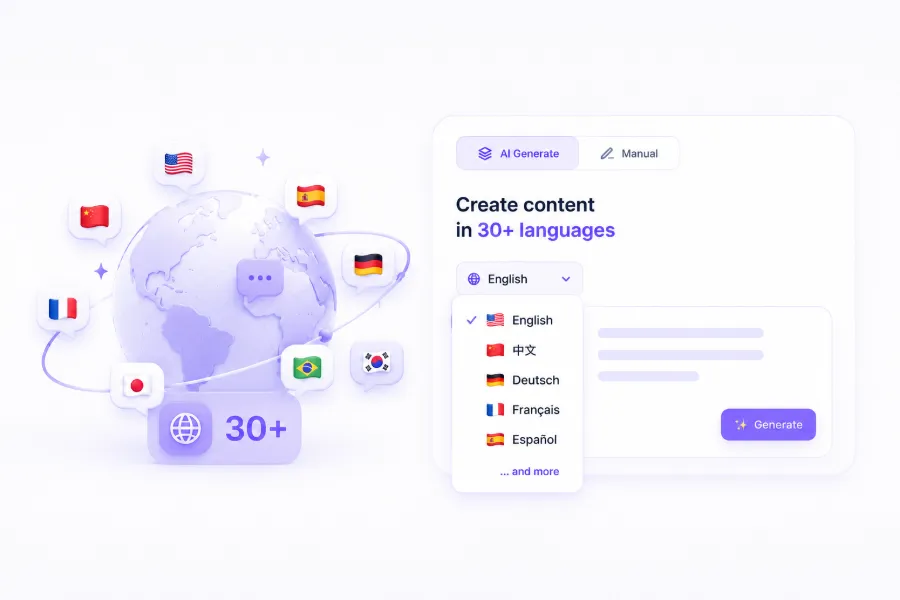
Platform rules also belong in the adaptation layer. Instagram may need a stronger visual opening, LinkedIn benefits from added industry context, X requires compressed sentences, and Threads allows a more conversational, topic‑focused expression. For platform format and operational rhythm, teams can also consult the Social Media Operations Best Practices to ensure their fields are specific enough.
From Brand Profile to Multi‑Platform Publishing: Turning Content Decisions into a Workflow
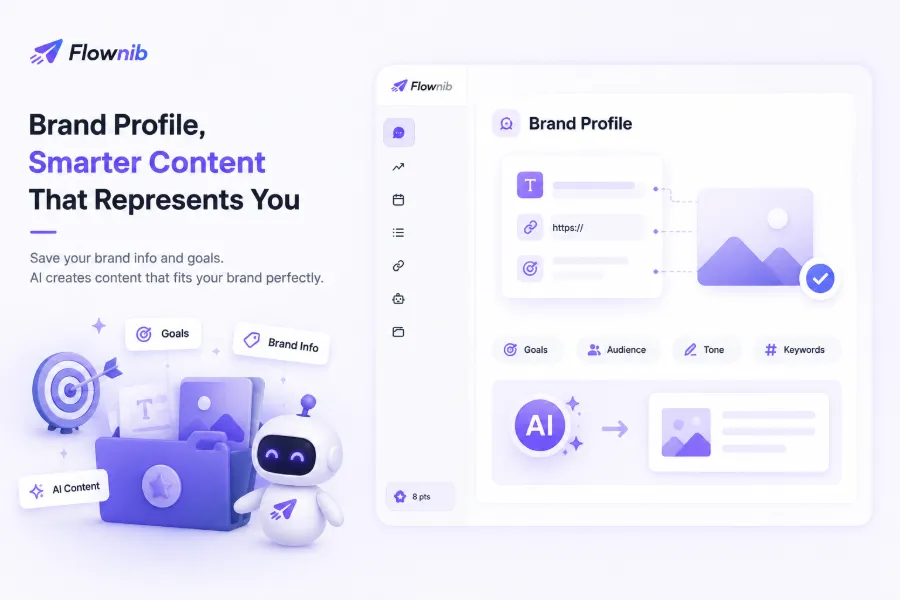
A runnable process usually starts by reading the brand profile, not from a blank input box. The system first fetches product facts, target market, language rules, marketing goals, and prohibited expressions, then generates a base piece of content. Afterwards, it rewrites for each platform, humans verify facts, schedule publishing, and finally record each platform’s version and results.
In this workflow, the AI‑ready profile constrains title direction, selling‑point order, tone, language, and call‑to‑action, while platform adaptation can still change character length, paragraph format, and interaction style. Brand consistency does not require Instagram, LinkedIn, X, and Threads to use the same copy; what must stay consistent are product facts, promise boundaries, and core positioning.
During a promotional cycle, teams often reuse the same set of product facts but not the same sentences. New‑product content can start with functional education, conversion posts then add price and discount deadline, and the Google Business version may need a more direct local‑store or service‑area statement. By following the Shopify Social Distribution Process, operators can clearly see which steps still need human intervention after a single creation is adapted and published in bulk.
In practice, connecting an account and starting the publishing setup can be done in about two minutes, but that’s only connection time, not review time. Coverage can extend to ten social platforms, yet the number of platforms does not replace market‑priority judgment. If a team has only one reviewer and connects ten accounts, the faster publishing speed may make fact‑checking the new bottleneck.
Between multi‑platform content generation, rewriting, and publishing logs, the tool itself can introduce friction. For example, the workflow example from Flownib can place Content Repurposing, Multi‑Channel Publishing, and Social Scheduling on the same operation chain, but the team must still define which content can be auto‑rewritten and which must pause on the preview page for confirmation. A smoothly running official API does not guarantee that inventory interfaces, pricing systems, or manual approvals are also functioning.
The same topic expressed on different platforms looks very different; Threads’ short posts, replies, and ongoing discussions are not suitable for directly reusing LinkedIn’s corporate announcement format. When checking the Threads platform features before publishing, reviewers should verify that the context is complete, not just that the character count is within limits.
Before publishing, at least the following items should be checked:
- Price, inventory, delivery scope, discount deadline, and compliance statements.
- Language, regional salutations, platform format, and call‑to‑action.
- Account, publish time, media assets, and final version.
- Publish status, error messages, interaction performance, and subsequent revisions.
This process looks slower than “one‑click publishing,” but it exposes errors before they go live. AI automation reduces repetitive editing and tab‑switching, but it should not eliminate high‑risk fact verification.
Operational Costs Most Often Overlooked When Maintaining a Brand Profile
A brand profile is not a permanent repository once filled out. Product lines change, promotional policies shift, delivery ranges shrink, platform rules update, and brand tone may evolve based on market feedback. If old versions are still called by AI, the faster the generation, the faster outdated information spreads.
During a promotional and new‑product cycle, a team once copied the same product copy to multiple markets; a few hours later they discovered the English version kept an old price, the Japanese version used expressions unsuitable for the local platform, and another market still displayed an expired delivery promise. Rework took several hours, some content was delayed, and already‑live posts needed line‑by‑line checks and revisions. Operators refreshed publishing logs while cross‑referencing different versions, eventually realizing the issue wasn’t a model glitch but that the brand profile never recorded the promotional expiration date.
Therefore, the profile needs version numbers, update timestamps, and expiration conditions. Product facts are edited by product or operations owners; localized content is reviewed by people familiar with the target market; platform feedback and historical errors should be logged by the content team. Conduct a regular review once a month; if product, price, delivery policy, or target market changes, complete a special update within 24 hours.
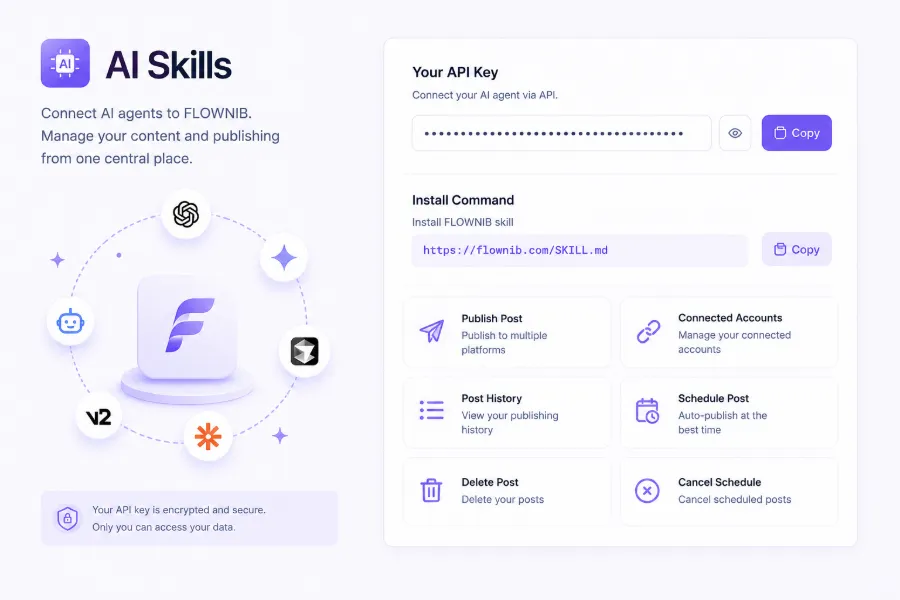
Automation trade‑offs also need to be documented in the workflow. It can reduce copy‑pasting, tab‑switching, and repetitive formatting, but it cannot replace confirmation of price, inventory, logistics, compliance, and timing constraints. Some teams treated increased publishing volume as efficiency gains, only to later find interaction rates unchanged and conversion rates dropped because promotional conditions were unclear; more posts do not automatically prove better content operations.
Managing multiple accounts amplifies a hard‑to‑detect issue: error logs are scattered across platforms, and by the time Google Analytics or platform dashboards show abnormal conversion data, the team often forgets which version of copy changed what. Publishing logs should retain the original content, platform‑specific rewrites, reviewer, publish time, error messages, and interaction performance—these data are needed to retroactively refine the brand fact repository. When scaling discussion tools, don’t just look at account count and publishing volume; combine with a price‑and‑feature analysis to see whether maintenance costs rise with complexity.
When using Flownib’s publishing logs or a similar system, teams still need to verify that the version matches the current brand profile. Automation reduces the number of operations but does not eliminate version management; a well‑running API can actually cause errors to spread to more markets within minutes when publishing to many accounts.
Regarding time savings, external case studies often express results as a percentage, but what really matters is what changed in the process. For example, the time reduction shown in the Brand Social Operations Time Case Study is hard to attribute to automation versus reduced publishing scope unless audit cycles, rework counts, and error‑handling times are also recorded.
One‑Page Checklist to Determine If a Brand Is AI‑Ready
A brand’s readiness isn’t about having a long PDF; it’s about being able to answer a few practical questions quickly: what to sell, to whom, in which markets, why users buy, and which statements are prohibited. If the answers are scattered across sales documents, product spreadsheets, chat logs, and old ads, AI still needs human effort to stitch the background together.
Each major market should have its own language, culture, platform, and promotional rules, not just a single English master file. AI outputs must also be traceable to specific brand fields so reviewers know where a price, selling point, or promise originated. Content that cannot be traced, even if fluent, is unsuitable for direct automated distribution.
Before launch, complete five checks:
- Fact completeness: product info, price boundaries, and non‑negotiable promises all have sources.
- Audience clarity: region, language, purchase stage, and common concerns are distinguished.
- Language rules clarity: localization is more than sentence‑by‑sentence translation.
- Prohibited expression clarity: exaggerated promises, expired policies, and non‑compliant wording are identifiable.
- Review responsibility clarity: owner, version number, update timestamp, and expiration conditions are recorded.
The execution order usually doesn’t need to be complex: first compile the brand fact base, then define brand expression rules, and finally connect content generation, review, scheduling, and data retrospection. This way, the AI‑ready brand profile becomes part of cross‑border e‑commerce operations rather than another unopened internal document.
Its long‑term value isn’t just faster generation. The profile links publishing logs, error tracking, and version updates, letting the team understand why a rewrite happened, which rule caused rework, and whether the next market needs an audience description adjustment.
FAQ
How does an AI‑ready brand profile differ from a regular brand manual?
The direct difference is that an AI‑ready brand profile consists of callable fields and execution rules, while a regular brand manual is usually a long narrative with visual guidelines. The former records product facts, prohibited words, market conditions, and update timestamps, and is read before each generation, with at least one monthly review.
Do cross‑border brands need a separate brand profile for each country?
It isn’t necessary to have completely independent profiles, but each major market should have localized fields. Brands can share product facts and core positioning, then separately record language, region, platform tone, promotional policies, and delivery restrictions to avoid maintaining multiple conflicting master documents.
How often should the brand profile be updated?
Typically once a month. If product, price, delivery policy, or target market changes, a special update should be done within 24 hours. Promotional activities should also have a clear expiration date; otherwise AI may keep generating old discount information weeks after the event ends.
After having a brand profile, does AI‑generated cross‑platform content still need human review?
Yes, especially for price, inventory, logistics, compliance statements, and timing constraints. Platform rewrites can be automated, but before publishing each version’s factual source should be verified, and reviewer and publish time records retained.
What brand information should a small cross‑border team organize first?
Start with product facts, target users, main markets, marketing goals, and prohibited expressions—the five categories of information. Small teams can initially cover one or two priority markets, run for two to four weeks, and then add fields based on rework frequency and interaction data, without having to maintain all countries and platforms from the start.
Share Article