
5 Platforms, 10 Accounts, 1 Operator — Daily Social Media Operations for Cross‑border Sellers

Open the computer, log into five platforms, switch between ten accounts, and paste each post you need to publish today one by one. Is this your daily work, or the routine of a teammate in your team? This article isn’t about tool recommendations; it’s about the most fundamental friction point—when your account matrix grows from two to ten, the time cost of manual operations can no longer be hidden. A typical cross‑border seller manages four platforms and six accounts on average; publishing a single piece of content manually requires switching five browser tabs. In short, the two‑hour daily repetition isn’t because you have no content to post; it’s because you’re too lazy to open the fourth platform.
Multi‑Account Matrix: The Turning Point from “Simple” to “Chaotic”
At first you might only use Instagram, with few accounts, posting from your phone. After six months of business expansion, the boss says “We need to be on X, LinkedIn, TikTok,” so you register, fill out profiles, and post. Later you add Threads, Pinterest, YouTube Shorts, Google Business, and Facebook, and the number of accounts expands from two to ten. At that point you’re no longer doing operations; you’re a production‑line worker.
Each platform has completely different content format requirements. Instagram needs visually striking images + concise copy, X (formerly Twitter) demands short, punchy statements, LinkedIn requires a professional tone and even paragraph structure, and TikTok tests script rhythm. You can’t use the same text for every platform—forcing it results in Instagram copy being truncated for being too long, and LinkedIn copy looking unprofessional.
| Platform | Content Format | Character Limit | Publishing Rhythm |
|---|---|---|---|
| Image+Video | 2200 characters | 1‑2 posts per day | |
| X | Short text+link | 280 characters | 3‑5 posts per day |
| Professional article | 3000 characters | 1 post per day | |
| TikTok | Short video | 300 characters | 1‑3 posts per day |
| Visual pin | 500 characters | 1‑2 posts per day |
You’ve probably experienced this: you prepare five pieces of content, but by the time you reach the third platform you discover the LinkedIn image size is wrong, so you have to crop again, adjust copy, and log back in. After all that, an hour has passed and TikTok still hasn’t been touched. That’s the daily reality of a multi‑account matrix: it’s not a lack of content, it’s too many distribution actions.
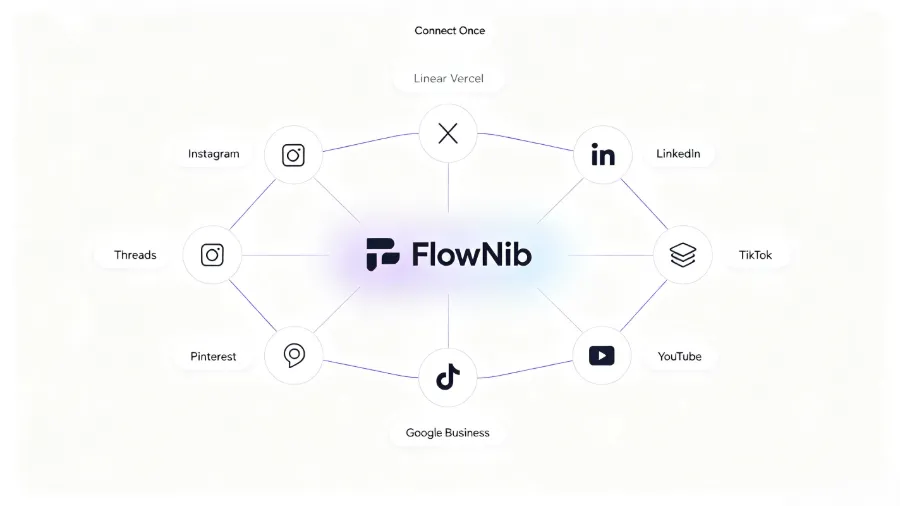
Timing Gap: Why the Same Content Performs Very Differently Across Platforms
Even when the copy and images are adapted, there’s another hurdle—publish time. Each platform’s user activity curve is completely different; Instagram’s golden hour might be 8‑10 p.m., LinkedIn peaks during weekday lunch breaks, and X has multiple small peaks throughout the day. When you publish manually you can only choose “publish now,” meaning the same batch of content reaches some users during peak time and others at 3 a.m.
A cross‑border seller of home‑goods forgot to account for time zones and scheduled a weekend promotion post for 3 a.m. Eastern Time in the U.S. The organic reach was almost zero; on Monday they discovered the LinkedIn post had only 3 impressions. The same content posted during Instagram’s golden hour can achieve a 47 % higher engagement rate than off‑peak—this isn’t an estimate; it’s data validated by many accounts.
Time‑zone issues are even more complex for cross‑border sellers. Your target markets may be the U.S. East Coast, Central Europe, and Southeast Asia; manual scheduling can’t simultaneously cover all three golden windows. Weekend blanks are also a big problem—people simply don’t want to log into five platforms on a Saturday night to schedule manually.
Cross‑border independent‑site sellers can consider using AI to implement a global social‑media distribution strategy, solving time‑zone conflicts at the source.
Underestimated “Repetitive Work”: When Pasting Becomes Muscle Memory
How time‑consuming is manual operation? Let’s do the math. Logging in, pasting, adjusting format, previewing, and publishing on each platform takes about five minutes. Ten accounts equal 50 minutes. Over 250 working days a year, that’s roughly 21 full workdays spent on “copy‑paste‑publish.” Twenty‑one days—over a month of pure work time—producing no strategy, creating no content, just acting as a mover.
The more accounts you have, the higher the chance of mistakes. One operator accidentally posted a LinkedIn professional industry analysis on Instagram; the 500‑word technical breakdown with product images got “I can’t understand” comments. Even worse, that post stayed up for a day before being deleted, while LinkedIn B2B clients were actively looking for content at that time.
Repetitive work drains not only time but also mental energy. When pasting becomes muscle memory, the brain stops asking “Is this content suitable for this platform?” or “Is the timing right?” You fall into a mechanical mode—finish one, move to the next, just to get it done, not to do it well.
I only broke free from the “50‑minute daily paste” after I started using Flownib. The click cost of switching from one platform to another is far higher than you think. Every additional switch erodes the willingness to publish consistently.
Human‑Machine Collaboration: How AI Rewriting Prevents the Same Content From Looking Identical
Another reason direct copy‑paste fails is that each platform’s users expect a completely different style. On Instagram, “Summer is here! 50 % off everything” feels normal. The same copy on LinkedIn might get comments like “Can you say something valuable?” The issue isn’t the copy itself; it’s the mismatched context.
AI rewriting solves this contradiction. The same product description can be automatically adjusted: Instagram gets a friendly tone with emojis, X gets a punchy statement, LinkedIn gets a paragraph of industry insight that leads to product value. The content is consistent, but the expression differs, so users don’t feel “this person is spamming.”
A fitness‑equipment seller ran a comparison experiment— the same product image paired with “Don’t skip summer workouts, regret winter” on Instagram, and re‑written on LinkedIn as “2026 Fitness Equipment Industry Trends: Three Major Shifts in Home‑Gym Demand.” The former received over a thousand likes; the latter generated three B2B inquiries. That’s the value of adaptation.
AI‑optimized posts on LinkedIn see an average 30 % boost in engagement. It’s not that AI magically writes better; it remembers each platform’s tone and content preferences, details that manual work can’t keep up with. For more detailed industry best practices, see cross‑platform social‑media content scheduling case studies.
From Manual to Automated: When One Operator Manages Ten Accounts
The unsustainability of manual operations is obvious to anyone who’s done it. It’s not that you can’t do it; it’s that you don’t need to. The workflow—content creation → rewriting → scheduling → publishing → tracking—only truly requires human input for the first two steps: ideation and production. The rest—scheduling, publishing, tracking—can be handed off to tools.
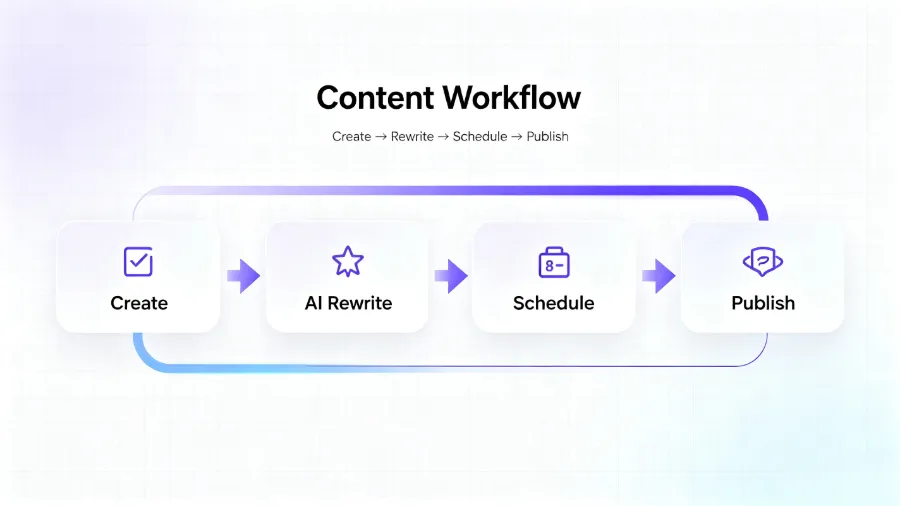
The biggest change after automation isn’t time saved; it’s that you finally see the whole picture. All platforms’ content calendars and publishing statuses appear on a single dashboard, instead of juggling five tabs. Tools like Flownib essentially solve “management” rather than just “publishing”—no matter how many accounts you have, there’s only one entry point.
After automated publishing, operators can save about seven hours of repetitive work each week, time that can be invested in content strategy and creative planning. In short, you move from “brick‑laying” to “thinking.” Automation also has a hidden benefit—no more weekend slacking. Content is pre‑scheduled, and when it goes live, users perceive a continuously active account rather than an “if‑or‑not” posting pattern.
The shift from manual to automated isn’t about efficiency; it’s about sustainability. When your matrix grows from five to twenty accounts, manual operation will inevitably hit a wall. The long‑term value of automated operations isn’t the saved minutes; it’s the ability to truly manage a multi‑platform matrix rather than being managed by it.
FAQ
Q1: If I manage multiple social accounts at once, do I have to use a tool?
If you have three or fewer accounts, you can operate manually. Once you exceed three, the switching cost becomes noticeable. With ten accounts, manual publishing takes 40‑60 minutes per day, not counting missed posts, wrong‑platform errors, or image‑size adjustments. Tools solve repetitive work, not replace people.
Q2: What’s the difference between an account matrix and cross‑platform content operation?
An account matrix emphasizes centralized management of many accounts, while cross‑platform content operation focuses on adapting and distributing content across different platforms. They’re essentially two stages of the same process—if you have ten accounts to manage, you must adapt content to each platform’s characteristics to make the matrix effective.
Q3: Which social platforms should a cross‑border seller prioritize?
It depends on target market and product type. B2C sellers usually focus on Instagram and TikTok; B2B cross‑border sellers can’t ignore LinkedIn; X is good for quickly building industry influence. Start with three platforms, master them, then expand—don’t try to cover ten from day one.
Q4: Will the content quality differ between manual and automated publishing?
It depends on the automation tool’s capabilities. If it only schedules the same copy, quality may drop. If the tool supports AI rewriting and platform‑specific adaptation, automated content can actually be more consistent—avoiding quality fluctuations caused by an operator’s varying energy levels on Monday versus Friday.
Share Article