
Content Sent ≠ Properly Delivered: Why No One Sees Your Post?

You spent half an hour writing a product post, copied and pasted it to five platforms, hit “publish,” and then waited. What you got back was three likes and a junk comment. It’s not that your content is bad; you’ve confused the concepts of “sending out” and “delivering properly.” Many people think that clicking the publish button finishes the job, but the real determinant of a content’s fate is the algorithmic filtering mechanism and user behavior logic that follow the publication.
Sending Out Is Only the First Step — Algorithms Won’t Pave the Way for You
“Publish” and “reach” are two completely different things. Publishing is you handing your content to the platform; reaching is the platform deciding how many people will see that content. Most people only complete the former and then wait for the latter to happen automatically — but the platform’s algorithm won’t open the road for you.
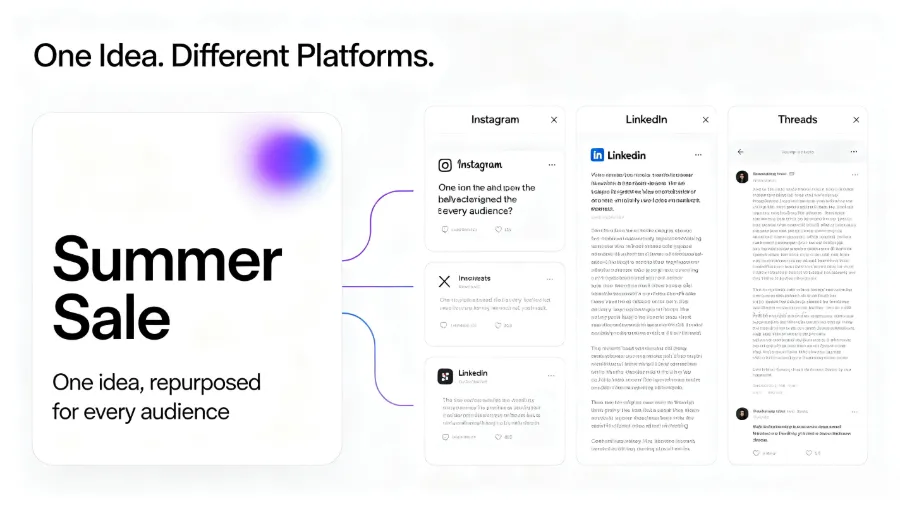
Each social platform has its own content distribution logic. Instagram’s algorithm prioritizes native Reels video content; according to public data, Instagram Reels receive more than twice the exposure of ordinary posts. Facebook has been tightening the traffic allocation for link posts year over year, while LinkedIn prefers to push posts that generate interaction within the first hour after publishing. X (formerly Twitter) no longer uses a strict reverse‑chronological timeline; it mixes in “you might be interested in” recommendations.
Copy‑pasting the same copy to these platforms is essentially fighting the algorithm. Platforms can detect whether content was created natively on their own service — EXIF data in photos, original video encoding, edit history of the copy — and these signals are used to judge the content’s “native‑ness.” Non‑native content gets a heavy initial recommendation weight penalty, especially on TikTok and Instagram.
Manual copy‑pasting also incurs a hidden cost: you lose the format advantages each platform offers. Instagram favors visual short copy with hashtags, LinkedIn works best with slightly professional‑tone paragraph structures, and X requires concise, sharp expressions under 280 characters. Posting a 500‑word product description unchanged across all platforms results in each platform feeling the content is “off.”
Many sellers don’t lack good content; they’re held back by a “content‑porter” mindset. To break this pattern, start by understanding each platform’s algorithmic preferences. For how to integrate multi‑platform publishing workflows, see this article on Breaking the Social Media Tool Silos. Additionally, the X Business Platform Best Practices page offers basic guidelines for content optimization.
Reach Does Not Equal Interaction — Why Your Post Gets Ignored
Suppose your post finally gets into users’ feeds, the click‑through rate rises, but the interaction rate remains dismal. This is another common misunderstanding: high exposure does not equal effective content.
According to Later, the average interaction rate for brands on Instagram is about 0.5%–1%, but can exceed 2% with optimized timing. This gap shows that users see your post but lack the motivation to like, comment, or share. The reasons usually fall into three categories.
Content does not match platform tone. A “limited‑time discount, act fast” promotion on LinkedIn feels spammy; a pure product specification comparison graphic on Instagram is quickly scrolled past. Each platform’s audience has different psychological expectations, and mismatched content, even if seen, won’t generate interaction.
User fatigue and information overload. An average user sees hundreds of posts daily on social media, and most are judged “not worth staying on” within 0.5 seconds. If you don’t capture attention in the first three seconds, the rest of the content, no matter how good, is useless.
Poor timing. Many sellers post during work hours, when competition is fiercest. Your target audience might be in a different time zone, or their active periods may be evenings and weekends. Manual scheduling can’t be precise — optimal posting times aren’t static; they shift with audience time zones and content types.
I’ve seen a cross‑border home‑goods seller spend two hours each day manually publishing to five platforms for three months, with an interaction rate stuck below 0.3%. He later changed his strategy: he focused on two platforms, rewrote content for each, and posted only during two specific weekly time windows. After a month, his interaction rate rose to 1.8%. The content didn’t improve; it was finally placed in the right place at the right time.
For platform‑specific content strategies and timing optimization, see Later’s blog research on Best Posting Times. For cross‑border e‑commerce sellers, understanding global audience time distribution is crucial; refer to this discussion on How Cross‑Border E‑Commerce Sellers Will Use AI for Global Social Media Distribution in 2026.
Three Key Actions to Move From “Sending Out” to “Delivering Properly”
After understanding the gap between reach and interaction, the next step is to find concrete ways to narrow it. From my experience, three actions are essential.
Content rewriting. The same copy cannot be pasted unchanged across all platforms. Rewriting isn’t just swapping a few words; it’s adjusting structure, tone, and information density. Instagram can host a short product story with three to five hashtags; LinkedIn needs a viewpoint‑driven, data‑backed professional analysis; X requires a punchy short sentence plus an accompanying image. This process is time‑consuming but is the most direct way to boost interaction rates.
Scheduled publishing. Identify each platform’s optimal time windows. User activity curves differ dramatically: LinkedIn peaks on weekday mornings and lunch breaks, Instagram is most active evenings and weekends, TikTok’s traffic is spread throughout the day. Using a scheduling tool lets you set publishing times in advance, avoiding manual clicks at every moment. Buffer’s research shows teams that use scheduling tools save an average of six manual hours per week.
Data tracking. Feed feedback into your content strategy. After publishing, monitor not only likes but also click‑through, share, save rates, and the sentiment of comments. These metrics tell you which content directions merit further investment and which should be dropped. A strategy without data feedback is like shooting in the dark.
Executing all three actions manually can take at least one to two hours per day. That’s why more teams are turning to tools to automate these workflows. For example, Flownib integrates content rewriting, scheduled publishing, and data tracking into a single workflow, reducing manual friction.
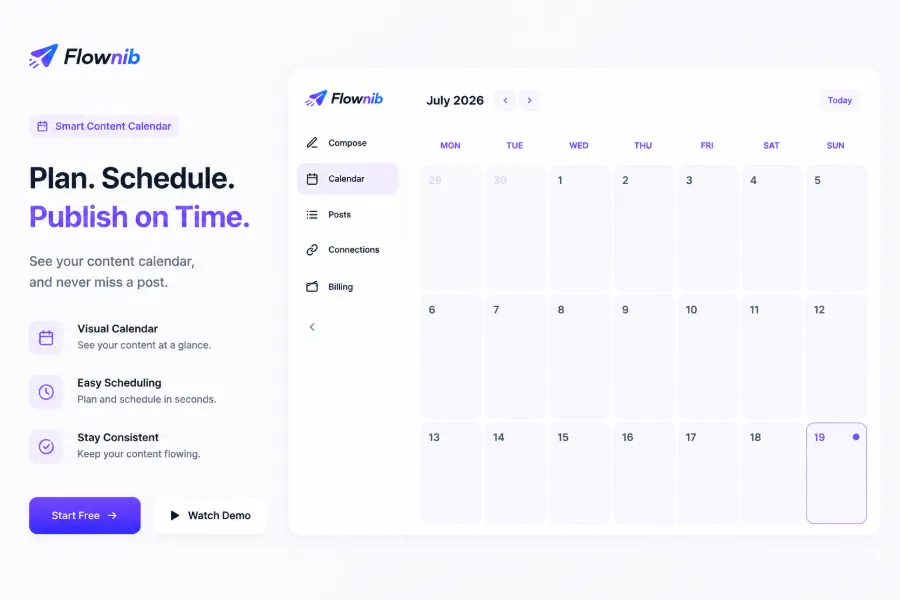
If you’re still using Excel to manually schedule, consider a different approach. This article on Saying Goodbye to Manual Scheduling, Embracing AI Distribution outlines a concrete path from manual to automated. The Buffer Resource Center’s guide on content scheduling also offers basic scheduling methodologies.
How Automated Workflows Narrow the Gap Between “Sending Out” and “Delivering Properly”
The hidden cost of manual processes is often underestimated. Every copy‑paste, every tab switch, every manual timing adjustment may seem trivial but adds up to at least 30–60 minutes per day. More seriously, manual work is error‑prone — forgetting a hashtag, linking the wrong URL, posting to the wrong account — all of which directly affect reach.
Automation solves a consistency problem, not a laziness problem. When content rewriting, scheduled publishing, and data tracking become an automatically executed pipeline, you free yourself from operational tasks and can focus on strategy.
AI rewriting is the most valuable part of an automated pipeline. It does more than shorten long text or lengthen short text; it adjusts tone and structure to match each platform’s stylistic traits. A good AI rewrite tool maintains brand voice consistency — your Instagram post and LinkedIn article sound like they were written by the same person, just expressed differently. This consistency is crucial for building brand recognition.
One‑click distribution eliminates operational friction. You submit content in a single interface, and the system automatically rewrites, schedules, and publishes. Teams using fully automated distribution tools see a three‑fold increase in publishing frequency. This boost isn’t due to overtime; it comes from removing waiting and switching costs inherent in manual work.
Content calendars make strategy visual. You can see the distribution of content over the next week or month, which platforms are covered, where gaps exist, and which content types are duplicated. This global view is almost impossible to achieve with manual handling.
When discussing one‑click distribution, Flownib’s approach is to place rewriting, scheduling, and publishing on the same screen, reducing tool‑to‑tool switching. The value of an automated workflow isn’t to replace human judgment but to offload repetitive labor to machines, allowing people to spend time on truly creative thinking.
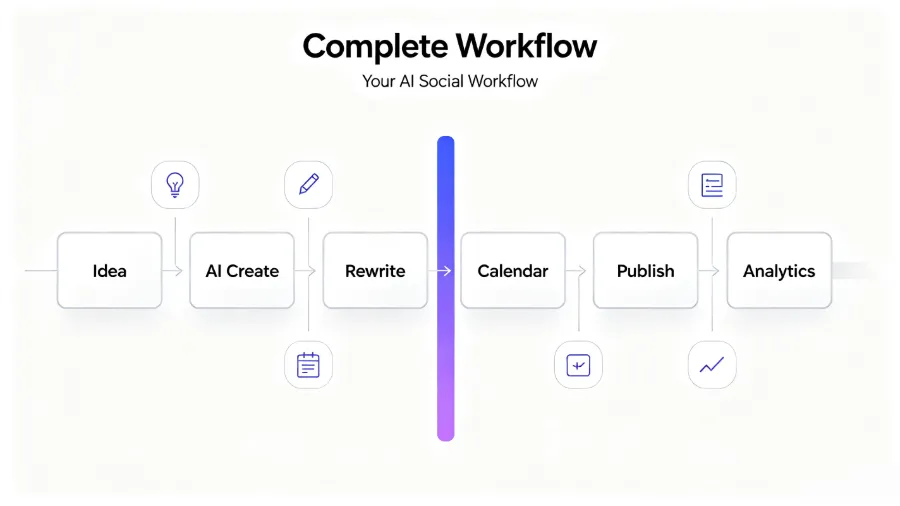
Users already employing automation tools like n8n or Zapier can refer to this discussion on Why Social Media Steps Can’t Be Missing From Automated Workflows to learn how to incorporate social media distribution into existing automation systems.
FAQ
Q1: Why did I post but almost nobody saw it?
The most likely reason is that the platform’s algorithm didn’t recommend your content to enough users. Causes include: the content was directly copy‑pasted and flagged as non‑native; the posting time missed users’ active windows; or the format didn’t match platform preferences. First, check whether you rewrote the content for each platform, then adjust the timing.
Q2: When is the best time to post for maximum interaction?
There is no universal answer. Optimal times vary by platform, audience, and content type. Generally: LinkedIn peaks 8–10 am on weekdays, Instagram 7–10 pm, TikTok is spread throughout the day but spikes in the evening. It’s best to test using your own account’s historical data rather than copying others’ conclusions.
Q3: Can I copy the same content directly to all platforms?
Not recommended. Direct copy‑pasting triggers platforms’ “non‑native content” demotion mechanisms, dramatically reducing initial exposure. Even if the content itself is great, mismatched formatting hurts interaction. At minimum, adjust titles, opening paragraphs, and hashtags.
Q4: How do I know my content is truly “delivered properly”?
Look at three metrics: exposure reaching at least 80% of your account’s average, interaction rate above the platform’s industry average, and the presence of comments or direct messages from target audiences. High exposure but low interaction means the content is seen but not engaging; low exposure means the algorithm isn’t recommending it.
Q5: Do small teams need automation tools?
It depends on publishing frequency. If you only post 3–5 times per week, manual handling may be tolerable. But if you publish 15+ times weekly or cover more than four platforms, the time cost of manual work will exceed the tool’s price. Automation’s value lies in freeing time, not replacing creativity.
Share Article