
Scaling Content Production Without Losing Brand Identity

Cross‑border e‑commerce teams usually aren’t short on content; they’re suddenly overwhelmed: English, Chinese, Japanese, and German versions all need to be prepared, and platforms like Instagram, X, TikTok, LinkedIn, etc., each have their own publishing schedules. In the first few weeks, copy‑and‑paste and automatic rewriting did boost the volume of posts, but then we started seeing expired promotional info, distorted platform versions, and incorrect product promises. The team posted faster, but rework increased.
When scaling content, you can’t just copy the same paragraph to every channel. A safer approach is to lock down the brand’s core promise, product facts, audience, and expression boundaries first, then handle language, localization, platform format, and publishing cadence separately. Automation can reduce scheduling and account switching, but it can’t replace the team’s judgment about what language represents the brand.
Break Down Brand Identity Into Executable Content Rules
If a brand identity is only described as “professional, friendly, reliable,” it’s almost useless for review. Different editors can interpret those words in completely different ways: some write like technical whitepapers, others like live‑stream sales pitches, and some add services the brand never promised in the name of friendliness.
Cross‑border e‑commerce teams should first decompose brand positioning into several checkable content rules. The core promise answers “what the customer ultimately gets”; the target audience defines “who we’re speaking to”; product information limits “which facts cannot be altered”; value orientation decides “what judgment to use when faced with price, sustainability, after‑sales issues”; and expression boundaries clarify “what statements are prohibited.” A content system should lock down three categories of boundaries: must‑keep, can‑rewrite, must‑avoid.
Must‑keep content usually includes product name, functional facts, price units, promotional conditions, logistics promises, and after‑sales scope. Can‑rewrite elements are headline length, examples, opening angle, sentence structure, and call‑to‑action phrasing. Must‑avoid content includes unverified discounts, absolute effect claims, fictional inventory, vague shipping times, and unapproved competitor comparisons.
These items shouldn’t all be handed over to a generic AI content‑rewriting pipeline. Product prices may change with the market, promotions may be valid only in certain countries, and logistics promises can be affected by warehouses and tax policies. Automatic rewriting most easily turns “free shipping in selected regions” into “global free shipping,” or compresses “up to 50 % off” into “50 % off everything.” Such errors are usually not caught before launch but surface when customer service receives inquiries.
Brand tone should be further broken down into word choice, sentence patterns, and narrative angles. For example, a brand can mandate using “helps customers compare” instead of “guarantees customers choose,” replace hyperbolic adjectives with concrete usage scenarios, and require each promotion to first state applicable products and deadline before stating the discount. This way, content review deals with sentences and facts rather than an unexecutable slogan poster.
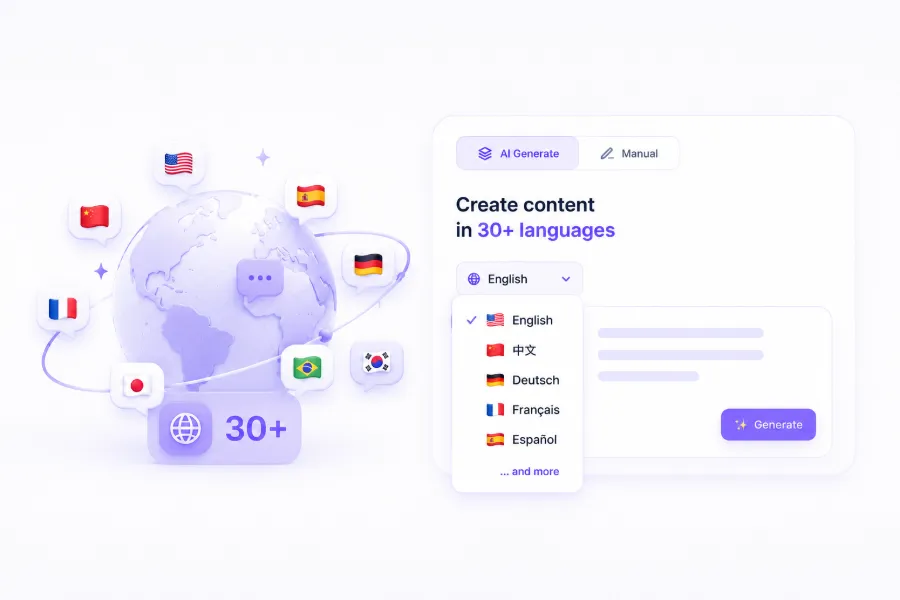
Multilingual expansion should be built on this rule set, not start from translation. The English version may need more direct action sentences, the Japanese version may require more cautious promise phrasing, and German and French versions have their own numeric, currency, and grammatical conventions—but these variations must not alter product facts. Each market can have its own examples and headline lengths, but the core claim must stay identical.
Therefore, the review baseline is not “every version looks the same,” but that each version can answer the same set of questions: what is the product, what problem does it solve, who is the promise made to, and what conditions limit that promise. Brand identity here is not a static slogan; it is a daily decision‑making standard for the team.
Replace Copy‑and‑Paste With “Core Message + Platform Version”
A single creation can reduce duplicate work, but it doesn’t mean the same text fits every platform. The original brand information should retain product facts, audience questions, and action purpose; the platform version should be reorganized based on context, reading speed, media form, and interaction habits.
Short‑text platforms usually need a quicker hook: X (formerly Twitter) works well by putting an observation or data point at the start, Threads can keep more continuous context. Image and short‑video platforms rely heavily on the first sentence, visual description, and subtitle pacing; Instagram, TikTok, Pinterest, and YouTube have different title, description, and call‑to‑action conventions. Professional platforms like LinkedIn often require additional business background, evidence, and team impact, not just a more formal version of a sales line.
The same “Summer collection up to 50 % off” promotion can be handled as follows: X opens with “When refreshing for summer, do customers care more about price or fabric?” Instagram starts from product details and usage scenarios, LinkedIn discusses inventory planning or seasonal consumption trends. Their openings, lengths, and interaction styles may differ, but discount conditions, applicable products, and deadline must be identical.
Multilingual content needs the same breakdown. Translators or AI can adjust local phrasing, currency format, date order, and action sentences, but they must not arbitrarily add promises like “free returns” or “2‑day delivery.” Threads’ official product format and conversational environment differ from image platforms; the team can refer to the official Threads platform for actual presentation before deciding sentence length and reply style, rather than applying a one‑size‑fits‑all template.
The version‑checking sequence should be fixed; otherwise editors may get stuck on tone and only later discover that the price has expired. A practical workflow can follow this order:
- Verify product facts, price, inventory, logistics, and promotional conditions;
- Verify brand tone, core claim, and prohibited expressions;
- Verify platform format, character limits, media ratios, and localized wording.
Cross‑border teams often have to manage 10+ social platforms simultaneously. The more platforms, the less feasible it is to rely on memory for version differences: Instagram visual descriptions, TikTok video openings, YouTube titles, and Google Business local updates should all have version references in the content record, not just the final post saved.
| Adjustment Dimension | Original Brand Info | Short‑Text Platform Version | Visual Platform Version | Professional Platform Version |
|---|---|---|---|---|
| Opening | State product & promise first | Pose a question or opinion first | Set scene & visual first | Add business background first |
| Length | Keep full context | Compress to a single focus | Align with visuals & subtitles | Add evidence & explanation |
| Proof Materials | Product facts & conditions | Data, observations, or replies | Images, videos, usage details | Cases, processes, or experience |
| Interaction Style | Guide understanding & choice | Encourage replies or discussion | Encourage save, share, or watch | Prompt professional discussion |
| Immutable Facts | Product, price, promise | Same | Same | Same |
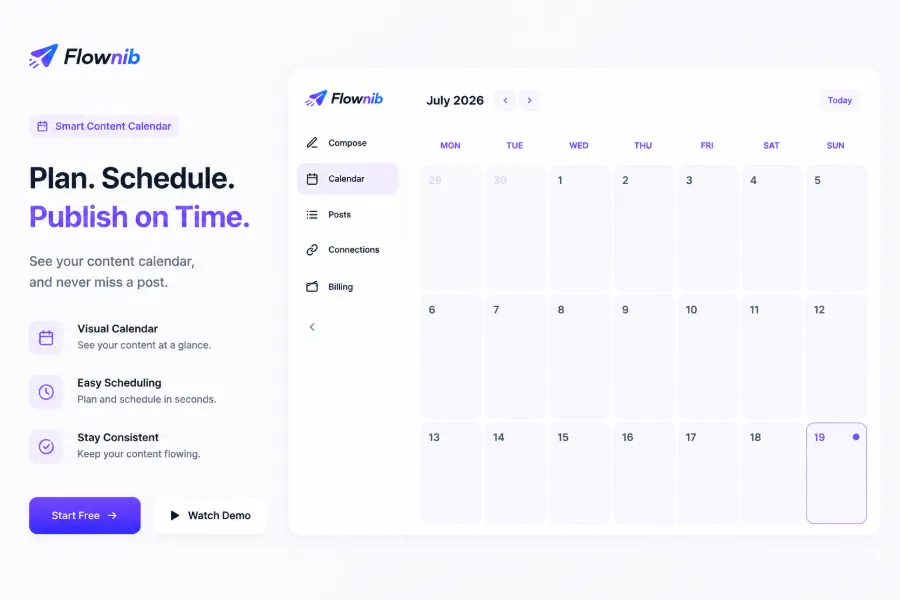
The difficulty of content reuse lies not in generating more versions but in letting the team see which parts are “rewritten” and which have become new facts. Content calendars must display market, language, platform, owner, and publish time together. Looking at a single schedule line makes it easy to miss that the same promotion ends on different dates in different countries.
Put Automation After Review, Not Before Brand Judgment
In practice, a cross‑market piece of content usually goes through five stages: draft, platform rewrite, manual preview, scheduled publishing, and publishing record. The draft stage locks the core info; the platform rewrite stage handles length and format; the manual preview catches tone and fact issues; scheduled publishing executes; the publishing record saves market, account, version, and time.
Automation mainly reduces copy‑and‑paste, tab switching, repetitive scheduling, and multi‑account logging. It is not suitable for deciding brand stance or judging whether a market should keep an old promotion. Especially for new launches, price changes, sensitive topics, and differing market policies, the manual preview step cannot be dropped for the sake of scheduling convenience.
In this workflow, Flownib is placed in the content rewrite, platform distribution, scheduled publishing, and publishing record stages for observation. It can reorganize a draft for Instagram, X, LinkedIn, TikTok, Threads, Pinterest, YouTube, and Google Business channels, connect multiple accounts, and save publishing logs. However, the generated versions still need to go through brand‑rule checks; adding more platforms does not reduce review responsibility.
Product documentation shows the average setup time for the related process is about 2 minutes. This figure only reflects account connection and basic configuration speed; it does not imply brand governance can be completed in 2 minutes. A promotional version must be checked for applicable market, currency, inventory, and deadline, and most of the time is spent on judgment, not clicking buttons.
When the team first expanded to multiple markets, they used a “single draft + automatic rewrite” approach, which quickly increased publishing volume. By week three, a discount that ended in the UK was still scheduled for the German account, and some short‑text posts removed after‑sales conditions to meet character limits, causing a noticeable rise in manual rework. The issue was discovered only after customer service sent screenshots; the team then spent two days taking down and correcting each post. Although the publishing pace was faster, it consumed more editorial time than before.

Trend discovery can be automated, but relevance judgment cannot be omitted. After entering a topic, the system may scan Reddit, YouTube, news sites, and Hacker News to find rising discussions; this only shows the topic’s heat, not its suitability for the brand. A popular controversy unrelated to the product, when forced into brand language, often causes more brand drift than not posting at all.
Tool capability limits must be written into the process rather than added after errors occur. The team can first compare different social‑media distribution tools to determine which platforms use official APIs, which media types need separate previews, and whether failures can be traced to specific accounts and error logs. Official API stability does not solve version mismatches; a successful connection does not guarantee factual correctness.
When a week requires generating multiple market versions, batch processing can cut repetitive work, but it cannot skip naming, owners, and deadline records. A workflow like batch‑generating a week’s content should separate “batch generate” from “batch approve.” External teams can also follow the single‑creation, all‑platform publishing guide, but still need to insert manual interception according to their own promotion and compliance processes.
The biggest risk of automated publishing is not content quality but existing rule gaps. Without version management, outdated prices get pushed to more accounts on schedule; without account verification, errors appear to be scheduled normally. The faster the publishing, the shorter the time for errors to spread—this is where automation and brand governance often clash.
Use Review Records and Feedback Loops to Preserve Brand Consistency at Scale
After scaling, content review cannot happen only before publishing. A robust approach splits into three layers: pre‑publish checks, post‑publish spot checks, and periodic retrospectives—pre‑publish confirms facts and versions; post‑publish verifies that the live page displays as expected; retrospectives determine whether issues stem from localization, platform format, assets, or the brand rules themselves.
Teams can track core‑info retention rate, fact‑error count, manual rework rate, platform‑version pass rate, publishing‑time accuracy, and content‑take‑down correction time. Google Search Console data typically lags 1–2 days; social‑platform impressions and interactions may also be back‑filled, so you cannot judge brand voice effectiveness from same‑day impression or CTR changes.
When a market version performs better, the team should first dissect variables: was it the local phrasing, the platform hook, or simply a different audience composition? Directly copying the successful market tone to all regions often harms the original clear brand positioning. Conversely, a poorly performing version isn’t necessarily a tone issue; it might be that the first two seconds of a video didn’t state the product’s purpose.
Publishing records should also bind version number, market, account, owner, and expiration date. After a promotion ends, inventory changes, or policy updates, old content must be quickly located and taken down—not relying on an individual’s memory of which accounts ever scheduled it. For rework time and operational burden, the team can reference the manual vs. AI distribution comparison for workflow differences, but internal metrics should still be based on the team’s account count and review time.
Content management style also impacts brand consistency. If assets, versions, and approval notes are scattered across chat logs, spreadsheets, and platform back‑ends, editors must reconfirm context each time they edit; consolidating market, language, and status records prevents retrospectives from turning into memory‑based debates. The team can further explore improving social‑media management practices, but regardless of the system used, responsibility must be assigned to specific versions.
Automation tools can be viewed as publishing infrastructure. Product documentation mentions an API uptime of 99.99 %, which indicates connection and publishing service availability but does not guarantee content correctness; even with a healthy API, expired promotions can still be fully published.
The final two‑layer review solves different problems: pre‑publish review prevents obvious errors from entering the queue, post‑publish spot checks confirm pages, links, and media match expectations, and periodic retrospectives refine the rules themselves. Brand owners are responsible for core promises and expression boundaries; market owners handle local conditions and audience context, and neither should hand all judgment over to the scheduling process.
Scaling relies not on using the same sentence across every platform, but on a repeatable decision‑making process. Core facts, brand promises, and review responsibilities stay stable; language, headlines, examples, and publishing cadence adapt to market and platform. When content volume grows, brand identity will not be diluted by the number of versions.
FAQ
What should be fixed when scaling content publishing?
The core promise, product facts, target audience, and expression boundaries should be fixed. Before any market version goes live, at least product name, price, promotional conditions, logistics, and after‑sales info must be checked; post‑publish spot checks should be done within 24 hours.
Should multilingual content be translated sentence‑by‑sentence?
No. Translation can adjust local phrasing, currency, dates, and call‑to‑action, but it must not change product facts or brand promises; cross‑market promotions especially need market‑owner confirmation of applicable conditions.
When the same content is published on different platforms, which parts must be rewritten?
Opening, length, proof materials, media description, and interaction style typically need rewriting. Instagram and TikTok rely more on visuals and the first few seconds; X and Threads favor quick discussion entry; LinkedIn often requires added business background. Prices, features, and deadlines must stay unchanged.
Will automation make the brand voice inconsistent?
Yes, especially when brand rules are not clearly written. Automation will replicate the same set of errors across multiple accounts, so teams should keep manual previews and record each version’s market, account, and expiration date.
How should cross‑border e‑commerce teams audit already published multi‑market content?
First, sample by market, language, platform, and publish time; then check fact errors, core‑info retention rate, and take‑down correction time. Promotional content should be checked within 24 hours after its end, combining platform data with Google Search Console’s lag to avoid premature brand‑voice adjustments.
Share Article