
Building an Off‑Platform Social Media Traffic Loop for Amazon Sellers with FlowNib
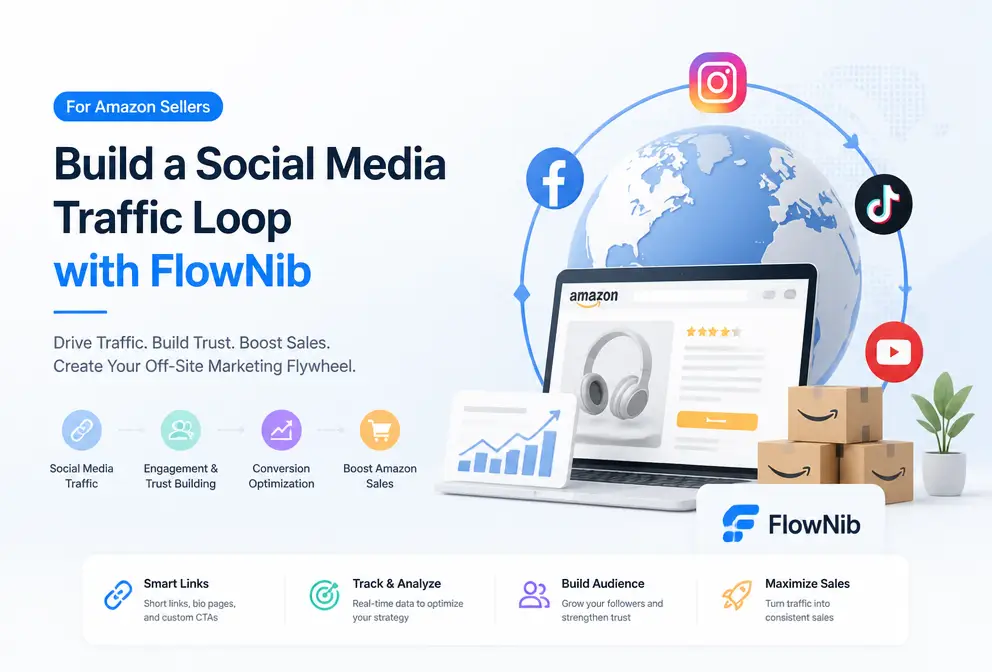
Amazon’s internal ad spend now accounts for over 15% of revenue on average in 2025, and it’s not uncommon for sellers in certain categories to see ACOS exceed 30%. The plateau of internal traffic dividends is no longer a forecast—it’s a daily reality felt when refreshing the ad dashboard. More sellers are turning to social media channels to capture external traffic, but most stumble at this stage. Content is created, but accounts are updated sporadically; switching between platforms leads to formatting chaos; weeks of effort yield no clear conversion attribution in the backend. Off‑platform traffic becomes a vague accounting line, and teams conclude: social media is useless.
The problem isn’t the social media channels themselves; it’s the lack of a standardized publishing process. This article uses a real cross‑border seller case to illustrate: a U.S. marketplace seller started trying social media traffic in 2023, manually managing eight accounts, and after three months was forced to quit—each post required platform switching, format tweaking, character checks, and timing, consuming more than 1.5 hours per day for negligible output. By mid‑2025, after adopting an automation tool to restore publishing cadence, off‑platform visitor share rose to 12% during the Q4 big‑sale season. The key change wasn’t a sudden jump in content quality, but a shift from irregular to stable publishing frequency.
Why Amazon Sellers Must Build Their Own Off‑Platform Social Media Assets
Internal traffic competition is squeezing profit margins. Relying solely on platform distribution hands over brand growth control. Social media accounts are long‑term brand assets—once content is posted, it lives in consumers’ feeds and profile pages, independent of Amazon’s search algorithm fluctuations. Combining an independent site with social media offers a much higher growth ceiling than a pure‑platform approach.
The core value of a social media account isn’t as a sales channel but as an entry point to private traffic. Amazon stores cannot directly acquire customers; consumers search, browse, and add to cart inside Amazon, but brands cannot proactively reach them—comments and Q&A are one‑way communications. On Instagram, Facebook, or TikTok, you can continuously engage potential customers, build brand awareness and trust, and ultimately funnel them via links to your Amazon store or independent site for purchase.
Social media is a path, not a destination. The chain from social media content to an Amazon order can be broken down into: user sees content on social → becomes interested → clicks link → lands on a landing page or brand storefront → adds to cart → converts. Without this path, off‑platform traffic remains scattered likes and comments that never translate into revenue.
Standardized Production of Social Media Content: One Creation, Full‑Platform Coverage
A common mistake among cross‑border sellers is copying the same piece of content to every platform. Instagram prioritizes visuals, LinkedIn values professional depth, TikTok focuses on rhythm and editing—using the same copy unchanged across platforms usually slashes engagement. Data shows that after platform‑specific adaptation, engagement can increase by over 40%.
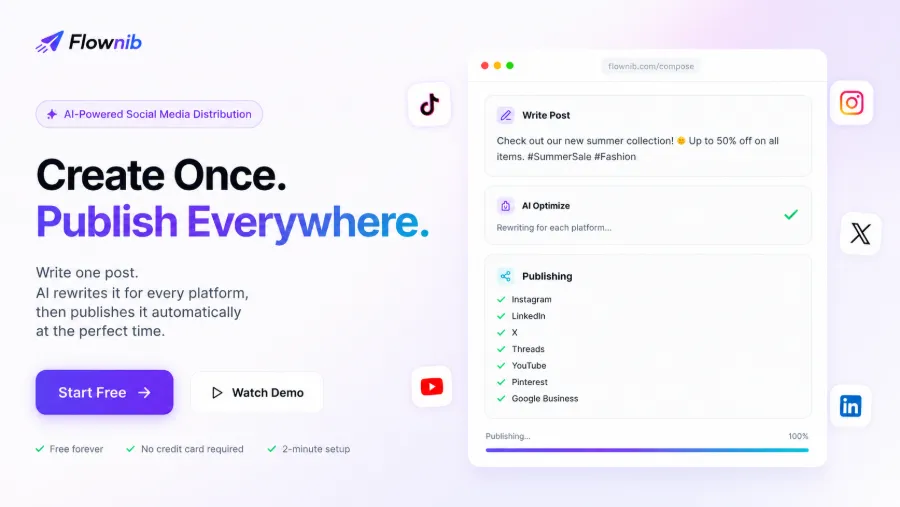
The correct approach is to set up a standardized production pipeline: create core material once → automatically rewrite/adjust for each platform → format and tone per platform. This sounds simple, but many sellers get stuck at the “rewrite” step—manually crafting a version for ten platforms multiplies the workload tenfold. Keep product highlights and brand tone in the master asset, then let tools handle platform adaptation.
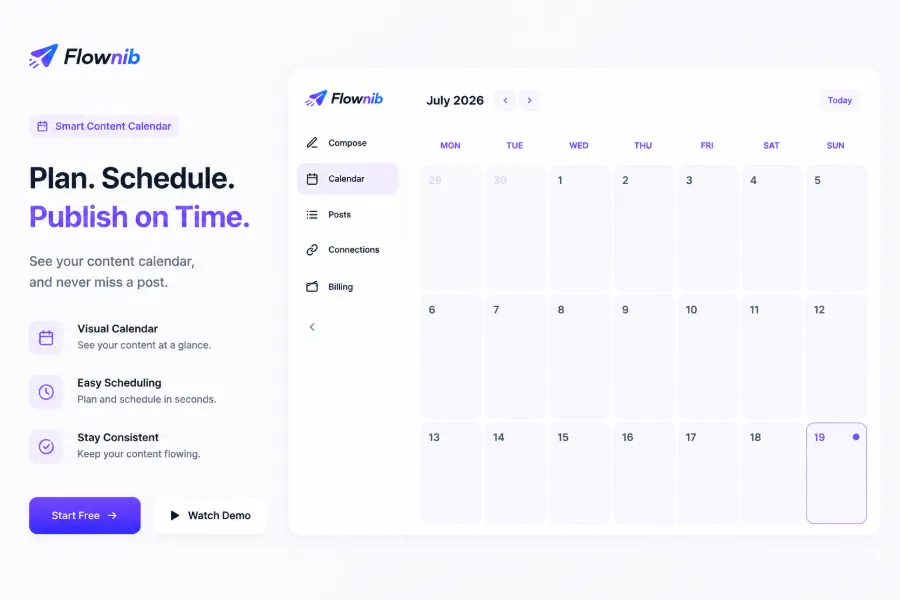
A content calendar is also essential. Plan promotional nodes (Prime Day, Black Friday, back‑to‑school) and product launch cadence ahead of time to avoid last‑minute scrambling. Spending two hours each month to set next month’s topics and dates is far more efficient than spending half an hour daily deciding today’s post. See the full‑funnel shoe brand independent‑site case study for how to link social media content with an independent site and Amazon storefront.
Many cross‑border sellers overestimate creative ability and underestimate the difficulty of sustained publishing. Content scoring 70 points but posted five times a week outperforms content scoring 90 points but updated only three times a month. Stable output requires a reusable production process, not just personal inspiration.
How Automated Distribution Boosts Publishing Efficiency by an Order of Magnitude
The real pain of manual multi‑platform publishing is that each post requires platform switching, image resizing, character‑limit checks, and audience selection—at least five minutes per post. Managing eight accounts (e.g., Amazon U.S., Europe, sub‑brands) with three daily posts consumes over 40 minutes just on publishing, not counting creation and review. The U.S. seller mentioned earlier persisted with this manual method for three months before giving up.
After outlining manual‑publish pain points, introduce an automation tool to shorten the workflow. The tool should let you publish to all platforms from a single page without logging in to each one. Manual publishing vs FlowNib AI distribution: how much time overseas teams can save shows that AI distribution can save teams over 15 hours per week of publishing work.
Flownib’s AI rewriting feature resolves a common paradox: maintaining brand tone while adapting to each platform’s style and character limits. For example, LinkedIn requires a more formal tone, while TikTok calls for colloquial short sentences. AI rewriting isn’t a simple summary; it reorganizes the content structure to fit the target platform’s context. Then, one‑click distribution can publish synchronously to ten platforms. A unified dashboard manages multiple accounts on the same platform (e.g., Instagram for U.S. and Europe) and eliminates frequent account switching. See the article 2026 Cross‑Border Content Stack: SEO, AI Video, and Automated Distribution Working Together for similar tool combinations.
The tool itself doesn’t create content, but it solves the biggest obstacle: “publishing consistency.” Automation’s value isn’t in creative upgrades but in raising publishing frequency from 2–3 times a week to more than once daily, without draining limited team time and energy.
Traffic Closed Loop: A Trackable Path from Social Media Content to Amazon Orders
Social media traffic isn’t random posting. Without tracking, you can’t optimize. Many sellers flood social media with content but don’t know which posts drive traffic or which content spurs adds to the prevents optimization and makes it impossible to prove off‑platform traffic value to the team or leadership.
A traceable path requires three steps: short links, UTM parameters, and landing‑page design. Every social media post link should include UTM parameters (e.g., source=instagram&medium=social&campaign=summer_sale) so Google Analytics or backend systems can differentiate traffic sources. Data shows that social posts with UTM tracking have an average cart‑add rate about 32 % higher than untracked posts—because you know which channel performs well and can allocate budget accordingly, whereas blind testing wastes money.
Short links are also crucial. Long URLs look messy on social platforms and can cause anchor‑text issues; short links boost click‑through rates and tracking accuracy. Landing pages should not jump directly to product detail pages—guide users to a brand storefront (Amazon Storefront) or an independent‑site campaign page where they can view multiple products, increasing the chance of adds. See the analysis of tracking‑tool choices in FlowNib vs Buffer vs Hootsuite: 2026 global brand AI scheduling tools comparison review.
Off‑platform social media ROI may not manifest as immediate conversion during peak sales periods; it often appears as brand search and repeat purchases during off‑peak times—something most sellers fail to track. When a user sees your social content in a slow season, doesn’t buy immediately, but later searches your brand on Amazon and orders, that conversion is usually attributed to internal search, not social media. By building a complete traffic closed loop and using content calendars and distribution‑backend feedback to adjust strategy, you can uncover these hidden values.
Automation tools can provide publishing records and cross‑platform, cross‑account logs. When you use a tool like Flownib, each post automatically generates a record containing content version, publish time, and platform distribution—these data can be cross‑analyzed with backend conversion data to reveal the true path from content to order. Buffer: social media management tool for everyone offers similar analytics, but if you need to consolidate data across multiple brands or sub‑accounts, a unified dashboard is more efficient.
Ultimately, a traffic closed loop isn’t a one‑off build; it’s an ongoing iterative process. From content creation to automated distribution, then data tracking and strategic adjustment, every step is part of the loop—missing any makes off‑platform traffic ROI fuzzy.
FAQ
Which platform should Amazon sellers prioritize for off‑platform social media traffic?
Start with Instagram and TikTok; their visual and short‑video formats naturally showcase products, and they have high user stickiness and engagement. For B2B or high‑ticket categories, LinkedIn is more suitable. Begin with 1–2 platforms, maintain consistent output for three months, then expand.
Will using an automated distribution tool make content look identical across platforms?
If the tool only copies and pastes, yes. Good tools provide AI rewriting or manual adaptation options, allowing you to preview and tweak each platform’s version before publishing. The distribution tool handles efficiency; content differentiation comes from creating a solid core asset and relying on the tool’s rewriting capabilities to fit each platform’s context.
I’m a one‑person Amazon store operator; off‑platform social media feels overwhelming. What should I do?
Start with a single platform, dedicating 15 minutes daily to content creation and 3 minutes to publishing. Solve the “consistent posting” problem first, then focus on “quality posting.” Use an automation tool to shrink publishing time from 1.5 hours to 5 minutes, freeing energy for content planning.
How should I set UTM parameters without affecting the Amazon link’s redirect experience?
UTM parameters don’t affect Amazon’s page redirects, but Amazon’s official short links (e.g., amzn.to) may strip some parameters. Use an independent site or brand storefront short link as a middle layer; add UTM parameters on that landing page so tracking isn’t lost.
How can I tell whether an order came from off‑platform social media?
The simplest method is to embed a unique discount code in the social link; users enter it at checkout. Alternatively, combine UTM parameters with Amazon Attribution (Amazon’s attribution tool) to view clicks and conversions per channel. For independent‑site traffic, Google Analytics will directly show source and conversion paths.
Share Article