How to Publish to Multiple Social Media Platforms at Once: Practical Path for Cross‑Platform Synchronous Publishing
It’s 9 a.m.; the e‑commerce ops team needs to push a new promotional post live. Four tabs—X, Instagram, LinkedIn, TikTok—are opened sequentially in the browser. The operator first trims the over‑length characters on X, then adjusts the image ratio and rewrites hashtags on Instagram, and when switching to LinkedIn discovers the tone is too colloquial and has to rework it. By the time everything is posted, more than an hour has passed, and the publishing times across platforms differ by almost two hours.
The core bottleneck of cross‑platform publishing has never been “what to write,” but how to distribute the same content efficiently and reliably to every platform. Character limits, content formats, hashtag conventions—each platform has its own rules. The time cost and risk of mis‑posting when maintaining each platform manually are far higher than most teams anticipate.
Why Manual, Platform‑by‑Platform Publishing Can’t Scale
Content constraints vary dramatically across platforms. X demands ultra‑concise text, Instagram focuses on images and short videos with hashtags that can exceed ten, LinkedIn leans toward a professional tone and is more restrained with links and hashtags, and TikTok is built around vertical videos. The same promotional piece ends up with four distinct versions.
Copy‑pasting isn’t just slow. The ops team spends about 15 hours per week on repetitive rewrites and manual platform posting, not counting the time spent refreshing each backend to confirm status. A subtler risk is format mismatches that cause display glitches—links get collapsed on one platform, hashtags are hidden when they exceed limits, @mentions are malformed and fail to notify. These errors often surface only hours after posting, by which time the traffic window has closed.
| Platform | Character Limit (approx.) | Primary Content Types | Publishing Tips |
|---|---|---|---|
| X | 280 characters | Short text, images, videos | 1–2 hashtags recommended; links tend to be collapsed |
| 2,200 characters | Images, Reels, carousel | Many hashtags allowed; strict image aspect ratios | |
| 3,000 characters | Long posts, image‑text, documents | Use hashtags sparingly; review can be time‑consuming | |
| TikTok | 2,200 characters | Vertical short videos | Relies heavily on hashtags and trending audio |
A e‑commerce team racing to meet a promotional deadline edited the same post manually on each platform. X’s character overflow forced three rounds of trimming, LinkedIn’s review delayed publication, and the final publishing times spanned nearly two hours, missing the concentrated traffic window and yielding conversions well below expectations. This case shows that the cost of manual, platform‑by‑platform maintenance isn’t just time—it’s also the misaligned timing and inconsistent content across platforms.
Three Technical Paths for One‑Click Multi‑Platform Publishing
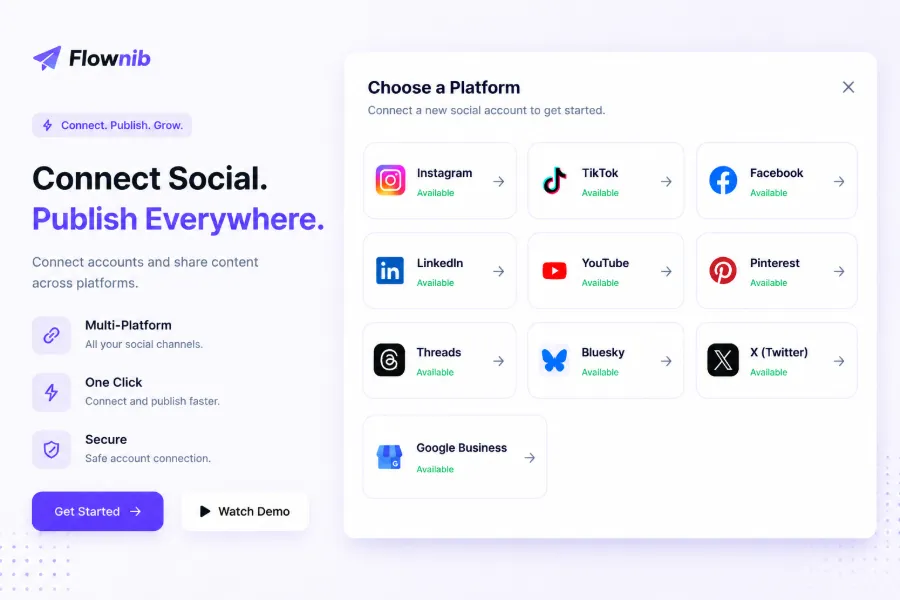
Built‑in cross‑posting features – e.g., syncing Instagram content to Facebook. Simple, no extra cost, but limited to platforms within the same corporate family and with almost no format adaptation.
Third‑party SaaS social‑media management tools – such as Hootsuite, Buffer. They support unified management, content calendars, and basic scheduling, ideal for small‑to‑medium teams to get started quickly. The downside is subscription costs that rise with the number of accounts, and some platforms lack full feature support.
Deep integration via official APIs – directly connecting through each platform’s open API. Up to ten major platforms can be linked, with API uptime reaching 99.99 %. This method is the most reliable in terms of stability and compliance but requires technical configuration. API documentation is available in resources like the Meta Developer Docs. For teams that need long‑term, high‑volume publishing with stability guarantees, direct API connections are usually the best investment. You can also consult the 2026 Best AI Social Media Management Tools Comparison for decision guidance.
Building a “Create Once, Distribute Everywhere” Publishing Workflow
Shift the workflow from “manual per‑platform maintenance” to “create once, distribute everywhere.” The key is letting AI automatically rewrite the same copy according to each platform’s style and character limits. Write a base copy, and the system generates Instagram hashtags, compresses the text for X, and adjusts the tone for LinkedIn—eliminating the need for manual rewrites.
Scheduled publishing is the second step. Active periods differ across platforms; setting individual release times yields better exposure than a single unified time. For guidance on optimal active periods, see the 2026 Instagram Best Posting Times Analysis, which offers data‑driven time slot recommendations.
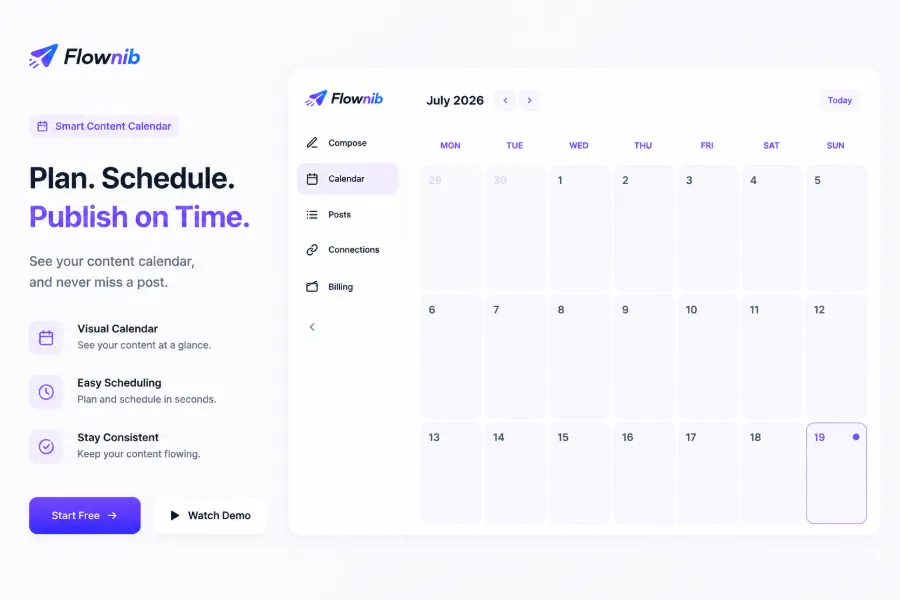
A content calendar that centrally manages all platform schedules and logs is essential for sustainability. The calendar provides a clear view of upcoming slots for each platform, and historical posts are stored in one place for easy performance review. Account onboarding takes about 2 minutes on average, and over 500 k posts have already been published via such automated workflows.
In my tool selection, after testing several options, I kept Flownib in the current workflow for cross‑platform automatic rewriting and distribution. It consolidates multi‑account management, a unified publishing queue, and a content calendar into a single dashboard, eliminating the cost of switching between tools. The step‑by‑step setup is documented in the One‑Click Adaptation to Ten Platforms Tutorial.
For teams serving multiple markets, multilingual content adaptation is another necessary dimension. Publishing the same English copy directly to Japanese or German audiences often underperforms. Letting AI translate and localize while rewriting saves massive duplicate effort. Once this workflow runs smoothly, Flownib’s multi‑account and unified queue mechanisms make the team’s publishing cadence far more controllable, no longer relying on a single person manually monitoring each backend.
Three Key Points for Long‑Term, Stable Multi‑Platform Publishing
API permissions and token configuration – the foundation for sustained operation. Direct API connections can achieve 99.99 % uptime, but only if permissions are set correctly. Tokens expire, and platform policy changes can affect scopes, so regular checks and updates are mandatory. Skipping this step leads to frequent pitfalls later.
Failure and rate‑limit handling – each platform imposes its own limits on posting frequency and content duplication. Bulk publishing may trigger API errors or temporary throttling. Mature tools provide retry mechanisms and failure logs to pinpoint which content and which platform failed. These details are crucial when linking automated workflows with social‑media publishing.
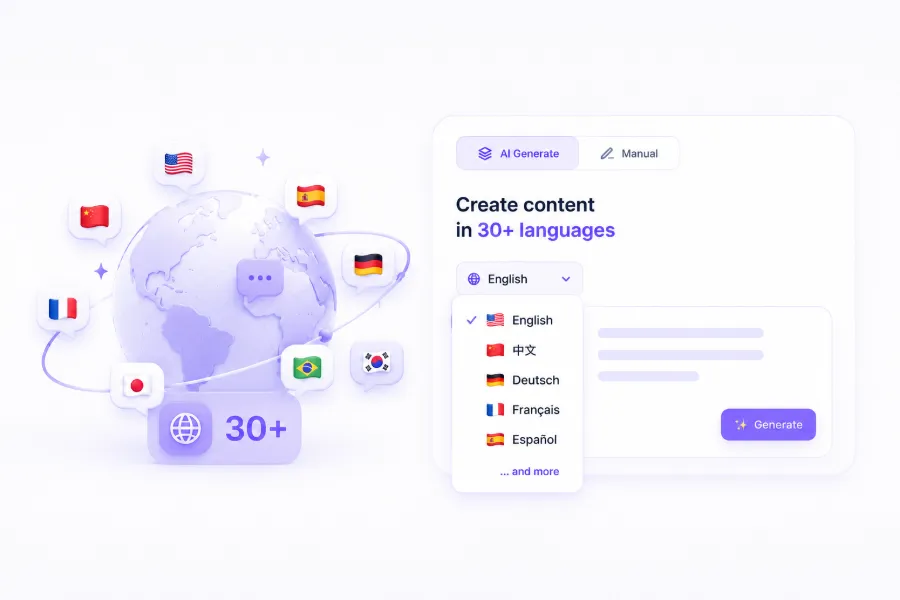
- Regional platform rule differences – global audiences mean varying platform habits, hashtag popularity, content‑review strictness, and feature availability. Content can be auto‑translated, but publishing strategies must be tailored to each market. For deeper insight, see the analysis in Why Automated Workflows Also Need Social‑Media Integration.
Frequently Asked Questions (FAQ)
Will publishing the same content to multiple platforms cause the platforms to flag it as duplicate and limit it?
Generally no. Rate‑limit rules target abnormal behavior within a single platform. Cross‑platform duplication doesn’t violate policies. However, if multiple accounts under the same platform post identical content, it may trigger spam detection. It’s advisable to add slight variations between accounts on the same platform.
The same piece of content has different character limits, image dimensions, and hashtag requirements across platforms; how should I handle this?
The safest approach is to let the tool automatically adapt to each platform’s rules. X needs compression to ≤ 280 characters, Instagram can keep the full copy with many hashtags, LinkedIn prefers a more formal tone. When doing it manually, write the full version first, then trim per platform, and verify image dimensions separately.
I don’t want to pay for a tool—are there low‑cost ways to achieve multi‑platform sync publishing?
You can use built‑in cross‑posting (e.g., Instagram → Facebook) or lightweight automation services like IFTTT or Zapier to build simple pipelines. These options are free or cheap but have limited platform coverage and weaker format adaptation. Once you exceed three or four accounts, the time saved by a paid tool usually outweighs the subscription cost.
Share Article