
How to Repurpose Content Across Different Social Media Platforms: A Workflow from Core Content to Multi‑Platform Distribution

A cross‑border e‑commerce operations team’s new product announcement usually needs to be posted separately on Instagram, LinkedIn, X, and TikTok. In practice, operators often have to manually rewrite and paste the content repeatedly, switching back and forth between multiple tabs. After a round of posting, the tone varies across platforms, formatting errors appear, and half a day is wasted on the logistics.
Content repurposing is not simply copying and pasting the same paragraph; it is reorganizing the same core message according to each platform’s format, character limits, and audience expectations. The real challenge lies not in creativity but in the process and tools.
Why “Copy‑Paste” Style Content Repurposing Is Becoming More Difficult
The format differences among platforms are now too large to ignore. Instagram relies on image carousels and visual storytelling, X is limited to 280‑character short text, LinkedIn demands professional depth, and TikTok and YouTube are purely video‑centric. The same sentence must be presented completely differently on each platform.
Audience expectations are also diverging. LinkedIn users want industry judgments and business insights; X users chase timeliness and buzz; Instagram users look for visual aesthetics. Posting a light‑hearted tone written for X directly on LinkedIn will be instantly noticed as off‑brand by professional clients.
The efficiency loss from manual copy‑pasting is tangible. Internal statistics show that about 40 % of social‑media work time is actually spent on copying, pasting, and moving content between platforms. This means a five‑person team spends two days a week on mechanical tasks instead of content creation and strategic thinking. Time is eaten up by distribution, and creative output naturally declines.
Core Workflow for Repurposing: First Extract the “Core Content,” Then Adapt per Platform
The correct approach is to first produce a reusable “core content”—the core message, data, and claim. Core content is a complete but neutral piece that isn’t tailored to any specific platform; it carries the brand’s essential message. Then identify which elements must be retained and which are secondary and can be dropped.
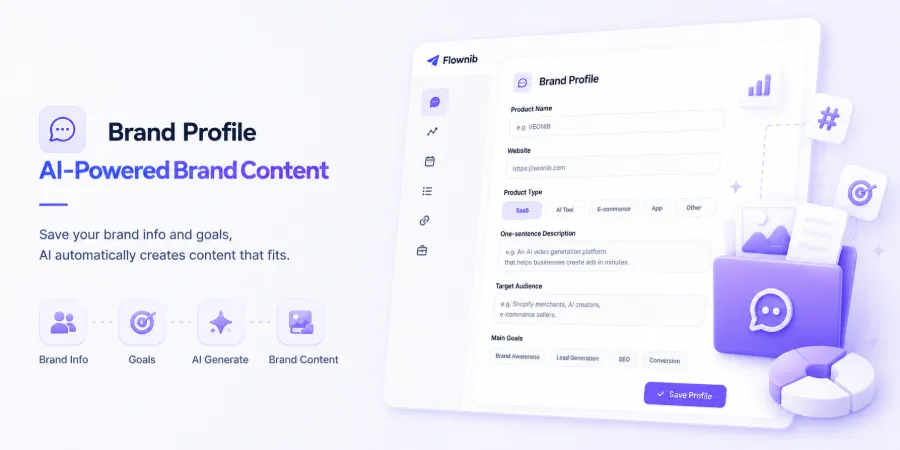
Adaptation has two layers. The format layer handles character limits, image specs, and video length; the tone layer addresses audience expectations and platform culture. Format adaptation is relatively mechanical; tone adaptation truly affects content performance. On LinkedIn you need to tone down colloquial language, on Instagram you must highlight visual hooks, and on X you must trim down to the core claim.
One piece of core content can be turned into 4–6 platform variants, rather than forcing coverage of every platform. Instead of posting on ten platforms with half‑hearted effort, focus on three or four primary platforms and adapt carefully. The human review step cannot be skipped—no matter how fast AI rewrites, a final human check is still required before publishing, especially for brand tone and factual data.
For choosing platform priority, you can refer to the Data‑Driven Selection of Main Platforms for Cross‑Border E‑Commerce, which ranks platforms by audience distribution and conversion potential. When implementing this workflow, also consider the Upgrade Path for Marketing Team Social‑Media Workflows to gradually replace the old manual process.
Key Adaptation Points and Format Differences for Major Platforms
Breaking down the changes needed for each platform makes the differences clearer. Instagram focuses on visuals and carousels, X on timeliness and character count, LinkedIn on professional depth, YouTube on video structure and the first few seconds, TikTok on short‑paced rhythm. Each platform’s focus drives a different adaptation strategy.
| Platform | Content Form | Character/Length Limits | Audience Expectation | Main Adaptation Focus When Repurposing |
|---|---|---|---|---|
| Image carousel, Reels | Up to ~20 images per carousel | Visual storytelling, aesthetic experience | Re‑order visual assets, condense copy | |
| X (Twitter) | Plain text, short images | 280 characters per post | Timeliness, buzz, controversy | Compress to core claim, drop filler |
| Long posts, image + text | No strict character limit | Professional judgment, industry insight | Add background & data, formalize tone | |
| YouTube | Long videos, Shorts | No strict length limit | In‑depth content, information density | Rewrite script, optimize first 5 seconds |
| TikTok | Short videos | Typically 15–60 seconds | Fast rhythm, entertainment | Split information points, speed up pacing |
X posts are limited to 280 characters; anything beyond must be split or trimmed. Instagram carousels can contain up to ~20 images; when material is scarce, you actually need to be more selective. YouTube’s first five seconds determine retention, so you cannot simply reuse another platform’s copy structure.
Visual content adaptation can follow the Instagram Business Operating Guidelines for asset specifications, avoiding publishing failures or unwanted cropping.
Reducing Repurposing Cost with Automation: AI Rewrites and One‑Click Publishing
The bottleneck of manual per‑platform posting is repetitive labor. AI rewriting can rearrange core information according to each platform’s style, character limits, and audience preferences, automatically generating multiple platform variants from the core content. Leading automation tools can configure ledger integration in about 2 minutes, with API uptime at 99.99 % and coverage of 10 platforms.
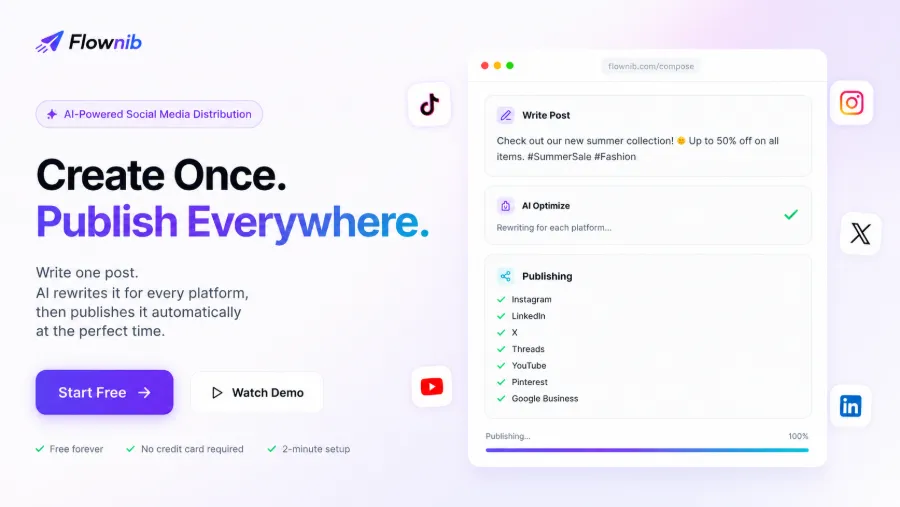
When evaluating automation tools, Flownib serves as an example of this workflow. It merges AI rewriting with official API distribution into a single pipeline: write the core content once, AI generates platform‑specific variants, then the official API publishes them with one click. This eliminates tab‑switching and manual pasting time, but not the human review step.
However, the boundary between automation and human oversight must be clear. One team deployed a fully automated rewrite solution without any human review and, within two weeks, observed brand tone imbalance across platforms—LinkedIn still used X’s lighthearted tone, causing professional clients to doubt the brand, with comments and conversion rates dropping noticeably. The team reverted to a semi‑automatic “AI rewrite + human spot‑check” process, restoring a consistent brand image.
This case shows that AI rewriting solves efficiency problems, not quality control. The discussion can extend to breaking the silos of social‑media operations with a unified tool—when a team uses multiple SaaS tools, fragmented accounts and data silos often consume more time than content creation itself. For video scheduling and publishing rhythm, the YouTube Official Blog Publishing Recommendations offer useful best practices.
Making Repurposing Sustainable: Scheduling, Content Calendars, and Multi‑Account Management
Timed publishing and optimal posting times turn repurposing from a one‑off task into a sustainable operational rhythm. Scheduling enables 24⁄7 unattended publishing, reducing manual monitoring costs. A content calendar visualizes scheduling and history, while unified multi‑account management lets the team maintain the status of multiple platforms from a single interface.
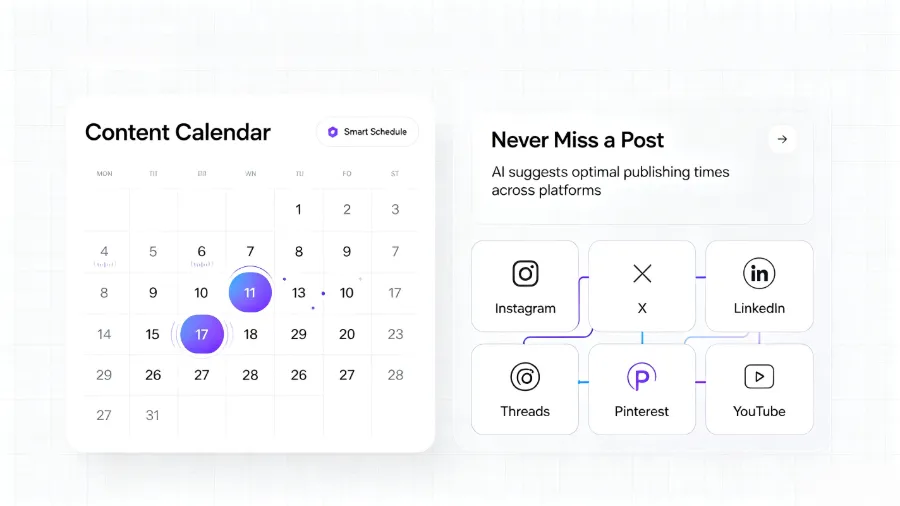
For teams targeting multiple overseas markets, maintaining publishing rhythms is more complex. Audience activity windows differ across time zones, and the same content may need to be scheduled separately per market. A content calendar’s value lies in making the entire scheduling process visible, preventing missed or duplicate posts.
Multi‑account management is especially crucial in cross‑border scenarios. A brand may operate accounts for several regions, each with its own audience and tone. A unified interface reduces time lost switching accounts and lowers the risk of posting to the wrong account. For emerging brands with limited budgets, low‑cost global operations can refer to the Low‑Cost Global Social‑Media Operations Strategy for Emerging Brands, which prioritizes core market publishing quality when resources are scarce.
FAQ
Q1: When repurposing content, should the same text be posted on every platform?
No. The character limits, formats, and audience expectations differ significantly across platforms, making identical text ineffective everywhere. A concise 280‑character expression works on X but feels too sparse on LinkedIn; Instagram needs visual hooks, so pure text performs poorly. At minimum, perform format‑level adaptation; tone‑level adaptation depends on brand voice.
Q2: When material is limited, how to decide which platform to prioritize for repurposing?
Rank by audience distribution and conversion potential. First identify the platform where target customers are most active, then choose the format accordingly—B2B businesses prioritize LinkedIn, visual products prioritize Instagram, time‑sensitive information prioritizes X. With limited material, it’s better to do a deep dive on two or three platforms than to post half‑heartedly on ten.
Q3: Will using AI automatic rewriting cause the content to lose brand tone?
It can, depending on whether a human review step is included. AI can adjust language to platform style, but brand tone still requires human oversight. Adopt a “AI rewrite + human spot‑check” semi‑automatic workflow, focusing on paragraphs involving brand claims and factual data. Fully relying on AI without review can lead to tone imbalance within two weeks.
Q4: How should the publishing rhythm be arranged for repurposed content?
Avoid publishing the same content simultaneously on all platforms. Audience activity windows differ, so a single timestamp can cause some platforms to receive insufficient exposure. Schedule each platform separately; a visual content calendar helps unified management. For teams serving multiple time zones, market‑specific scheduling is more effective than a single global posting time.
Share Article