
Must-Read for Cross-Border E-commerce Sellers: Building and Iterating Global Social Media Closed-Loop Marketing

A single new product must appear on Instagram, TikTok, LinkedIn, and Pinterest at the same time. Operators have to repeatedly switch between each platform’s backend, copy the same copy, edit it to fit each platform’s character limits, and time it for the North American prime posting window. After three months of this process, people are exhausted while account growth may still be stagnant.
The so‑called “closed‑loop marketing” isn’t just dumping content onto every platform once and calling it a day. It’s a cycle: create → distribute → track → feed back. Publishing isn’t the end; the data must flow back to the start to inform the next round of topics and timing. This fundamentally differs from the old “post everywhere” approach— the former builds account authority and conversion data, while the latter merely drains operational effort.
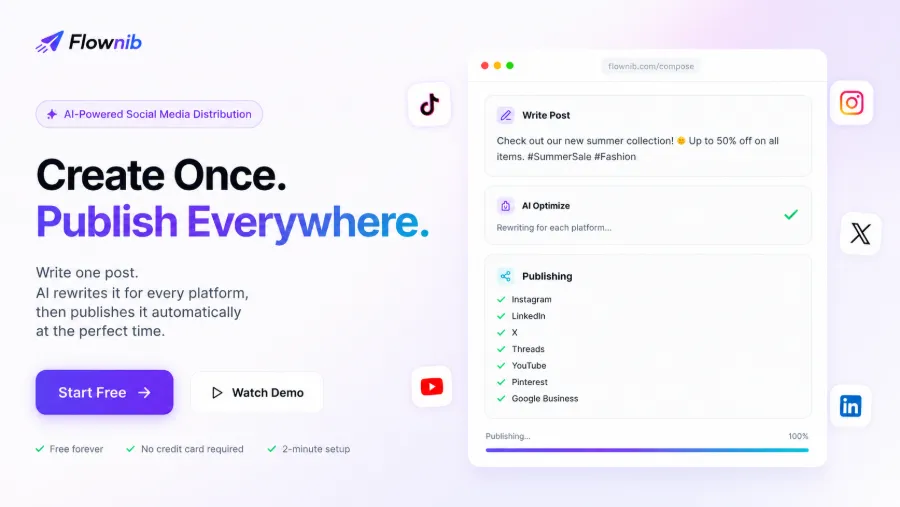
Why Cross‑Border E‑commerce Needs a “Closed Loop” Instead of “Posting Everywhere”
A cross‑border team typically manages more than ten overseas social accounts. Instagram is visual‑driven, TikTok cares about the first three seconds, LinkedIn demands professional restraint, and X (formerly Twitter) values high‑frequency real‑time updates. The same product selling point requires four completely different expressions across these platforms. Manual distribution means switching back‑ends four times per post, copying and pasting four times, and then adjusting format and tone for each.
Time‑zone mismatches are even more draining. 3 PM in North America is 3 AM domestically, so to hit the prime posting window operators either stay up late or schedule all platform content a day in advance—only to discover that a platform has changed its character limit or a post’s format is broken.
The differing content formats double the maintenance cost. An Instagram post may need five images, TikTok requires a separate short video, LinkedIn needs a long article, and Pinterest calls for a vertical image redesign. These cannot be solved by copy‑paste; each platform is an independent piece of work.
So the issue isn’t “not posting enough” but “stopping after posting”. Once content is out, who’s viewing it, who’s converting, which platform truly generates inquiries—if this data doesn’t flow back, the next round remains blind. That’s why the “one creation, publish everywhere” concept deserves serious consideration—it compresses the distribution step, freeing time for tracking and feedback. For concrete low‑cost scaling tactics, see this practical guide to low‑cost, platform‑wide batch seeding.
Set Up the Publishing Hub in Two Minutes: From One Draft to Ten Platforms
I’ve seen an independent‑site seller who initially manually copied the same product copy across five platforms. After three months, account growth stalled and conversions were low. The post‑mortem revealed two issues: always missing the North American prime posting window, and completely inconsistent content styles across platforms—Instagram felt like a hard sell, LinkedIn too casual. Lots of posts, but none hit the platform’s content context.
Later he switched tactics: write a single draft and let AI rewrite it for each platform’s style. This isn’t translation; it’s adapting format and context. The same line “Summer new arrivals 50% off” needs a punchy, brief version on TikTok, while LinkedIn must explain product value and use cases. AI rewriting does exactly that—maintaining brand tone while tailoring to each platform’s audience expectations.
After rewriting comes preview and scheduling. You can set times manually or let the system automatically choose based on each platform’s audience activity patterns. Then a single click distributes to all connected accounts simultaneously. The whole setup takes about two minutes, covering ten major platforms.
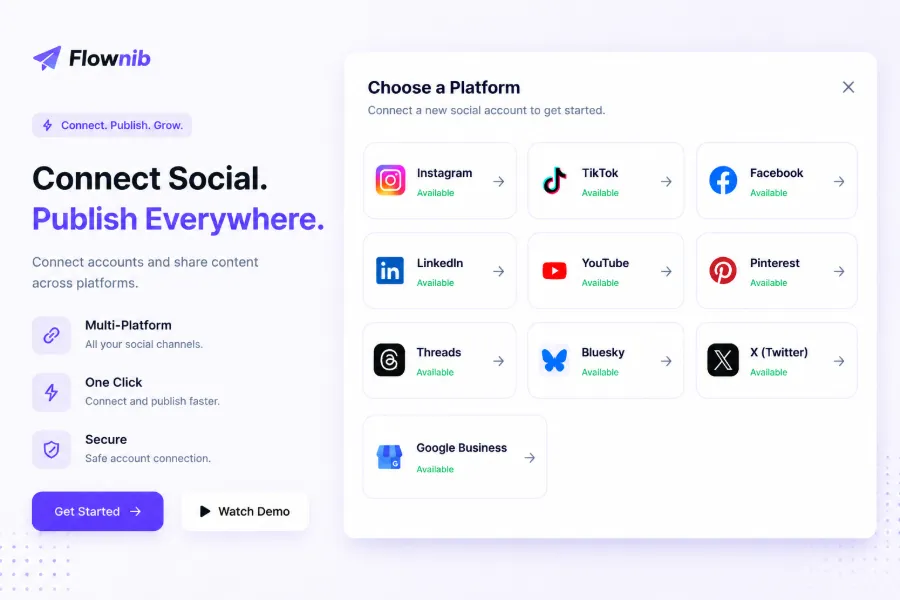
In this workflow, tools like Flownib are valuable because they centralize distribution into a single entry point. They connect to platforms via official APIs rather than relying on third‑party plugins that may break at any time. The stability of official APIs is documented; for example, TikTok publishes a complete developer documentation for integrators.
The adaptation logic for each platform can be roughly understood as follows:
| Platform | Main content form | Posting habits & character limits | Typical value for cross‑border e‑commerce |
|---|---|---|---|
| Images + captions & Reels | Visual focus, hashtags | Grass‑root promotion & new product exposure | |
| TikTok | Short videos | Fast pace, first 3 seconds crucial | Youth traffic & viral hits |
| Long articles & image posts | Professional tone, restrained | B2B & wholesale customers | |
| X | Short text | High‑frequency real‑time | Industry topics & public opinion |
| Image pins | Long-tail search traffic | Niche traffic acquisition |
Multiple Accounts and Multiple Languages: How Global Teams Coordinate
Brands operating multiple accounts across countries is the norm. One US site, one European site, one Southeast Asian site—each with its own Instagram and TikTok. When accounts multiply, information becomes fragmented—what was posted on which account last week, where a piece of material was used, all relying on memory.
A unified dashboard solves this. All platform accounts are managed from a single interface; publishing records, pending content, and account statuses are instantly visible. In team collaboration, no need to repeatedly ask “Has this been posted?” or worry about two people operating the same account simultaneously.
Multiple languages add another layer of complexity. Content for different languages must be localized, but brand style must stay consistent. AI rewriting here isn’t translation; it converts the same brand tone into versions that fit local expression habits. English humor can’t be directly translated into Japanese, and German formality isn’t suitable for the Spanish market. For deeper details on multilingual synchronized publishing, see this article on global simultaneous publishing from a single creation.
For small teams, starting with a free tier is sensible. The free plan supports three social accounts and six posts, no credit card required. First get the workflow running, confirm the distribution method fits you, then consider upgrading. The cost of trial and error is low, so don’t over‑invest at the outset.
Bring Data Back to the Starting Point: Turn Publishing into an Iterative Closed Loop
The key to the closed loop is the final step: data feedback. Flownib’s content calendar logs each post’s performance across platforms—what’s published, what’s pending, which performed well—all in one view. I habitually spend half an hour each week reviewing the calendar to see which platform’s posts actually generated inquiries and conversions, not just likes.
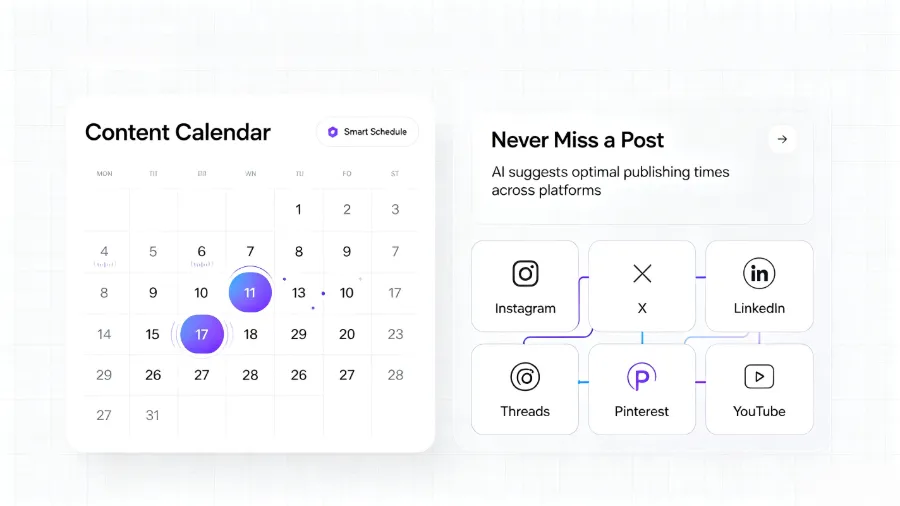
An often‑overlooked point: platform algorithms value a steady, continuous posting rhythm more than the polish of a single piece of content. Regular posting boosts account authority, often delivering more long‑term value than occasional viral hits. So rather than agonizing over the wording of a single post, ensure a consistent weekly publishing schedule.
Publishing records can also inform topic selection. If, for several weeks, Pinterest pins drive significantly more external traffic than other platforms, the next round of content should tilt toward that direction. The same applies to timing; the records reveal which time slots perform best, rather than relying on gut feeling.
The time saved from manual scaling to automated distribution is evident. Official APIs have 99.99% uptime, and platforms have collectively posted over 500,000 posts, proving stability only after scaling. Teams that spent two hours daily on manual distribution now spend just half an hour weekly reviewing the calendar, reinvesting all saved time into content itself. For a more complete roadmap on upgrading team workflows, see this guide to marketing team automation workflow upgrades. The architectural logic of closed‑loop marketing can also be explored in this breakdown of cross‑border AI full‑traffic closed loop architecture.
FAQ
Cross‑border e‑commerce runs multiple overseas platforms simultaneously, and content formats differ greatly—how to handle them uniformly?
Start with a core draft, then adapt it to each platform’s style. Instagram emphasizes visuals and hashtags, LinkedIn requires professional restraint, and TikTok must capture attention in the first three seconds. AI rewriting isn’t translation; it converts the same selling point into expressions that meet each platform’s audience expectations while keeping the brand tone consistent.
For audiences in different countries and languages, should the content stay the same or be individually localized?
Rewrite separately, but keep the brand style unified. English humor can’t be directly translated into Japanese, and German formality isn’t suitable for the Spanish market. Localization is an adjustment at the expression level; the core selling points and tone must remain cohesive.
How can small sellers without a dedicated operations team maintain a stable platform posting frequency?
Start with free tools, get the workflow running, then upgrade. Set a fixed weekly publishing schedule and manage it with a content calendar to avoid posting three items today and none next week. Platform algorithms favor a steady, continuous rhythm; regular posting offers more long‑term value than occasional bursts.
How to determine which platform truly drives conversions rather than just gaining followers?
Use publishing records to backtrack, not just likes. The platform whose posts generate inquiries, external clicks, or actual sales should become the focus of your content. The same applies to timing; records reveal which time slots yield the best data.
Share Article