
Manual vs Automation: A 30‑Day Experiment of a 3‑Person Overseas Team — How Big Is the Gap

Experiment Design: 3‑Person Team, 30 Days, Two Workflows
Last autumn, a three‑person overseas micro‑team I belong to decided to do something many people have thought about but never had time for—spend a month manually measuring the real gap between manual publishing and automated publishing.
We operate five social platforms: Instagram, X (Twitter), LinkedIn, Facebook, and Pinterest. The team is divided into a content creator, a publisher/engager, and a data‑strategy analyst. It sounds reasonable, but the daily reality is far more tedious than imagined.
The experiment groups are simple. Manual group: follow the traditional method—write the content, then log into each platform one by one, copy‑paste, adjust formatting, add images, check, and publish. Automated group: use a tool to create once, automatically rewrite for each platform, and push with one click. As for control variables, each group publishes 10 pieces of content per day, with the same amount of content, the same platforms, the same time slots, for 30 days.
The goal is clear: time consumption, publishing success rate, content consistency, and team fatigue. No complex metric system—just a few down‑to‑earth operational indicators.
Time Consumption Comparison: Manual vs Automated
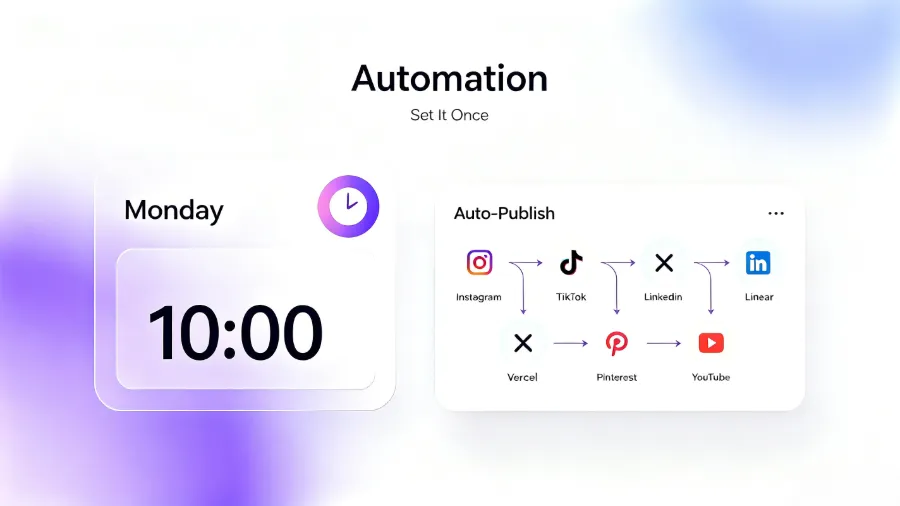
The manual group’s time ledger is very clear. Ten pieces of content per day; each requires logging in, copying‑pasting, adjusting format, preview checking—average 15 minutes per piece. That alone consumes 2.5 hours just on the publishing step each day. This doesn’t even count interruptions like platform verification codes, image size mismatches requiring re‑crop, or broken links that need manual fixing.
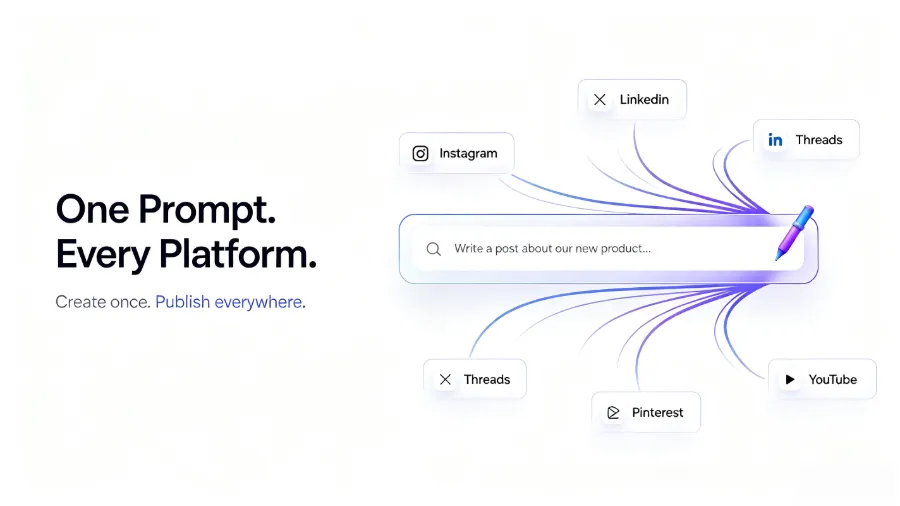
For the automated group we used Flownib for testing. The workflow became: create content once, AI automatically rewrites for each platform, set the schedule, and push with one click. Average daily time shrank to 0.5 hour. Over 30 days, the manual group spent a total of 75 hours on publishing, while the automated group used only 15 hours—saving a full 60 hours.
Converted to team man‑hours, 60 hours equals the weekly workload of one and‑time employee. For a three‑person team, that means you could hire half a person more, or free existing members from mechanical labor.
Weekly cumulative data is even more interesting. In the first week the gap wasn’t obvious because manual members were still fresh and efficient. By the second week, the manual group showed clear operational fatigue; the average time per post stretched from 12 minutes to 18 minutes. The automated group’s time curve stayed almost flat, stable at 0.4–0.6 hours per day.
Content Quality and Consistency: Where Manual Publishing Trips Up
The manual group encountered a typical operational incident in week 2. A team member took a day off; the plan was for another person to take over publishing, but during hand‑off the image paths for three pieces were missed. As a result, those three posts went out with text only; one of them was a product promotion, directly affecting that day’s conversion metrics.
Throughout the experiment the manual group accumulated 12 publishing errors—4 formatting glitches, 2 broken links, 3 missed tags, and 3 timing deviations over 30 minutes. The automated group had only one error: in week 3 an API hiccup delayed one piece, but the system automatically retried and the delay was only 12 minutes.
| Comparison Dimension | Manual Group | Automated Group |
|---|---|---|
| Formatting adaptation | 4 formatting errors | 0 |
| Timing | 3 deviations > 30 min | 1 delay of 12 min |
| Link validity | 2 broken links | 0 |
| Tag completeness | 3 missing tags | 0 |
Manual publishing may seem “controllable,” but human error rates are far higher than those of automated tools. This conclusion ran counter to our pre‑experiment intuition—we thought manual checks would guarantee higher quality. In reality, repetitive work leads to attention decline, which is the biggest hidden risk to content quality.
For standards on content quality, see the discussion on consistency in the YouTube Official Blog. Platform algorithms weight regularity and formatting completeness far more than we imagined.
Automated AI rewriting has a hidden advantage: it doesn’t just copy‑paste; it reorganizes language according to each platform’s style. The same product description sounds professional on LinkedIn, more visual and colloquial on Instagram. The brand tone stays the same, but the expression adapts to each platform’s user expectations.
Team Energy Allocation: What Automation Frees Up
Another issue revealed in week 2 for the manual group was the fragility of person dependency. The earlier mentioned leave‑of‑absence incident looked like a hand‑off mistake on the surface, but the deeper cause was that the entire publishing pipeline was tied to a single person. When that person is absent, the whole content line stalls.
As a participant, I rotated on the manual group for two weeks. The deepest feeling wasn’t fatigue, but “emptiness”—spending huge amounts of time on copy‑pasting work that offers no growth, and after finishing, I couldn’t even recall what was posted that day. Creative burnout wasn’t due to lack of ideas, but because mental energy was drained by mechanical labor.
The automated group’s situation was completely different. Team members used the saved two hours each day for user interaction and content strategy. Some began systematically replying to comments and DMs; others analyzed platform performance data to adjust next week’s content direction. Team morale shifted noticeably—by the latter half of the experiment, manual members started asking to move to the automated side.
To break the efficiency loss caused by tool switching, see our earlier article on “Breaking Social Media Tool Silos” (https://flownib.com/p/local/en/system-silos-to-one-stop/index), which dissects the real cost of juggling multiple tools.
The time freed by automation wasn’t spent “resting,” but naturally flowed into user interaction and strategic work. We didn’t anticipate this before the experiment, but it may be automation most valuable by‑product of automation—not just saving time, but reallocating it to work that yields compounding returns.
Experiment Summary: Automation Is Not Lazy, It’s Strategic
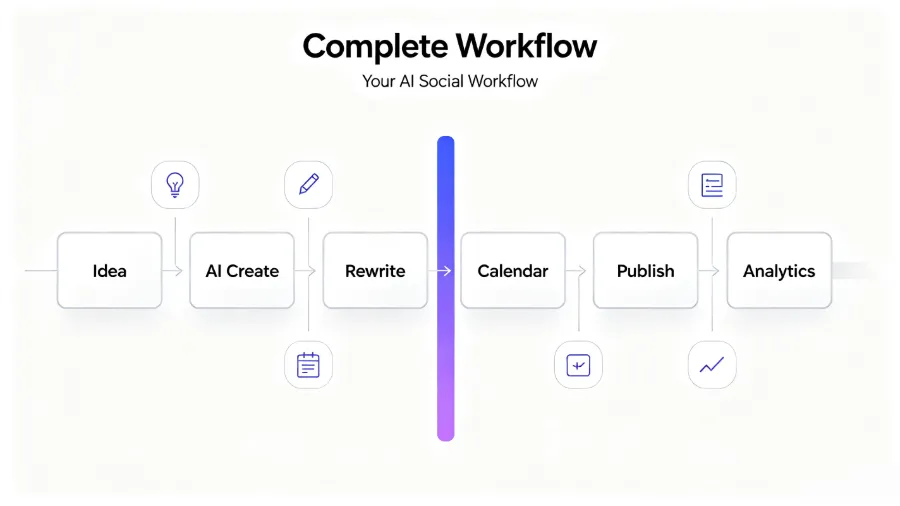
Key data from the 30‑day experiment: the automated group’s overall efficiency rose 80 %, content consistency hit 100 %, and team satisfaction scores (1–10) climbed from 4.2 (manual) to 8.7 (automated).
That doesn’t mean manual publishing is useless. When the volume is low—say 2–3 posts per day—manual cost is acceptable, and per‑item checks can catch details that automated tools miss. Our rule of thumb: if you publish more than 5 items per day or cover more than three platforms, the time ROI of automation outweighs its setup cost.
For overseas teams considering a shift from manual to automated publishing, we recommend a three‑step approach. First, track real publishing time for a week to confirm the need for automation. Second, pick a tool that supports official APIs, covers the main overseas platforms, and offers AI rewriting—Loomly‑type social‑media management platforms (https://www.loomly.com) are worth comparing, but watch the scope of official API support. Third, run a 1‑2‑week parallel phase with both manual and automated processes; once the automated workflow proves stable, switch fully.
In terms of tool selection, we used Flownib in our experiment. Its official API coverage and AI rewriting capabilities are relatively balanced among peers. For differences in API support across tools, see our analysis “FlowNib vs Publer vs Planoly Official API Comparison” (https://flownib.com/blogs/flownib-vs-publer-vs-planoly-official-api-support-battle-who-is-true-all-in-one).
For overseas teams, automation isn’t a shortcut; it’s a prerequisite for scaling. When your energy shifts from “how to publish” to “what to publish,” the growth ceiling truly opens. For publishing‑time strategy, we also compiled a 2026 Instagram Best Posting Times analysis (https://flownib.com/blogs/instagram-best-post-time-2026-9-6m-posts-analysis) that can serve as a reference for automated scheduling.
FAQ
Q1: What was the team size and platform setup for this experiment?
A three‑person overseas team managing Instagram, X, LinkedIn, Facebook, and Pinterest. Each person posted 10 pieces of content per day, split evenly (5 manual, 5 automated) for 30 days.
Q2: Was the content volume truly identical between the manual and automated groups?
Yes. Both groups posted 10 pieces per day, five each. The source pool was pre‑created to ensure identical content quality; only the publishing method differed.
Q3: Which automation tool was used in the experiment?
We primarily used Flownib for testing. It was chosen for its direct official‑API connections, coverage of all required platforms, and AI rewriting capability. We also referenced Loomly and similar tools for comparison.
Q4: Is automation worth trying for a 1‑2‑person team?
It depends on volume. If you post fewer than three items per day and cover only one or two platforms, manual work is manageable. Once you exceed five items per day or more than three platforms, the time payoff of automation becomes evident.
Q5: Won’t automated publishing make the content look too templated?
Our experiment showed that good automation actually avoids templating. AI rewriting tailors the phrasing to each platform’s style, so the same content looks completely different on LinkedIn versus Instagram while preserving brand tone. Templating issues tend to arise during content creation, not publishing.
Share Article