TikTok Creator Marketing: A Practical Path from Content to Conversion
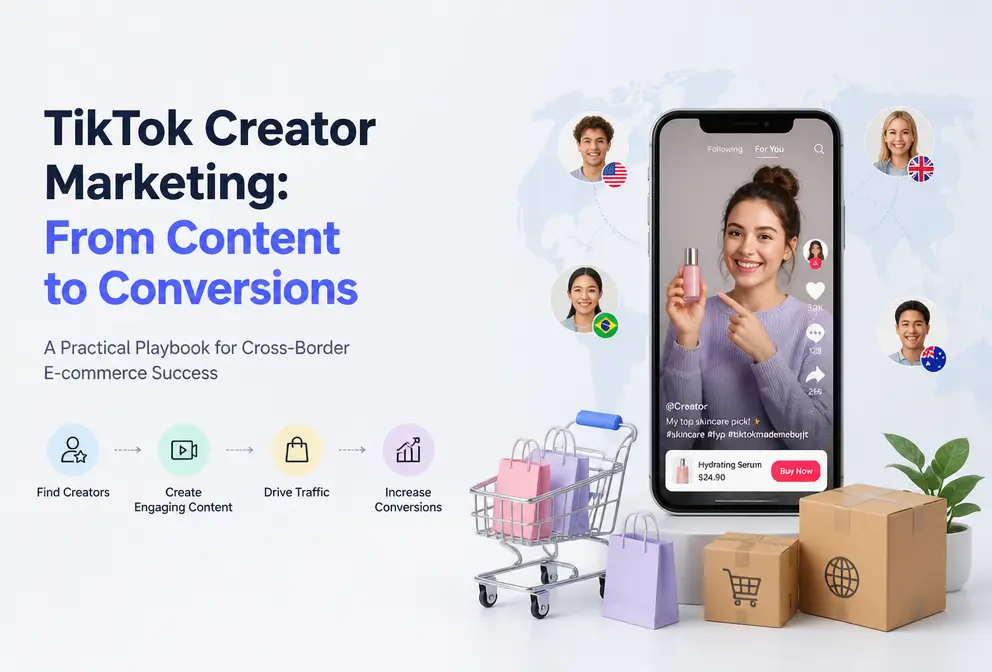
At the 2026 Cannes International Creative Festival, a small round‑table discussion revealed the deep changes TikTok marketing is undergoing. Keiko Mori, Head of Creative Product Marketing & Operations for TikTok North America, shared a detail: late at night she saw a creator’s review of a setting‑spray video, and within 30 seconds the entire journey from awareness to purchase was completed—she didn’t know the brand and had no purchase plan, but TikTok Shop’s instant purchase entry made everything happen within the same piece of content.
This scenario is not unfamiliar to many brands, but few truly realize what it means. Many brands still treat TikTok as a brand‑exposure channel when planning budgets and measure content performance with traditional funnel thinking, while consumer behavior paths have already changed. Discovery, consideration, and purchase are compressed into a single short video, which means brand content strategies, creator collaboration methods, and measurement standards all need to be redesigned.
TikTok Is No Longer Just a Pure Brand‑Exposure Channel
Keiko Mori’s purchase experience is not an isolated case. TikTok’s algorithm and product design have already compressed the entire consumer funnel into a single piece of content. A user watches a creator’s review video, taps the shopping‑cart icon in the lower left corner, and completes payment—no need to leave the app, no need to search the brand’s website, no need to compare prices. Brands that still treat TikTok as a top‑of‑funnel channel and only chase view counts and engagement rates will miss the most direct conversion opportunities.
This has a fundamental impact on brand content strategy. In the past, brands could do brand exposure on TikTok, product showcases on Instagram, and conversions on their own website, each channel playing its own role. Now TikTok itself is a complete sales funnel, and brands need to rethink: does a single piece of content simultaneously attract attention, build trust, and drive purchase?
In practice, this means brands can no longer produce TikTok content following the traditional ad‑production workflow. A video that goes through five layers of approval and a two‑week revision cycle loses relevance on TikTok’s fast‑moving timeline. The “instant” and “native” feel of content is more important than polished production, and that is precisely why the brand‑creator collaboration model must be adjusted.
Finding the Right Creator Is More Important Than Writing a Great Brief
Sabrina Callahan, Chief Digital & Marketing Officer of Southwest Airlines, described their logic for selecting creators: the brand prioritizes creators who are already Southwest passengers—people who already have genuine feelings for the product before the partnership begins. “We always look for people who already travel and have flown Southwest because they already love it. That way the content feels natural, both to the audience and the creator.”
The logic sounds simple, but most brands still prioritize follower count in practice. High‑follower creators aren’t necessarily a good fit for your product, while a real user with only a few thousand followers who uses your product daily may produce far more effective conversion content.
Southwest Airlines has a case that illustrates this well. They arranged for a creator to fly on a flight and attend a live music event, only to discover that the creator had opened for the same band more than a decade earlier. The creator’s reaction was completely authentic, and the content was almost automatically generated—no creative brief, no shooting script, no post‑production direction needed.
Behind this is a counter‑intuitive fact: a creator’s authenticity does not come from “free‑wheeling,” but from the brand’s upfront screening work. Find people who already believe in the product, rather than trying to convince a stranger creator to pretend they like it. The more time spent in the selection stage, the fewer frictions later in collaboration.
From Idea to Conversion: A Practical Framework for Brand‑Creator Collaboration
Once a brand has found the right creator, the next question is how to place creative decisions and commercial decisions in the same conversation. Many brands treat creators as content vendors, providing detailed shooting scripts and product‑point lists, resulting in content that looks like a filtered TV commercial and performs poorly in TikTok’s algorithm.
A more effective approach is: the brand provides product information and conversion goals, and the creator interprets them in their own language and style. This means the brand must adjust its internal approval process—if a creator’s piece of content must pass legal, brand, and marketing departments word‑by‑word, its lifespan on TikTok has already been largely consumed.
The efficiency of distribution after content production is equally critical. After collaborating with multiple creators, a brand accumulates a large amount of high‑quality content, but if this content can only be manually posted one‑by‑one to each platform, the team’s time is eaten up by repetitive work. This is where automation tools shine—through platforms like Flownib, brands can automatically adapt a creator’s piece of content for Instagram, LinkedIn, X, and other channels, maintaining a steady publishing rhythm while dramatically lowering operational costs.
Brands also need to specify the conversion path in the creative brief. Should users be guided to click a TikTok Shop link, or should trust be built via comment‑section interaction before directing them to an independent site? Different conversion goals correspond to different content structures and publishing strategies. The internal marketing and e‑commerce teams must share a single goal rather than working in silos.
To address the impact of internal approval on timeliness, a viable solution is to set up a dedicated approval channel for creator content, shortening review cycles. At the same time, refer to best practices from platforms like LinkedIn Marketing Solutions to understand each channel’s preferred content formats and tones, helping creators avoid compliance risks early on.
Automated Distribution: Turning High‑Quality Content into Ongoing Commercial Value
After a brand finds suitable creators and produces content, the biggest challenge is often not content quality but the continuity of publishing rhythm. Many brands release a batch of content at the start of a partnership and then go silent because the operations team lacks bandwidth, leading to a drop in account activity and a corresponding decline in algorithmic recommendation weight.
A content calendar is the basic tool to solve this problem. By planning the publishing rhythm in advance, a brand can ensure a steady stream of content each week instead of a concentrated burst at a single point in time.
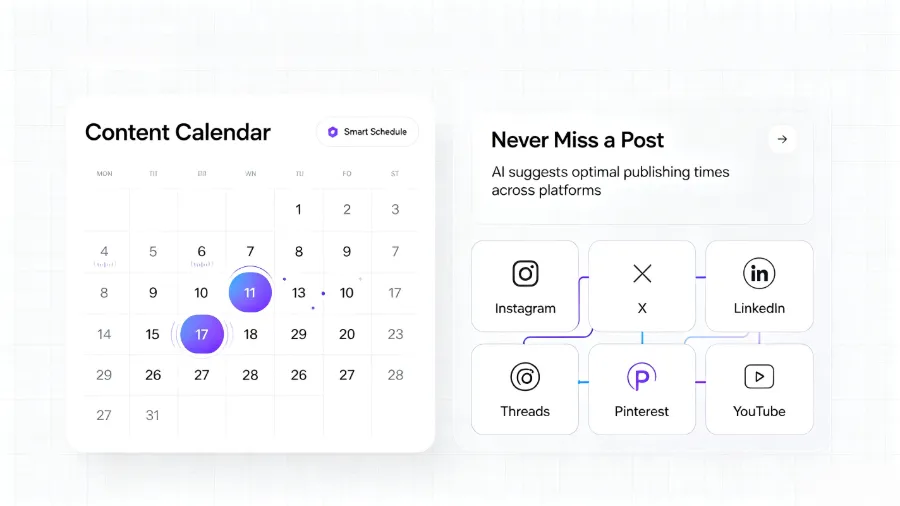
The value of automated distribution tools lies in allowing brands to sync creator content across multiple platforms without creating separate versions for each. A creator video that performs well on TikTok can, with simple adjustments, be repurposed for Instagram Reels, YouTube Shorts, and LinkedIn, reaching different audience segments. Buffer’s social media management resources provide industry background on multi‑platform content strategies, helping brands understand user‑behavior differences across platforms.
In practice, brands can start by testing TikTok and Instagram, observing which content types retain high engagement after cross‑platform distribution. Flownib’s content calendar feature helps brands visualize each piece’s performance across platforms and adjust publishing strategies in real time.
For e‑commerce brands, automated distribution of creator content offers an additional benefit: it continuously drives traffic to product pages, not just a one‑time spike on the day of publishing. By scheduling and re‑publishing, brands can keep high‑quality content generating commercial value over a longer time window.
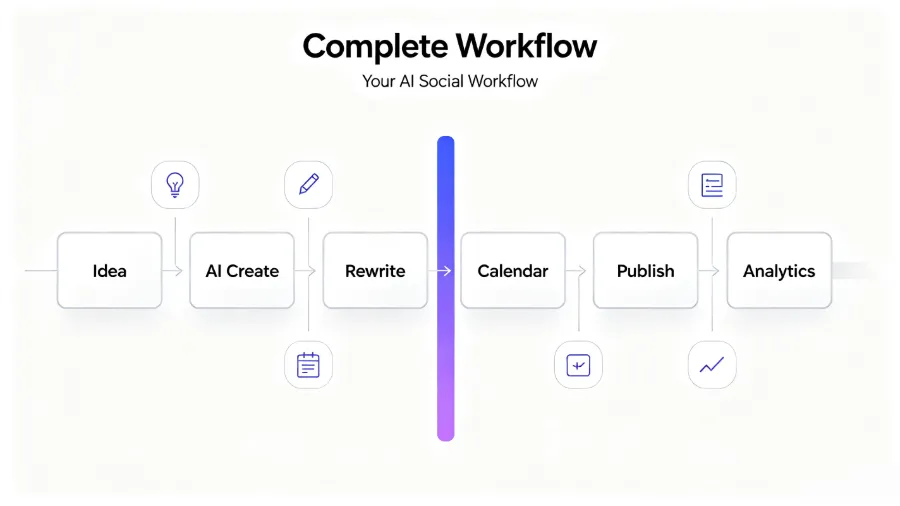
One noteworthy detail is that TikTok’s algorithm favors native content, meaning brands need to abandon overly polished ads and embrace rougher, more authentic creator content. Automation tools should not be used to mass‑produce homogenized content; they should amplify the reach of content that already feels genuine. Brands can read the case study “How Pet‑Product Sellers Use Automated Social Media to Build Loyal Fans” for industry‑specific examples.
Frequently Asked Questions
How can a brand determine whether a creator truly fits?
The most direct method is to see if the creator already uses your product. Review the creator’s content from the past three months; if they have spontaneously mentioned your category or brand before any partnership, the match is natural. If such creators are hard to find, prioritize those whose style and tone align with your brand rather than focusing solely on follower count.
Should the content creation and publishing process on TikTok be led by the brand or the creator?
The brand should provide product information and conversion goals, while the creator leads the format and expression. Excessive brand involvement stifles authenticity, while complete hands‑off can make the conversion path unclear. A balanced approach is to give creators 3–5 content directions to choose from instead of a word‑by‑word script.
How should a brand measure the actual ROI of TikTok creator marketing?
Beyond view and engagement metrics, focus on TikTok Shop transaction data, traffic to independent sites generated through creator‑specific links, and changes in brand search volume after content release. Assign unique tracking parameters to each creator so you can directly attribute results to specific content.
Will automated distribution tools affect the authenticity and personalization of content?
No, as long as they are used correctly. Automation should handle publishing schedules and format adaptation, not the content creation itself. The core creative idea remains with the creator; the tool simply pushes it to the right platform at the right time.
Small brands with limited budgets—how to start TikTok creator marketing?
There’s no need to start with top‑tier creators. Find 10–20 mid‑tier creators with 10 k–50 k followers; they usually charge less, have higher engagement rates, and are more willing to work for product swaps rather than cash. Prioritize creators whose style naturally fits your product, even if their follower count is modest.
Share Article