
From General AI Content to Brand‑Specific Content: Implementation Process for Cross‑Border E‑Commerce

The most common issue that cross‑border e‑commerce teams encounter is receiving a batch of AI‑generated copy that is grammatically correct and contains no obvious factual errors, yet nobody wants to publish it directly. The product name, discount, and features are correct, but the tone doesn’t feel like the brand: the U.S. market version is too formal, the German market version overpromises, and the social‑media opening reads like a catalog. Even worse, the same piece of content is translated and simultaneously used across ads, product pages, and social media, causing the selling points to morph differently on each channel.
Whether an AI‑generated copy is usable cannot be judged by grammar alone. In practice, teams must check factual accuracy, channel suitability, and brand consistency simultaneously, then tie together brand assets, prompts, platform formats, and post‑publish data. Brand‑specific content isn’t just about inserting a few brand names; it’s about ensuring the AI adheres to a consistent set of factual boundaries and expression rules every time it generates copy.
First, Identify the Problem: Why AI Copy Looks Correct but Doesn’t Belong to This Brand
“Correct” has at least three meanings. Factual accuracy means price, size, material, inventory, and delivery promises are not wrong; linguistic naturalness means the target‑market readers don’t feel awkward; brand consistency means the copy matches the brand’s tone, audience expectations, and conversion goals. The three are not automatically simultaneous.
General generative AI often turns product information into a set of “reasonable‑sounding” selling points. For example, a foldable storage rack aimed at small‑apartment renters might be written as “a premium storage solution that enhances quality of life.” The sentence is grammatically fine, but it replaces a specific usage scenario with a generic slogan. The brand originally emphasizes “no tools needed, foldable when moving, clear load‑capacity limits,” and these points get pushed to the back.
Cross‑border scenarios amplify this deviation. Product catalog information is suited for structured reading; ad copy needs quick benefit statements; Instagram posts rely on visuals and short sentences; LinkedIn is better for explaining industry use cases. Each social platform also has its own public character, media, and interaction rules, so copying the same paragraph across platforms usually preserves information but loses expressive effect.
In the first cross‑platform rollout, a team simply translated a generic AI copy into English, French, and German, then synced it to product pages, ad accounts, and social accounts. The first batch went live on schedule, but three days later a review revealed: the English version turned “repairable” into “lifetime‑durable,” the French version weakened the core selling point, and the German promotion omitted eligibility conditions. The team had to edit each line, re‑upload images, and cross‑check versions across multiple tabs; some ads had already generated clicks, and the rework wasn’t synchronized across all channels.
You can first use the table below to see which layer the content is stuck on:
| Evaluation Dimension | General AI Content | Brand‑Specific Content |
|---|---|---|
| Information Source | Relies on current prompts and public descriptions | Connects to a verified product fact database |
| Tone | Default neutral, exaggerated, or generic marketing | Adheres to brand tone and emotional intensity |
| Selling Points | Inferred from functions | Prioritized by positioning and audience pain points |
| Audience | Vague “consumer” | Specific country, scenario, and audience persona |
| Platform Expression | Same text translated or slightly shortened | Reorganized according to platform structure |
| Review Method | Grammar and typo check | Fact, promise, channel, and conversion‑path verification |
The audit should start with four questions: What is the brand promise? Which expressions are prohibited? Who is the core audience? What action should this content drive—click, save, inquire, or purchase? Conversion and click rates cannot replace brand review. An exaggerated headline may boost short‑term clicks but generate comments questioning returns, delivery, or product capability.
Organize Brand Knowledge into an Executable AI Archive
A brand archive should not be a one‑time questionnaire. Prices, inventory, delivery zones, return policies, and promotion rules change constantly in cross‑border e‑commerce. If the AI keeps reading outdated data, the generated copy may seem more persuasive than a copy‑less version yet be harder to spot errors at a glance.
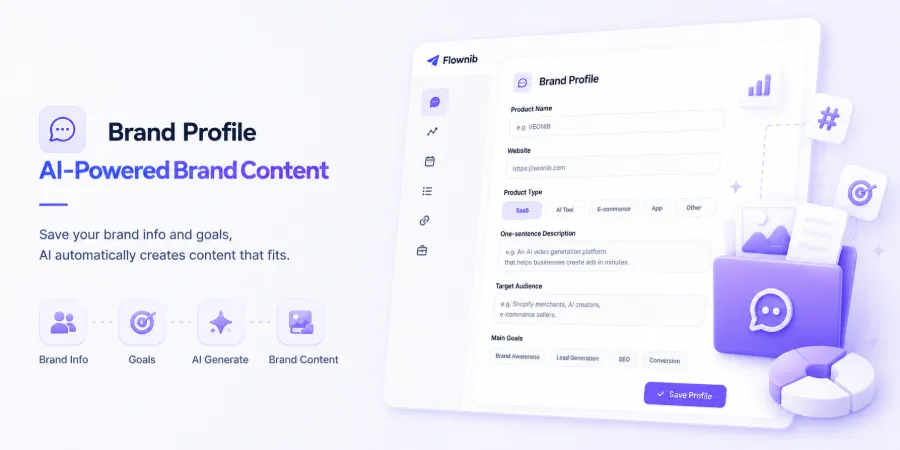
An executable brand archive should be broken into at least six field categories: product facts, audience, positioning, tone, prohibited rules, and marketing goals. Product facts must state “what it is” and “what it cannot promise”; the audience field must specify market, purchase scenario, and main concerns; positioning should explain differentiation from alternatives; tone must be turned into observable rules; prohibited rules must cover vocabulary and promise boundaries; marketing goals decide the final call‑to‑action.
“Friendly but professional” cannot be used directly as a prompt. The ops team can rewrite it as: keep sentences short, prioritize concrete verbs, avoid exclamation marks, do not use “absolute,” “permanent,” “zero risk,” and do not expand “suitable for most families” into “suitable for all families.” Even if the brand allows a casual voice, it must define where humor is permissible and where restraint is mandatory (price, health, safety, after‑sales).
It’s best to manage the product information database by SKU rather than mixing dozens of items into a single brand narrative. Each main product should record specifications, material, applicable regions, inventory status, delivery lead time, return restrictions, provable selling points, and forbidden descriptions. Maintaining this is costly, but it is far more stable than letting the AI infer product details from long context. The part of the brand archive that truly expands is not slogans but the details that affect promise boundaries.
Global and local markets also need layered management. Brand name, product capabilities, quality standards, and after‑sales principles usually stay unified; opening narratives, examples, currency, holidays, address forms, and action paths can be localized. Translation teams often only change words without adjusting purchase context, resulting in error‑free language that still leaves the audience unsure whether the product fits them.
When a team starts managing multiple accounts and content calendars, the publishing workflow itself can generate errors. Placing the brand archive within a unified social‑media management process (e.g., https://flownib.com/p/local/en/hootsuite-alternative-ai-powered-social-media/index) makes it easier to trace content source, editor, and publish time. The archive needs regular review, especially on the day price, inventory, or delivery commitments change, rather than waiting for a customer comment.
From One Brand Master Copy to Platform‑Specific Brand Versions
Before cross‑platform rewriting, lock in a brand master copy. The master copy should not be the longest promotional text; it should be a fact‑checked set of boundaries: what problem the product solves, who it’s best for, what it cannot promise, and any conditional promotions. AI may change structure and tone, but not this information.
Then rewrite for Instagram, X, LinkedIn, TikTok, Pinterest, YouTube, Threads, etc. Instagram usually starts with a visual scene, X relies on dense information in the first few sentences, LinkedIn can add workflow or industry background, TikTok needs clear visual actions, Pinterest should align the title with search intent, and YouTube’s title, description, and community post should be treated as distinct content. Platform rules and user expectations evolve, so teams can occasionally check YouTube’s official updates (https://blog.youtube/) for changes.
In practice, content rewriting typically follows three steps:
- AI generates a first draft from the brand master copy, preserving fact fields and prohibited rules.
- Editors verify brand promises, product capabilities, audience address, and market language.
- Before publishing, check platform length, media format, tags, links, and call‑to‑action.
If the number of accounts grows from two to ten, manual per‑platform adjustments are not just eight extra copy‑pastes. Each version has its own opening, media ratio, tags, comment prompts, and schedule that need verification; content calendars, publishing records, and multi‑account management become scattered across systems. In the second week after launch, a team discovered a revised promotion copy still scheduled in the old version—not because the AI wrote it wrong, but because the editor updated the draft but not the schedule record.
These frictions are exactly the operational issues that a “reduce copy‑paste between social‑media systems” solution aims to solve. Using Flownib (https://flownib.com), the team links each generated platform version with its publish time and account, then checks fields that need manual tweaks; this doesn’t eliminate review but reduces the chance of missing a version or switching tabs. For teams managing ten platforms, the time saved is often not writing but locating “which version was actually published.”
The master copy for the foldable storage rack can be rewritten as follows: Instagram starts with the “rented space shortage” visual, then shows the folding action; X directly states “no tools needed, foldable when moving,” keeping the load‑capacity limit; LinkedIn opens with space management in short‑term apartments; TikTok shows a three‑second unfold‑and‑store demo; Pinterest puts dimensions and room‑use scenarios in the title; YouTube’s description adds installation, delivery, and return info. The order of selling points changes, but the brand promise stays the same.
When comparing cross‑platform tools, don’t just count supported accounts; also check whether they retain the master copy, version history, and publishing records. Teams evaluating rewriting methods can refer to cross‑platform content rewriting comparisons (https://flownib.com/blogs/flownib-later-sprout-social-ai-multi-platform-compare), but they must still test with their own markets, account permissions, and content types. The deeper the automation, the more the brand archive must stay up‑to‑date; long prompts cannot fix incorrect product facts.
Post‑Publish: Use Data and Manual Spot‑Checks to Confirm “Brand‑Like,” Not Just “Published”
Publishing only means the content left the draft folder. At minimum, verify factual accuracy, completeness of brand promise, tone consistency, and correctness of links, prices, discount periods, and delivery info. High‑risk promotions, logistics timelines, return conditions, and compliance statements must still undergo manual confirmation even after automated publishing.
Each review cycle should examine three result categories: content quality, channel performance, and business conversion. Content quality includes error rate, rework count, and brand consistency; channel performance covers impressions, click‑through rate, engagement rate, saves, and shares; business conversion looks at landing‑page visits, add‑to‑cart, inquiries, and final orders. Relying solely on impressions can be misleading—a highly viewed piece that triggers “is shipping free?” or “can I return?” comments may be less valuable than a lower‑impression piece that drives accurate inquiries.
Differences between markets must be examined separately. Low click‑through in a country could be due to unnatural language or an opening that the platform’s users reject; high engagement but low conversion may indicate the content attracted the wrong audience or that price, delivery range, or landing page is problematic. A/B testing can compare headlines and calls‑to‑action, but not all business issues can be blamed on copy.
Publishing records should be audited alongside schedules, especially for short‑duration promotions. Ops staff can check the scheduled social‑media content (https://flownib.com/p/local/en/view-scheduled-posts-instagram/index) on the day of scheduling, a few hours after launch, and before the promotion ends, confirming that edits truly synced to the target accounts. Past incidents include a price update in the backend and a changed ad asset, while a pre‑scheduled social post still displayed the old price until a customer inquiry revealed it.
Automation reduces operational time, not decision responsibility. Teams can route low‑risk routine content through automated pipelines, while price, inventory, delivery, return, and legal restrictions remain manual gatekeepers. Recurring AI errors should be fed back into the product fact database, prompts, and prohibited word list, rather than being fixed ad‑hoc by editors.
The review cadence doesn’t need to be heavy from the start. Sample a small batch of content from different markets and platforms weekly, tally rework types; update the brand archive monthly; immediately refresh fact fields when promotions or policies change. This reveals whether problems stem from content generation, platform rewriting, publishing workflow, or the product itself, and prevents teams from only reacting after traffic drops.
FAQ
What’s the main difference between generic AI content and brand‑specific content?
Brand‑specific content must be fact‑correct and adhere to a fixed brand tone, audience scenario, and promise boundaries. In practice, use a three‑layer checklist: factual accuracy, channel fit, brand consistency, and then audit post‑publish with click‑through, comment issues, and conversion paths.
How can we start building brand content rules without a complete brand manual?
Begin with six fields: product facts, audience, positioning, tone, prohibited rules, and marketing goals. Teams can usually draft the first version within a week, then refine vocabulary, promises, and market nuances based on weekly rework logs rather than waiting for a full manual.
Should cross‑border e‑commerce rewrite content entirely for each country?
Not entirely, nor should they simply translate and sync. Keep product capabilities, quality standards, and after‑sales principles unified; localize openings, examples, currency, holidays, and action paths. Observe at least one full promotion cycle before judging effectiveness.
After AI auto‑rewriting, which items must be manually reviewed?
Price, discount conditions, inventory, delivery lead time, return policy, product capabilities, and compliance statements require manual review. A quick line‑by‑line check before launch takes minutes but prevents outdated schedules from continuing to publish errors after a promotion ends.
How to determine if a piece truly matches brand tone?
Cross‑reference the content with the specific rules in the brand archive, then monitor audience comments and inquiries for expected issues. If click‑through rises but questions about promises, price, or delivery also increase, the copy may be driving traffic without maintaining brand consistency.
Share Article