
The Next Step in Content Marketing: Let AI Simultaneously Understand Trends and Brands

Cross‑border e‑commerce teams often spot a newly emerging topic on overseas social platforms: a Reddit discussion suddenly heats up, related videos appear on YouTube, news sites start covering it, yet the team is still manually confirming tone, target market, publishing time, and promotional details. By the time the copy is revised and the account switched, the trend may have moved to the next cycle.
The next challenge for AI content systems is not merely to write articles faster, but to simultaneously assess in the same decision flow “what is happening now” and “who this brand should speak to”. A trend becomes a content opportunity only when it is tied to a product scenario, user problem, and market objective; otherwise it is just another piece of material that needs review.
Direct answer: Future content‑marketing AI will connect trend monitoring, brand profiles, platform rewriting, and publishing feedback. It will not auto‑post just because a keyword is hot; instead it will filter angles based on audience, product, country market, and brand rules, leaving price, inventory, and sensitive phrasing to human handling.
How AI Moves From Trend Detection to Content‑Opportunity Assessment
Traditional topic‑selection processes rely on several people taking turns browsing Reddit, YouTube, news sites, and Hacker News. One looks at keywords, another filters comments, a third opens Google Trends or the platform’s search box to confirm search interest, and finally they write “can follow up” in a shared spreadsheet. This workflow is not entirely ineffective, but there are several hours between trend heat and content judgment, making it easy for the team to treat already‑stale buzz as an opportunity.
When AI reads public discussions, it can drill down from a single keyword into specific questions. For example, under “portable coffee maker” you might see camping users’ concerns about battery life, office users’ cleaning issues, and beginners’ questions about grind coarseness. Their heat comes from different sources: Reddit is closer to experience discussion, YouTube reflects video search interest, news represents industry topics, and Hacker News may expose technical users’ focus on product principles. With at least four sources combined, the team sees not just a hot word but several audience perspectives being debated.
However, high heat does not equal suitability for brand participation. A topic must pass three checks: product relevance, market relevance, and user problem. Does the brand truly have an explanation or use‑case to offer? Are consumers in the target country discussing the same thing? Can the content naturally connect to education, trial, purchase, or after‑sales rather than forcibly inserting a product link? Hootsuite’s social media marketing resources repeatedly illustrate this point: trend monitoring is only input; content context and publishing actions still require team judgment.
Cross‑border e‑commerce can convert filtered trends into three types of content. When the product is still unfamiliar to users, explanatory content works, answering “what problem does this product solve.” When users are already comparing options, product‑scenario content is appropriate, showing differences under various usage conditions. Only when inventory, price, and promotion rules are stable should promotional content be created. In one real launch, a team saw overseas users discussing summer travel gear and turned the discussion into a discount post; the interaction mainly consisted of “does the price include tax?” follow‑up questions, and the team spent half a day adding explanations, by the original content window had already passed. Later they placed “can the user’s question be answered” before “is the keyword hot.”
Therefore, when a trend converts into a marketing theme, the content calendar should record more than just date and platform; it should also capture the triggering discussion, target audience, product scenario, and reviewer. For how to schedule new products across multiple markets, see the cross‑border product launch cadence; the most overlooked part is not the idea but whether the launch timing and material preparation align across markets.
Letting AI Know “Who the Brand Is”: Brand Profiles and Audience Context
When AI only knows a hot topic, it typically generates a piece that looks reasonable but lacks brand ownership. It may portray a premium product as a low‑price impulse buy, or turn a product aimed at professional buyers into a lightweight toy for beginners. Even more problematic, the same brand may have different purchase motivations in the US, Japan, and Germany; literal translation would merely copy the wrong judgment into more languages.
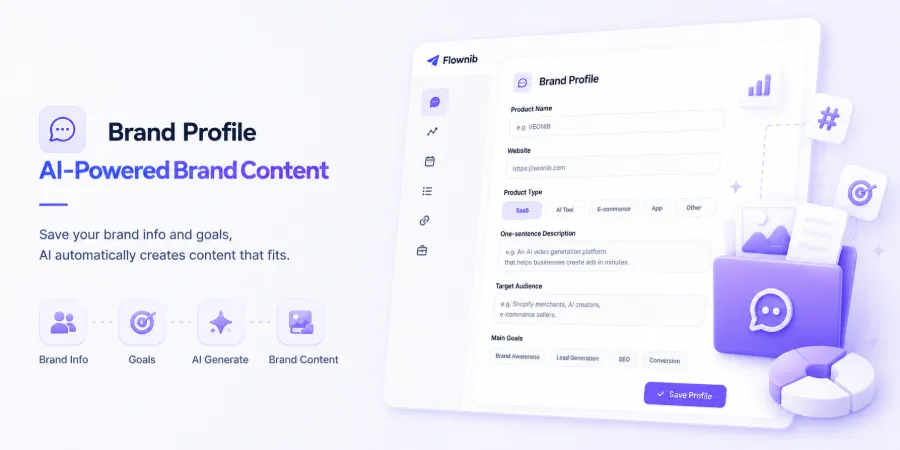
A brand profile must capture more than the brand slogan; it should include product information, target users, brand positioning, marketing objectives, and expressions prohibited in different markets. For example, a product may suit small‑household families but should not promise “suitable for all scenarios”; one market may value durability while another cares more about delivery speed. Marketing goals should also be clearly stated: acquiring new customers, driving repeat purchases, explaining features, or funneling traffic for a specific promotion.
When a trend and a brand profile are combined, AI can choose different entry angles for the same topic. For new customers, content may first explain how the product solves a problem, reducing comprehension cost; for existing customers, it can focus on accessories, usage tips, or repurchase cycles. Cross‑border sellers often include a separate check on whether brand data can be fed into the generation pipeline when evaluating tools, rather than merely checking if text can be generated. See the cross‑border distribution tool evaluation.
In real cross‑platform rewriting, friction with publishing tools like Flownib is not just “fewer copy‑pastes.” The team must first verify that product names, prohibited terms, and audience settings from the brand profile will be correctly applied to the different versions for Instagram, X, LinkedIn, or TikTok, then preview each item. If an account manager forgets to update a promotion’s end date, the smoother the automatic rewriting, the faster the error spreads.
Global market adaptation cannot be just translation. Instagram relies more on visuals and short captions, X’s expression is more concise, LinkedIn suits industry background, and TikTok often needs a stronger hook and video rhythm. Even if a single piece of content must be adapted for ten social platforms, the brand’s core message can only stay at the “what to say” level; you cannot demand identical sentence structures, lengths, and examples for each platform.
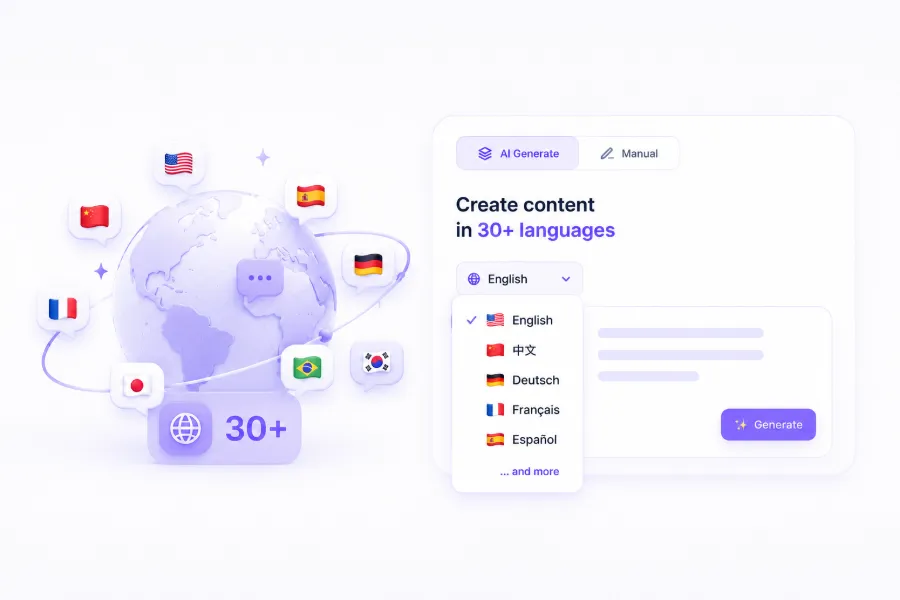
Language adaptation is also affected by cultural context. An exaggerated expression that feels natural in the English market may appear rude in Japanese or German markets; a joke suitable for TikTok may not fit LinkedIn’s procurement audience. If the brand profile does not record these boundaries, AI can only guess based on general language habits, and manual review will revert to sentence‑by‑sentence rewriting.
From One Piece of Content to Multi‑Platform Publishing: How Automation Handles Real Friction
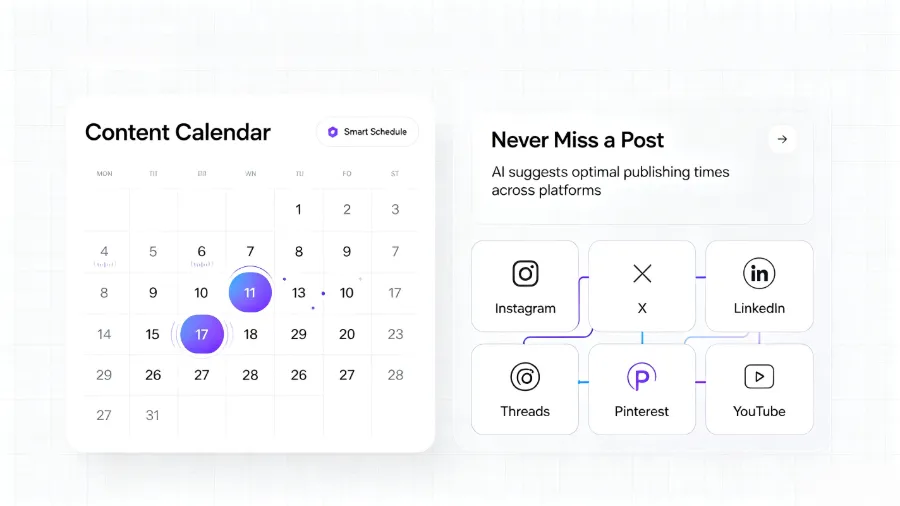
A cross‑border piece of content goes through several stages from draft to launch. The team first writes the product’s core message, then lets AI rewrite for each platform, humans preview images, videos, price, and links, schedule the publishing time, and finally log the publishing result. The time‑consuming part is usually not writing the first draft, but repeatedly switching tabs among Instagram, X, Threads, LinkedIn, Pinterest, YouTube, and Google Business.
A practical workflow typically runs in the following order:
- First lock in the trend angle, brand core message, and target market, then generate a draft; subsequently rewrite according to each platform’s character limits, content structure, and media format, preview manually, add to the content calendar, schedule publishing, and verify the publishing record.
- If price, inventory, promotion period, or cultural phrasing anomalies are detected, pause that piece of content rather than letting other platforms continue syncing.
- After publishing, record each platform’s version, account, time, and any anomalies to facilitate feeding audience feedback back into content rules later.
One‑click distribution, multi‑account management, and official APIs can reduce copy‑pasting and lower the chance of missing accounts, selecting the wrong page, or treating a personal account as a brand account. Product documentation shows that such systems support ten social platforms, with an average setup time of about two minutes, and the official API boasts 99.99% uptime. These numbers are better viewed as tool‑level operational metrics rather than proof of content effectiveness; an error‑free API does not guarantee that the version on the platform meets audience expectations.
The process for creating content adaptable to multiple overseas platforms can help teams verify the sequence from draft, rewrite, preview, to logging. For scheduled publishing, queue management, and account permissions, social media operation resources offer many scheduling‑level best practices. However, the more complete the automation, the more pre‑emptive review points are needed; otherwise errors can appear across multiple markets within minutes.
A real failure occurred on the day a new promotion launched: the team scheduled an English promotional post in the morning, then in the afternoon changed the discount from 15% to 20%, but only updated the main account’s content calendar, not the already‑scheduled multi‑platform versions. Two hours later, Instagram and Threads still displayed the old price; customer service first noticed the issue, and the team had to retract the post, re‑audit inventory and promotion terms. The publishing record was later filled in, but the click data had been split into two segments—withdrawn and reposted—making it impossible to compare directly with other activities that day.
This is also a synchronization issue the team often deals with when using Flownib later in the process: successful publishing, successful scheduling, and consistent content status are not the same thing. An API response of success from a platform may only mean the request was accepted; media processing, link preview, or account permissions may still fail later. If the content calendar and publishing logs cannot indicate platform‑level status, operators may mistakenly believe that “one‑click publishing” has completed all work.
Human review should at least cover price, inventory, promotion rules, culturally sensitive phrasing, and emerging trends. Trend content especially should not be set for fully automatic publishing, because the original discussion can change meaning within half an hour. Speed is indeed important: if the team spends hours after a trend appears manually searching, rewriting, and switching accounts, they may have missed the window; but if speed is decoupled from review, brand tone distortion and promotion errors can amplify even faster.
Measuring Future Content Marketing: From Publication Count to Feedback Loop
Publication count is easy to track and the most likely to mislead teams. Publishing 300 pieces of content in a month does not prove accurate trend judgment; if interactions mainly consist of doubts, clicks don’t lead to product pages, and conversion rate differences across countries are masked by averages, the content system merely increases noise output. Cross‑border teams should also monitor trend hit rate, engagement rate, click‑through rate, conversion rate, and content performance per market.
An initial review can treat the 24 hours after publishing as an observation window, checking platform feedback and anomalies. For fast‑moving consumer goods or promotional content, click and comment changes in the first few hours are more indicative; for LinkedIn long‑form posts or YouTube videos, a longer observation period may be needed. Google Search Console, native platform analytics, UTM parameters, and order‑backend attribution models often differ, so platform‑displayed click numbers should not be directly taken as payment conversions.
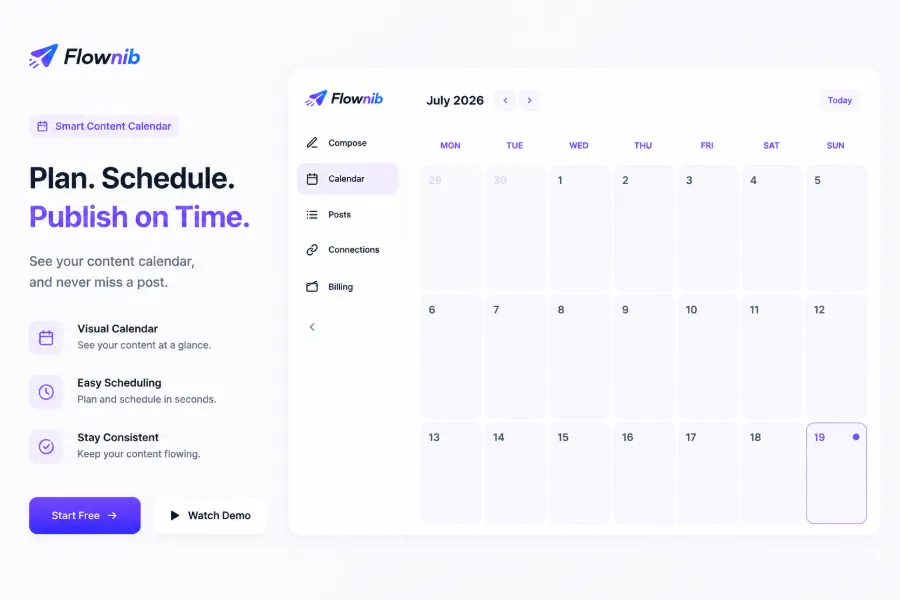
Feedback should loop back to the brand profile and brand rules, not just stay in weekly reports. For example, a market may be indifferent to “quick results” but linger longer on durability and after‑sales explanations; the team can adjust that market’s theme priority. If legacy‑customer content has stable click rates but almost no repeat purchases, the discount design and landing page should be examined rather than simply increasing publishing frequency.
Automation workflows also require maintenance. Discussions about automating social media integration can remind teams to include account authorizations, failure retries, field synchronization, and publishing logs in routine checks. After platform API upgrades, media limit changes, or recommendation algorithm adjustments, a previously normal workflow may only result in “send success,” while the content presentation has already changed.
Multi‑platform syncing does not mean each channel uses the same version. An effective cross‑platform strategy retains a unified brand core message while allowing Instagram to use stronger visual explanations, X to maintain information density, LinkedIn to add industry context, and Pinterest to emphasize searchable descriptions. Consequently, the team’s role shifts from repetitive editor to trend assessor, brand reviewer, and exception handler, still dealing with market details that automation cannot reliably infer.
Future content‑marketing metrics will not be just “how much AI generated.” More useful questions are: Did it find genuine user problems? Did it connect those problems with the right product scenario, market, and brand tone? After publishing, can it adjust rules based on audience feedback? Missing any link in trend identification, brand understanding, or human judgment will cause the system to repeatedly swing between speed and accuracy.
FAQ
How does AI determine whether a social‑media trend is suitable for a cross‑border e‑commerce brand?
AI should simultaneously check trend heat, product relevance, target market, and user problem, not just keyword ranking. The team can complete an initial filter within a few hours of the trend’s emergence, then have humans confirm whether it suits educational, scenario‑based, or promotional content.
What information must a brand profile contain for AI to generate more consistent content?
A brand profile should at least include product information, target users, brand positioning, marketing objectives, prohibited expressions, and language boundaries for each market. It should be updated after any change in product price, inventory, or promotion rules; otherwise content generated within days may still incorporate outdated information.
After AI automatically rewrites, does a cross‑border e‑commerce team still need human review?
Yes, especially to review price, inventory, promotion periods, culturally sensitive phrasing, and media formats. Keep a manual preview before publishing, and within 24 hours after publishing, check platform status, comments, and click data to catch synchronization or tone issues early.
Can a single piece of content be adapted simultaneously for different countries and different social platforms?
Yes, but adaptation should retain a unified core message, not literal word‑for‑word copying. A piece of content may need to adjust length, examples, language, and calls‑to‑action for ten platforms across multiple countries, typically requiring AI rewriting followed by human spot‑checking.
Which metrics will future content‑marketing teams need to monitor most?
Teams should monitor trend hit rate, engagement rate, click‑through rate, conversion rate, market differences, and publishing anomalies. Publication volume only reflects capacity and does not indicate whether content reached the right audience; start with a 24‑hour review, then combine with longer‑term order and repeat‑purchase data for assessment.
Share Article


