
How Independent Overseas Creators Can Use AI to Create Once and Distribute Across All Platforms

You’ve probably experienced this countless times: after writing a post, you log into Instagram, X, LinkedIn, Threads… one by one, adjust the format, compress the text, re‑layout, then copy‑paste again. Each platform has its own rules, and after a single round of work, half an hour is gone. This isn’t about creating content; it’s about being a content porter.
This “copy‑paste” multi‑platform distribution drains creators far more than it looks on the surface. When you keep spending time adapting formats and logging in repeatedly, not only does your posting frequency drop to the minimum, but the quality of your content also slides as you become fatigued. The key to amplifying content monetization isn’t always writing a more viral piece; it’s maximizing the exposure efficiency of the content you already have.
Hidden Time Costs in Multi‑Platform Distribution
If you manage three or more social platforms, you know each one has completely different aesthetic requirements. Instagram favors visual‑first short copy, X demands fast‑paced messages under 280 characters, and LinkedIn expects professional long‑form posts with clear paragraphs. Add the tag‑count rules—Instagram suggests 3‑5 tags, X needs 2‑3, LinkedIn can go up to 5‑5—and every platform switch becomes a full format rebuild.
I’ve seen many overseas creators who, to stay cross‑platform, spend the first thing each morning reshaping the same piece of content five different ways according to each platform’s rules. In a week, just the format adaptation alone consumes dozens of hours.
| Platform | Preferred Content Style | Character Limit | Typical Tag Count |
|---|---|---|---|
| Visual‑first, short copy | 2,200 characters per post | 3–5 | |
| X | Fast‑paced, short text | 280 characters | 2–3 |
| Professional long‑form, clear paragraphs | 3,000 characters per post | 3–5 | |
| YouTube | Detailed description paired with video | 5,000 characters per description | 5–15 |
Doing this repetitive work for a long time makes you wonder: what if that time and energy were spent on actual content creation? Would the data look completely different?
Some creators give up. A blogger I know stopped updating any platform for three months because manual posting was too cumbersome; traffic plummeted, and a pre‑negotiated brand partnership fell through. That’s the harshest cost of the “copy‑paste” model. In contrast, automating the publishing workflow with tools sounds ideal, and the efficiency gains are very tangible. For example, lightweight social‑media management tools like Loomly offer a centralized publishing panel that cuts down a lot of switching.
But the real breakthrough comes from AI‑driven automatic rewriting—turning “adapting each piece individually” into “one piece automatically generates multiple versions.”
AI Automatic Rewriting – Maintaining Brand Voice While Adapting to Each Platform’s Grammar and Style
The mechanics of AI rewriting are actually more practical than many imagine. It doesn’t turn your content into a completely different article; it first reads the original, extracts the core information, then reorganizes the language according to the target platform’s characteristics. For instance, if you write a slightly long product recommendation, the AI will compress it into X‑style short sentences while preserving key emotions; it will expand the same paragraph into a professional narrative structure for LinkedIn with clear logical flow; it will also tweak wording so the Instagram version feels more emotionally vivid.
The most critical point is preserving brand voice. If your Instagram post feels lively but your LinkedIn version sounds like a different tone, followers and brands will get confused. Good AI rewriting isn’t “write a new post”; it’s “use the same voice to fit different rooms.”
Creating once and outputting multiple platform versions sounds like a simple efficiency tweak, but it directly boosts posting frequency. Most creators aim for 2–3 posts per day because manual rewriting already eats up most of their time. After AI generates multiple versions, you only need a single round of human review and fine‑tuning before slotting the content into your calendar.
For detailed steps, see the post on How to Automatically Rewrite and Distribute to Ten Platforms, which breaks down the entire process from raw draft to platform‑specific final products.
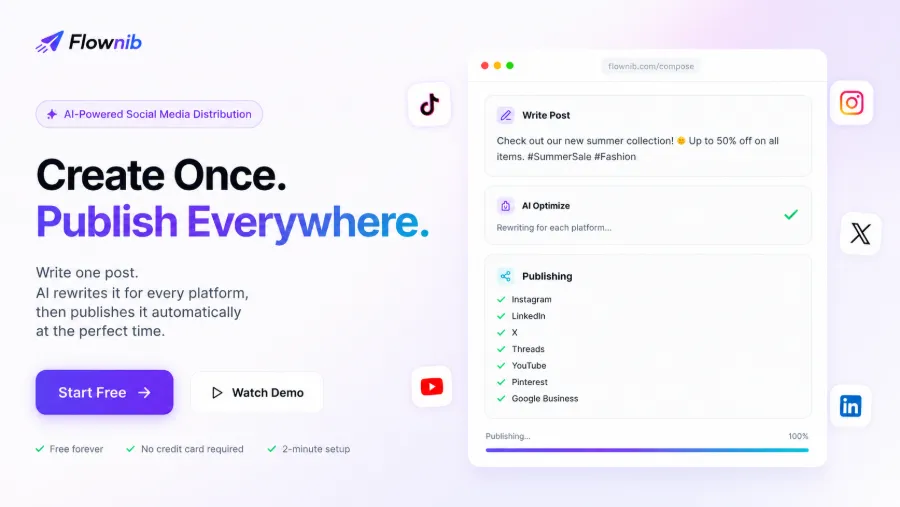
Of course, an AI‑rewritten draft isn’t ready to publish as‑is. I’ve encountered AI outputs that are slightly too formal, deviating from my personal style. So the human review step can’t be skipped—but reviewing one rewritten result takes far less time than manually crafting five platform versions.
One‑Click Publishing & Smart Scheduling – Freeing Creative Energy from the Publishing Action
After AI optimizes the content, the remaining task is the publishing process itself. If you still have to log into each platform, upload images, click publish, log out, and repeat, you’re only saving typing time; the number of steps doesn’t shrink. Real efficiency comes from a unified dashboard with one‑click publishing.
The workflow can be broken into a few steps: Write → AI Optimize → Preview → Set Publish Time → One‑Click Publish. All actions happen on a single page, eliminating repeated tab and account switching. This relies on each platform’s official API, and the stability of those APIs directly determines whether the workflow can be trusted.
The Write Once, Publish Everywhere with AI philosophy is built around this logic—once content is produced, the remaining work is selection and scheduling.
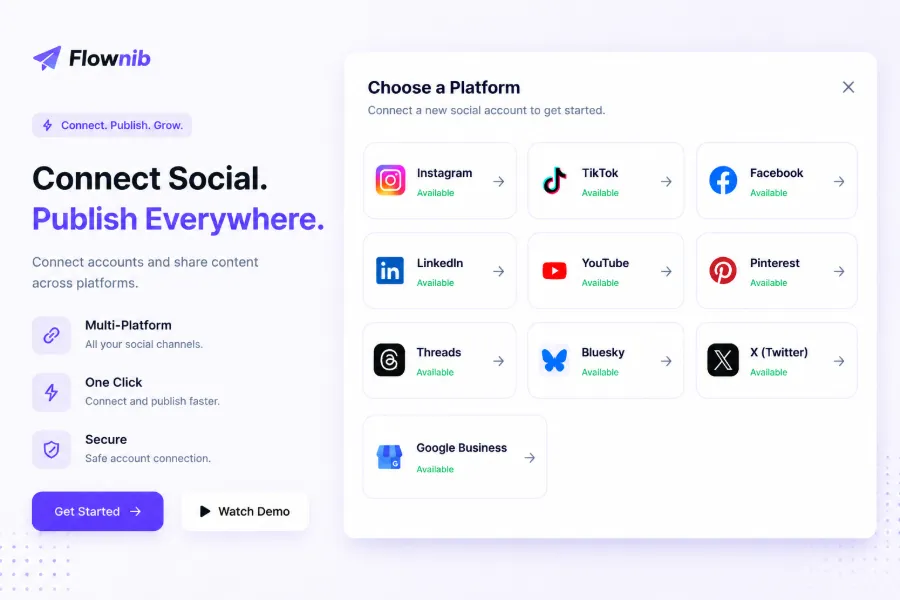
Regarding publish time, many beginners pick a fixed manual slot, like 10 am daily. But audience activity peaks differ completely across platforms—Instagram peaks in the evening, LinkedIn engagement is highest around noon, and X fluctuates throughout the day.
A content calendar is another often‑underestimated tool. A visual calendar lets you see a week or month’s layout at a glance, which platforms are covered, and where there are gaps. This is crucial for long‑term planning and retrospectives, far more reliable than scattered notes in a memo.
If you manage multiple brand accounts or accounts in different languages, multi‑account management reduces repeated logins. With a single click you can switch accounts and publish for another brand. Compared with traditional tools like Buffer, a unified dashboard is now standard, but the depth of multi‑account support and the smoothness of each switch still vary.
From Workflow Optimization to Monetization Efficiency – An Advanced Path for Light‑Weight Creators
When the publishing process is trimmed to a few minutes, creators can finally focus on content creation instead of format adaptation.
Think of the logic chain as: Save repetitive‑operation time → Increase posting frequency → Boost multi‑platform exposure → Accelerate follower growth → Expand monetization channels. Each step is backed by data. Creators I know who adopted automated workflows went from 3 posts per week to 7, and saw interaction metrics rise over 40 % in two months.
Brands evaluating creators look not only at content quality but also at active multi‑platform coverage. A blogger posting twice a week only on Instagram is far less attractive to a brand than one who updates daily on Instagram, X, LinkedIn, and Threads. Consistent, frequent updates across platforms signal seriousness about content operations.
For a technical comparison of different tools, see FlowNib vs Publer vs Planoly Official API Comparison. If API support is incomplete, one‑click publishing reliability suffers—this is a key factor when choosing a tool.
Many users report saving 10–15 hours per week after adopting automated publishing tools. That time isn’t just “free”; it’s reinvested into content strategy, topic planning, and audience interaction—core drivers of monetization efficiency.
Another rarely mentioned impact is creator burnout. Repetitive manual work is a major cause of “ghosting.” When the publishing workflow becomes lightweight, updates no longer feel exhausting or aversive, and content continuity naturally improves. This isn’t about discipline; it’s about reducing workflow friction.
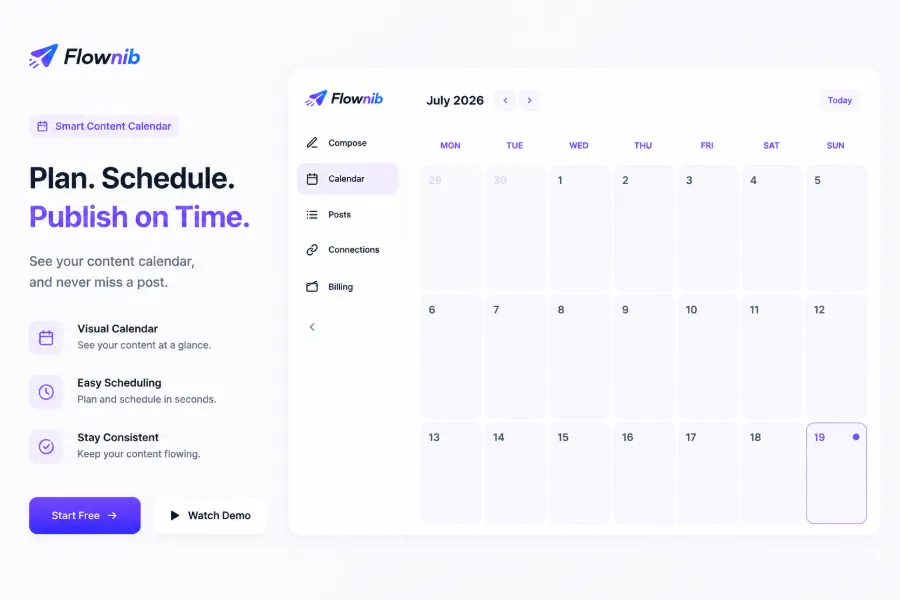
If you’re just trying this workflow, the free tier (3 accounts and 6 posts) is enough for a test run to see if you adapt to the rhythm. After a 2‑minute account setup, publish one piece of content, then monitor the data and adjust your strategy.
Frequently Asked Questions
Q1: Will AI‑rewritten content lose my personal style?
AI rewriting retains the core information and emotional tone of the original, but the output style tends to be neutral. If a platform’s version feels too different from your voice, you can manually tweak keywords or phrasing, then have the AI learn those preferences. Deviations are common, but a couple of adjustments usually suffice.
Q2: Which platforms can I manage with the free plan?
The free plan supports the same platforms as the paid plans—Instagram, X, LinkedIn, YouTube, Pinterest, Threads, Google Business, and a total of 10 platforms—but with limits on the number of accounts and posts. You can test different platforms on the free tier before deciding where to invest more effort.
Q3: If a published post has an error, can I retract or edit it?
Once a post is live, most platforms don’t allow third‑party tools to retract it. Use the preview feature to double‑check format and links before publishing. If you have a scheduled draft, you can edit or cancel it any time before the scheduled publish time.
Q4: Does multi‑account management consume extra plan slots?
Each social account counts as a separate account slot. Managing multiple brands or language‑specific accounts requires allocating slots within your plan’s limit. Growth and higher tiers offer unlimited accounts, suitable for multi‑account scenarios.
Share Article