Building a More Stable Cross-Border Content Production Process Using Trending Topics and Brand Context

Cross‑border e‑commerce teams often wake up to a hot topic: discussions heat up on Reddit, YouTube searches rise, news outlets report related events, and Hacker News keeps asking follow‑up questions. The problem is that the same topic can have different tones, consumer contexts, and platform formats in English, Chinese, or Japanese markets. If the team simply copies a popular copy, they usually have to switch between multiple tabs repeatedly, ending up either missing the publishing window or posting content that doesn’t fit the brand.
A more stable approach is not merely chasing hot topics, nor simply translating the same copy into multiple languages, but embedding trend signals, brand context, and platform adaptation into a single reusable workflow. In this way, a hot topic is first evaluated before entering content production; after publishing, the results feed back to refine the next round of topic selection.
Cross‑border content production should treat trending topics as clues, not answers: first verify whether the discussion is sustained and whether the audience is relevant, then filter with the brand archive, and finally reorganize the content by platform and market. Adding an extra manual check takes a few minutes but is usually cheaper than mis‑posting, reworking, and missing promotional windows.
Turning “Chasing Hot Topics” into a Judgable Topic Selection Process
The value of a trending topic lies in helping the team discover what the audience is talking about, not in deciding for the brand what to say. A topic may have high discussion volume yet only suit news commentary, entertainment consumption, or tech‑community discussion, with no relevance to product purchase decisions. Treating heat directly as content value can cause the content team to chase new buzz all day without leaving reusable audience insights.
During actual screening, the team can advance in this order: first see which sources the keyword appears in, then compare whether the discussion heat is sustained, then assess audience relevance, and finally check brand fit. The trend discovery process should reference at least four types of sources: Reddit, YouTube, news, and Hacker News. Different sources reflect different behaviors: news is more like an event signal, YouTube may show search and viewing interest, Reddit often reveals specific questions, and Hacker News is more focused on tech and entrepreneurial audiences.
The team also needs to categorize trends into three types. Short‑term topics are suitable for flash promotions, real‑time responses, or same‑day releases; continuously growing demand fits series content, FAQs, or comparison guides; noise unrelated to the product should stay in an observation list and not be forced to link just because of high heat. A seemingly hot term that cannot be tied to purchase barriers in the target market is usually not worth the effort of rewriting and review.
Markets and audiences should be confirmed during the topic selection stage, not after the copy is written. Operators will first ask: which country’s audience is discussing this? Are they looking for a solution or merely watching the event? Can the brand provide concrete information, or only repeat what others have already said? These questions help the team avoid producing a batch of content that looks like it has traffic but actually has no follow‑through.
For teams that need to manage multiple markets over the long term, a multilingual publishing workflow can help place market judgment before content generation, rather than generating a copy first and then temporarily copying it to regional leads for review. This change in order is small but can affect the rework volume of all subsequent versions.
Hot Topics Need Brand Context Filtering
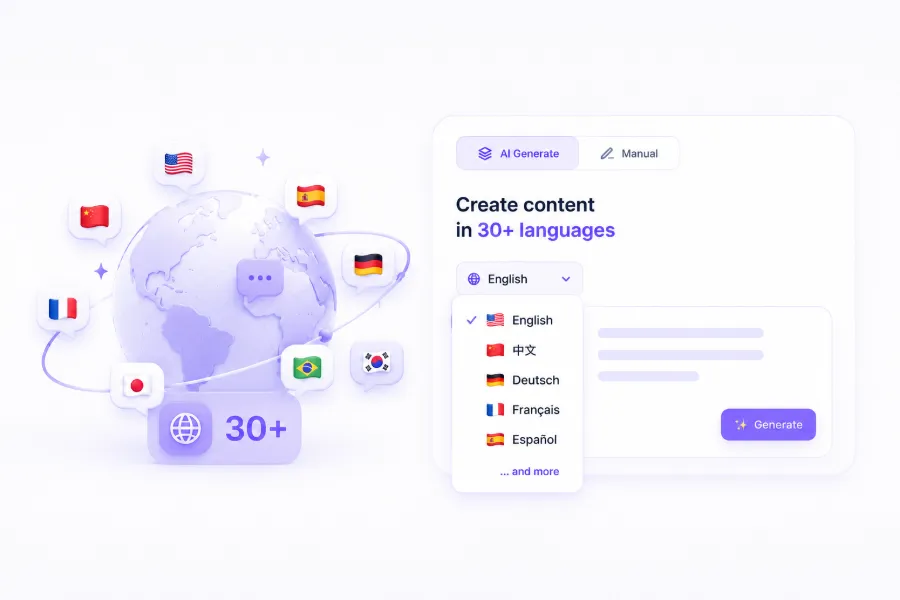
The same trend does not necessarily convey the same need in different countries. The English market may interpret a word as an efficiency tool, the Chinese market focuses on price and practical usage, the Japanese market may care about restrained expression, the German market often emphasizes information completeness, and the French market may be more sensitive to tone and cultural background. Therefore, global content localization is not just translation; it also requires adjusting platform expression, market context, and timing.
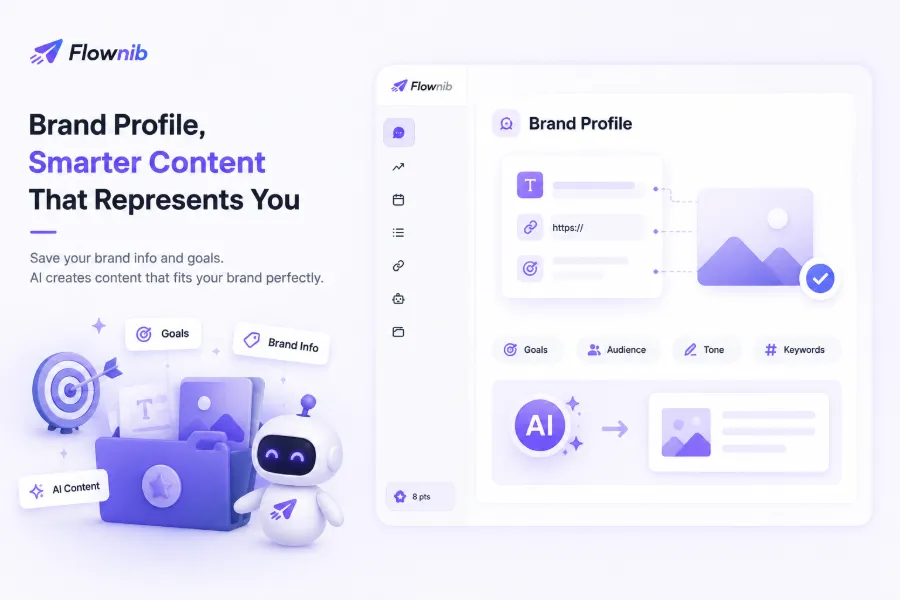
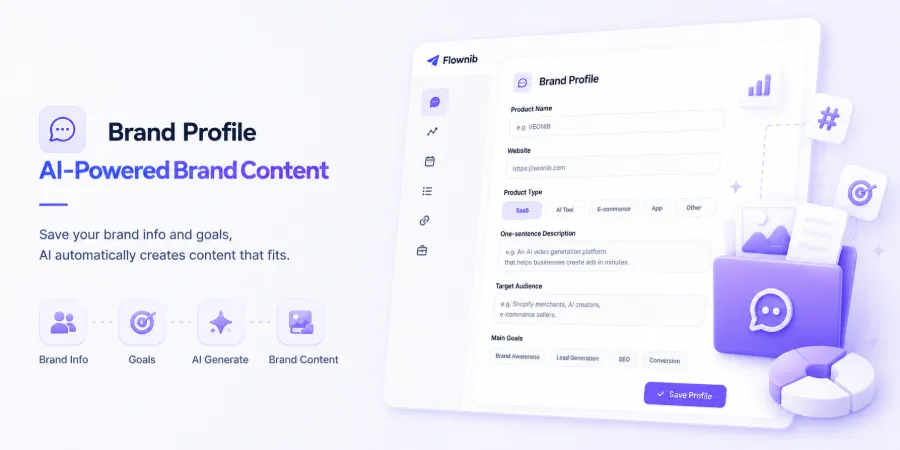
Brand context should at least include product information, target users, brand positioning, and marketing objectives, and clearly specify which statements are permissible and which promises must not appear. A brand archive is not a set of fixed slogans, nor a repository for AI to automatically generate promotional copy. It is more like a boundary when reviewing topics: it helps the team determine whether a trend is related to the product, assists editors in preserving accurate product information during rewrites, and helps different language teams maintain a consistent brand personality.
Taking the five major language environments—English, Chinese, Japanese, German, and French—as an example, the team cannot merely check whether terminology is translated correctly. They must also verify whether examples fit local consumption scenarios, whether price, units, and promotional conditions need adjustment, and whether the target audience would interpret the sentence as an overpromise. Some content that is direct in English may sound too stiff in Chinese; a German version that removes constraints may make the product capability appear exaggerated.
Hot but irrelevant topics and topics with moderate heat but closely aligned with purchase decisions should be reviewed differently. The former can be a lightweight observation on social platforms without full multilingual production; the latter, even with a small discussion volume, may be more suitable for product descriptions, use cases, or pre‑sales answers. Teams have often been led by “trend scores,” but later realized that the ability to continuously connect brand products with audience problems is more worth solidifying than the day’s heat ranking.
One Topic Selection Does Not Mean Using the Same Copy Across All Platforms
After the topic is selected, the content is still unfinished. Instagram relies more on visuals and short captions, X (formerly Twitter) is heavily constrained by character limits, LinkedIn requires more comprehensive business background, TikTok and YouTube often need redesign around the video intro, and Facebook, Threads, Pinterest, Bluesky, and Google Business each have distinct content structures and interaction habits.
In the multi‑platform rewriting stage, teams encounter a very specific friction: when promotional content must cover multiple markets within the same workday, operators translate while adjusting character limits, uploading images and videos, and confirming each account’s connectivity. Later, some teams moved part of the rewriting and publishing workflow into Flownib, not because the copy could be fully handed over to the system, but because repeated copying, tab switching, and manual scheduling had already caused many errors.
The core content information should remain consistent, such as the problem the product solves, when the promotion ends, and what the user can do next. However, platform expression can differ. Instagram may showcase visual benefits first, LinkedIn may introduce usage background, X may pose a question directly, and TikTok may place the most easily understood scenario in the first few seconds of the video. AI content rewriting can reduce duplicate effort on the first draft, but platform style, character limits, and visual assets still require human review.
This is also the part most easily misunderstood about “create once, publish everywhere.” Reducing copy‑and‑paste does not mean eliminating review; bulk distribution saves mechanical work but should not replace the market lead’s final confirmation of tone, links, images, and promotional conditions. When selecting tools, teams can refer to the comparison dimensions of an all‑in‑one social media tool, but still need to decide based on account numbers, content types, and human review capacity.
The current adaptation range can cover ten social platforms, but the more platforms covered, the less you can judge workflow reliability by “all posts succeeded.” Some platforms accept images, others require specific video ratios or title structures; some may delay display even after a successful post. If operators only look at total success counts, they may miss a failure in a specific market until the evening when they realize traffic didn’t reach the expected page.
Break Down Trend to Publishing into Four Checkable Steps
If trend, brand, and platform versions lack clear handoff points, teams usually end up doing rework at the final step. A more practical approach is to set a manual checkpoint for each stage and retain publishing records, making it easier to trace back during the next round of content planning.
- Discover Trend: Input keywords and cross‑check discussion sources on Reddit, YouTube, news, and Hacker News, checking whether the topic is a short‑term surge or a sustained rise. The manual checkpoint is to confirm that the discussion target and target market are not misinterpreted.
- Add Brand Context: Fill in product information, target users, brand positioning, and marketing goals, removing unverified features, prices, or effect promises. The manual checkpoint is for someone familiar with the market to confirm that the content still sounds like something the brand would say.
- Generate Platform Versions: Rewrite according to each platform’s length, media format, and interaction style (Instagram, X, LinkedIn, TikTok, etc.). The manual checkpoint is to preview each platform, checking character limits, links, image ratios, and language expression.
- Preview and Schedule: Confirm accounts, time zones, publishing times, and content calendar, then schedule the post and verify records after publishing. The manual checkpoint is to ensure that the active periods of global markets are not overwritten by a single time zone.
These four steps may sound slower than directly copying copy, but they are especially useful on promotion days. A typical setup time of about 2 minutes does not mean each piece of content can be completed in 2 minutes, because the real time‑consuming parts are usually material confirmation, market review, and exception handling. Automation only hands stable repetitive actions to the system and cannot replace the team’s decision on whether a joke is appropriate in a given cultural context.
One‑click distribution, scheduled publishing, content calendars, and publishing records can reduce the maintenance cost of managing multiple accounts, but official APIs also have limits. The documentation indicates an official API uptime of 99.99%, meaning connections are stable most of the time, but it does not guarantee that no platform in any market will encounter permission expirations, media format rejections, or delayed displays. Pre‑publish previews and post‑publish records still need to be retained.
In practice, when Flownib appears a second time, it is usually just a tool in the publishing, scheduling, and recording workflow: the team uses it to centralize versioning, scheduling, and history for multiple accounts, then still needs to verify each platform’s response status. To see differences among various automation paths, you can refer to social media automation methods; the focus is not to automate every action, but to identify which actions are suitable for batch execution.
Teams should also manage local time separately. 9 a.m. Eastern Time in the U.S. does not correspond to the active periods of audiences in Tokyo or Berlin; if the same promotional content is released simultaneously across all markets, it may get interaction in one market but fall into the early morning in another. Content calendars should ideally record market, language, account, time zone, and version, rather than a single unified publish time.
Use Post‑mortems to Determine Which Trends Are Worth Ongoing Follow‑Up
Post‑publish retrospectives should not focus solely on likes. Teams need to examine content relevance, interaction feedback, audience quality, market differences, publishing time, and subsequent conversion signals. Some popular content draws many viewers but yields no clicks, saves, or inquiries; other content with lower interaction may attract audiences closer to the purchase stage.
The retrospective cycle can be set at the next content planning node after each publish. Retain at least three types of records: why it was judged a trend at the time, which platform versions were published, and what the final outcome was. This allows the team to distinguish “high heat but not brand‑compatible” from “low heat but delivering effective audience,” rather than deciding based on impression a few days later.
Market differences should also be recorded separately. A topic may generate comments in the English market, private messages in the Chinese market, and almost no interaction in the German market; this does not necessarily indicate a failed topic—it could be due to timing, visual assets, or expression style mismatch. By writing these results into the content calendar and records, the next round can adjust keyword lists, brand judgment criteria, and publishing windows.
What the team ultimately needs to solidify is not a static set of hot words, but an increasingly accurate decision boundary. Trends provide external signals, brand context limits content direction, platform adaptation determines expression style, and retrospective results correct the next selection. Allowing a small amount of manual review and uncertainty during execution usually reduces mis‑posts and rework more than striving for complete automation.
FAQ
Why can’t cross‑border e‑commerce content be created solely based on hot trends?
Because heat only indicates that people are discussing something; it does not mean those people are the brand’s audience, nor that the topic can be linked to purchase decisions. Teams should first consult at least four source types, then combine market, product, and audience judgments; after publishing, they should also use the next content planning round to verify interaction and conversion signals.
What specific information should brand context contain?
Brand context should at least include product information, target users, brand positioning, and marketing goals, and also clearly state prohibited promises and statements that can be easily misinterpreted. Multilingual teams should have human confirmation of tone and market scenarios for English, Chinese, Japanese, German, and French versions.
Should the same hot topic be published on all social platforms?
It should not be assumed to be posted everywhere. Teams should select channels based on platform audience, content length, interaction style, and media format; if a platform cannot accommodate product information, keep it in the observation log, which usually saves rework time compared to forced posting.
How to determine if a trend is worth following up?
Assess whether it is sustained, relevant to the target audience, and whether the brand can provide concrete, useful information. A trend with moderate heat that brings high‑quality inquiries or clicks may be more deserving of inclusion in the next content calendar than a high‑heat trend with no conversion.
Which parts must be manually reviewed when adapting multilingual content?
Product features, price, promotional period, disclaimer, market tone, and publishing time must be manually reviewed. AI rewriting can first handle platform versions, but before go‑live each platform should still be previewed, and post‑publish status and exception logs checked.
Share Article