
Amazon Sellers External Traffic Generation: Using Flownib to Close the Traffic Loop from Social Media to Store

I’ve been doing Amazon operations for two years. Even if internal ads perform well, the traffic ceiling is still there. In the second half of last year I started trying to drive traffic from social media, and I found that the biggest bottleneck wasn’t content quality at all—it was publishing efficiency. Posting the same content to Instagram, X, and Facebook required adjusting character counts and image dimensions, which took about twenty minutes per post. A post published on a Friday peak would be remembered on Tuesday that another platform hadn’t been synced. This fragmented workflow lasted two months, consuming more than ten hours a week on manual publishing, yet traffic growth was almost zero. It’s true that Amazon sellers rely heavily on internal ads and organic rankings, but external social‑media traffic is the real source of incremental growth—provided you have a standardized, repeatable process.
Three Major Pain Points for Amazon Sellers’ External Traffic
Anyone who has done manual publishing knows the hassle: Instagram limits 2,200 characters, X limits 280 characters, LinkedIn is suited for long articles, and Facebook requires thumbnail images. Every time you switch platforms you have to copy, reformat, and resize images. If you maintain Instagram, X, LinkedIn, Facebook, Pinterest, YouTube, TikTok, Threads, and Google Business—the nine major platforms—just adapting the content can stall you completely.
The most typical failure scenario I’ve seen is this: a seller decides at the beginning of the year to focus on external traffic. For the first two weeks they manually post 5–6 items per day, covering Instagram images, X short posts, Facebook long posts, and TikTok short videos. By the third week the posting volume drops to 1–2 per day, and content quality visibly declines— the same product image appears on three platforms, copy‑pasted captions, and even the tags aren’t changed. By the fourth week they stop posting altogether. The traffic curve starts a straight decline in week three and never recovers for the next two months. This isn’t an isolated case; the vast majority of Amazon sellers who try external traffic fail not because of a lack of creative ideas, but because the manual publishing burden is too heavy to sustain a steady output rhythm.
I looked for mature tools in the industry that could solve this problem. Compared with older social‑media management tools like Hootsuite, the functionality is indeed comprehensive, but the pricing is high and many features are redundant for Amazon sellers. In multi‑account management, each platform maintains its own account and publishing history, scattered across different places, making troubleshooting extremely inefficient.
Standardized Process: Create Once, Publish Everywhere
The solution is straightforward: decouple content creation from platform publishing. Write the original draft first, then let the tool automatically adapt it to each platform’s format, and finally publish everything in one go. The workflow consists of four steps: content creation → AI‑automated rewriting for each platform → preview & confirm → one‑click publishing.
In practice I use Flownib for this workflow. Setup takes less than two minutes; I connect Instagram, X, LinkedIn, and Facebook accounts, write a product description, and the system automatically rewrites it according to each platform’s character limits and style. The Instagram version keeps the image and a short caption, the X version is compressed to under 280 characters, and the LinkedIn version expands into a titled long post. After confirming the preview, a single click publishes to all platforms. The API availability is 99.99%, and after several months there have been no publishing failures.
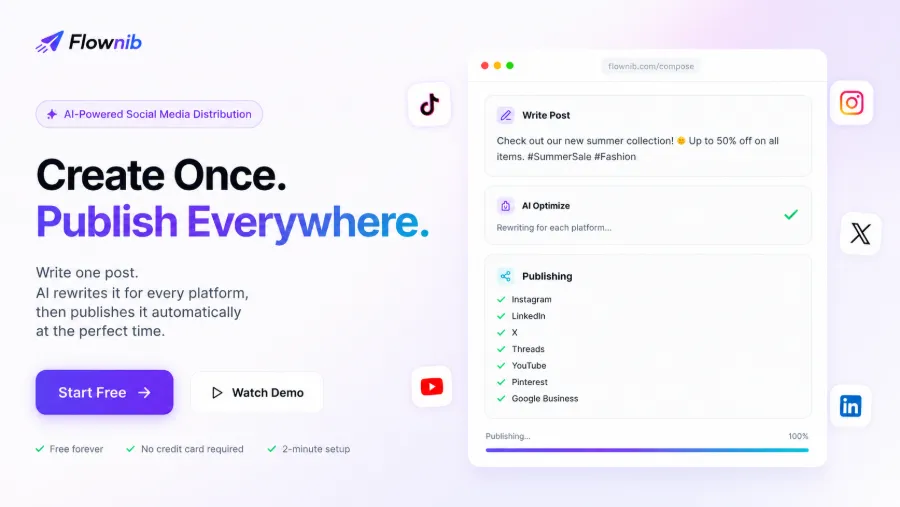
Once this workflow was running smoothly, I switched to writing all next‑week drafts on Friday and scheduling daily releases, ensuring at least one new piece of content appears on a platform each day. Social‑media traffic driven from the site started from zero and stabilized at 500–800 clicks per week after two months. For a more detailed build guide, see the Complete “Create Once, Publish Everywhere” Process, which includes screenshots for each step.
Multi‑Platform Account Management & Content Calendar
Flownib’s official API supports ten platforms: Instagram, X, LinkedIn, TikTok, Facebook, Threads, Pinterest, YouTube, Bluesky, and Google Business. Each platform can connect multiple accounts; for example, I have two Instagram accounts—one for product images, one for customer case studies—all managed from a single dashboard.
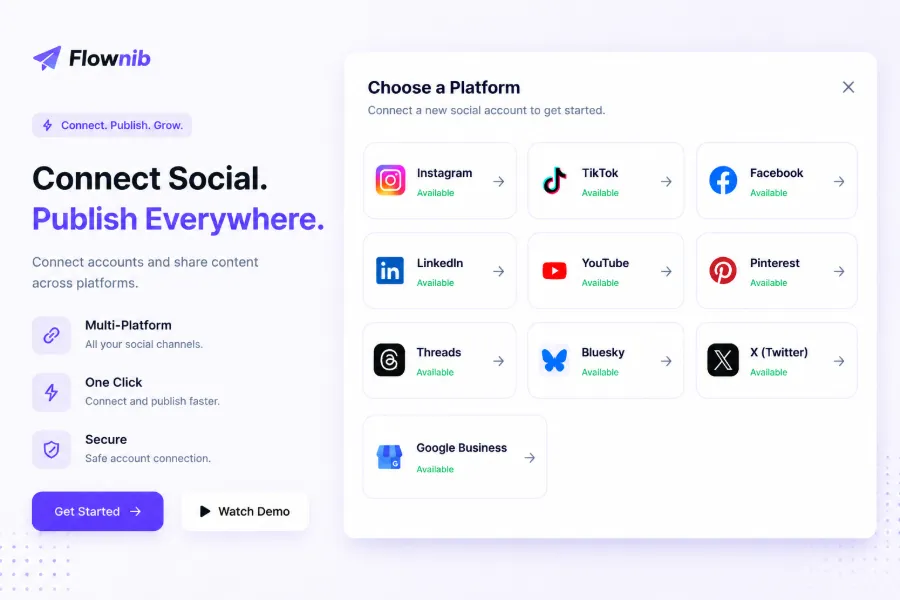
The content calendar solved an old problem for me: I used to scramble for what to post right before the scheduled time, often ending up with filler content or skipping altogether. The visual calendar spreads the daily/weekly/monthly publishing plan, allowing me to pre‑schedule what to post, when, and on which account. Aligning the schedule with Amazon’s promotional calendar yields even better results—intense product posts two weeks before Prime Day, review and discount teasers a month before Black Friday. This way, traffic peaks line up with major promotion dates, and conversion rates are far higher than random posting.
The calendar is not just a record; it helps maintain rhythm. Missed days are instantly visible, preventing the week‑long blind spots that used to happen. Occasionally, to compare the adaptability of different tools, I check the API support comparison between FlowNib, Publer, and Planoly to see which platforms use genuine official APIs versus simulated posting, which directly affects stability and account safety.
Building an External Traffic Flywheel with Other Tools
Social‑media distribution is only one part of the external traffic loop. Amazon sellers need a full external traffic system that also includes SEO content for long‑tail search entry and short videos for high‑conversion traffic. I combine Flownib with two other tools: Seonib for keyword optimization across platforms, and Veonib for video publishing. The three tools form a collaborative loop: first, SEO determines content direction; then Veonib distributes video content to YouTube and TikTok; finally, Flownib distributes graphic and text content to Instagram, X, LinkedIn, etc.
After this loop is running, traffic sources are no longer single‑channel. A product post on Instagram can, three days later, generate a wholesale inquiry via a LinkedIn long post, which then converts into a B2B order. Without platform‑specific distribution, such cross‑scenario conversions are hard to happen automatically.
For real‑world results of this collaborative model, see the Flownib case study on helping creators boost social coverage worldwide, which records data changes for different sellers and creators after using the workflow.
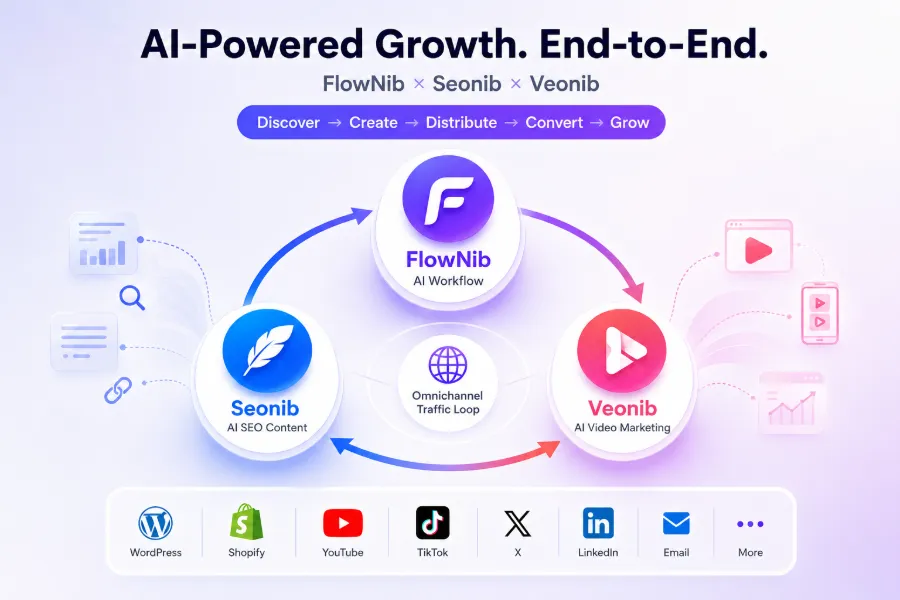
On the SEO side, I first use the Seonib SEO tool for keyword research and title optimization before publishing content, ensuring each post carries searchable attributes. This way, social‑media traffic and search traffic stack, so a single post gains exposure on its platform and continues to bring long‑tail traffic after being indexed by search engines. Using all three tools isn’t mandatory, but after a period I found that Flownib alone only solved publishing efficiency; adding Seonib noticeably improved content quality and traffic sustainability.
External traffic often runs into hiccups—sudden API rule changes, content throttling, temporary account bans. Having redundant tools and workflows for quick switching is far more reliable than fighting with a single tool. Flownib, as the core daily social‑media distribution tool, excels in stability and multi‑platform coverage; combined with SEO and video tools, an Amazon seller’s external traffic flywheel can keep turning.
FAQ
Why do Amazon sellers need external social‑media traffic?
Internal Amazon traffic competition is getting fiercer, CPC costs keep rising, and organic rankings are hard to maintain. External social‑media traffic helps sellers acquire incremental users directly from Instagram, TikTok, Facebook, etc., reducing reliance on internal ads. Moreover, social‑media content can be indexed by search engines, creating a long‑term search traffic entry.
How does Flownib help Amazon sellers save publishing time?
Flownib’s AI‑automated rewriting and one‑click multi‑platform publishing reduce what used to be over ten hours of manual work per week to just two to three hours. Sellers only need to write the original draft; the system adapts it to each platform’s format and publishes with a single click—no per‑platform operations or repetitive editing required.
Which social platforms does Flownib support? Does it include the Instagram and Facebook that Amazon sellers commonly use?
Flownib supports ten platforms via official APIs: Instagram, X, LinkedIn, TikTok, Facebook, Threads, Pinterest, YouTube, Bluesky, and Google Business. These cover the main social‑media channels Amazon sellers use for traffic, especially Instagram and Facebook for product images and case studies.
Do I need a technical background to use Flownib? Is the setup complicated?
No technical background is needed. Connecting accounts takes about two minutes: just click the authorization button in the dashboard and log into each platform. After the initial setup, daily publishing is simply write‑draft → preview → click‑publish—no code or API configuration required.
Is Flownib suitable for individual sellers and small teams?
Yes. The free plan offers three social accounts and six posts, sufficient for small‑scale traffic generation for solo sellers. Paid plans start at $11/month, far cheaper than hiring a person to manage the publishing workflow. Small teams can share a single account for collaboration without extra costs.
Share Article