
Turning Hot Conversations into Brand‑Aligned Content: A Cross‑Border E‑Commerce Workflow

Cross‑border e‑commerce teams often discover a heating topic in the afternoon: Reddit users are discussing real‑world usage issues of a certain product, related YouTube videos are increasing, and news sites are publishing reports on the same angle. After the team verifies the source and confirms whether the brand is suitable to intervene, they translate the content into English, Japanese, or German and adapt it for each platform—by then, the window is usually gone.
AI can shorten this process, but it should not decide for the team whether “this hot topic is worth chasing.” A more reliable approach is to chain trend discovery, brand constraints, platform rewriting, human review, and publishing records into a single, auditable workflow. This way, the team retains not only a few posts but also the rationale for choosing the topic at that time.
AI turns hot conversations into brand content, not by a single generation but through a four‑step workflow: first filter audience‑relevant and risk‑controlled trends, then limit factual boundaries with a brand dossier, rewrite for different platforms and languages, and finally have human review and record the publishing outcome. Hotness only determines entry into the candidate pool; it cannot directly dictate brand stance.
First, Decide Which Hot Conversations Are Worth Brand Involvement
“Hot” and “brand‑suitable” are two different things. A topic may have high view counts but be unrelated to the product, or the discussion may contain obvious misinformation, attacks, or region‑sensitive content. When cross‑border e‑commerce brands filter candidate trends, they must consider audience relevance, product relevance, discussion growth momentum, and brand risk simultaneously.
Trend discovery can start from multiple entry points. Operators may begin with keyword searches on Reddit, then compare YouTube video titles and comment growth, check news sites for industry events, and finally verify on Hacker News whether the tech or consumer trend is just a niche topic. Different source platforms give different meanings to discussion heat: Reddit more easily reveals genuine questions, YouTube often provides usage scenarios, news sites may amplify events, but none alone can represent target customers’ purchase intent.
Cross‑border e‑commerce brands should focus on four types of trends: user‑encountered usage scenarios, recurring consumer questions, category controversies, and pain points not yet answered on product pages. For example, “Is a certain storage product suitable for small‑apartment travel?” is more valuable than a simple hot keyword because it combines scenario, question, and potential product relevance. Ops teams can first expand the candidate pool with keywords, then manually rank by audience relevance and brand risk, rather than sorting solely by view count.
A candidate trend might be scored 92 % match by the system, but this score is only a filtering signal. It cannot detect sarcastic tone in the original discussion or confirm which regional product version the user is referring to. The team should record trend discovery time, source platform, original link, keywords, discussion heat, and the reasons for selection or rejection. When revisiting a few hours later, staff can discern whether the trend truly changed or the captured context was incomplete.
In practice, the filtering order can be compressed into a short process:
- First confirm the discussion subject and target audience, then verify the product truly involves the scenario; next determine whether the discussion is natural growth or a one‑off event, and finally check whether the brand can respond with verifiable facts.
The team once tracked a consumer controversy on a Monday morning; the backend showed rapid discussion growth and high brand relevance. By the afternoon, operators discovered the original post discussed regulations in another country, which didn’t apply to the product’s market. The posts had already been scheduled on three accounts, so the team had to pull them back before publishing, spending half a day re‑checking and explaining the internal decision. Such delays not only miss the hot window but also create gaps in the content calendar. For how to arrange social distribution across different markets, see the Cross‑Border Social Distribution Case Study, but the process records there cannot replace verification of the original context.
Transform Trends into Brand‑Responsible Content Angles
Trend facts, user opinions, brand stance, and commercial claims must be stored separately. A user saying “This type of product is hard to clean” is an opinion or experience; a brand stating “Our product cleans in three minutes” is a commercial claim that needs product information and factual verification. AI can quickly identify common angles in discussions, but it should not package a net’s judgment directly as a brand conclusion.
The same hot conversation can usually be rewritten into at least three content angles. The brand can answer the user’s question, add a verified usage experience, showcase the product in a specific scenario, or present a cautious viewpoint indicating which statements lack sufficient evidence. Each angle must retain the original discussion’s context and verifiable facts; otherwise, faster rewriting leads to faster misinterpretation spread.
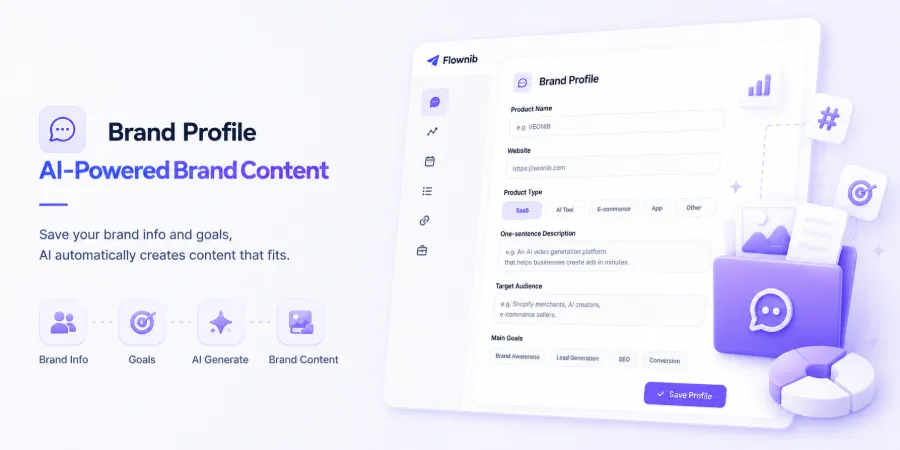
A brand dossier should be more specific than a tone guide. It must at least record product information, target audience, brand positioning, marketing goals, and prohibited commitments. For example, a product page may say “suitable for short trips,” which does not mean the content can claim “suitable for all travel scenarios”; the target audience may be European consumers, which does not allow ignoring local currency, regulations, and after‑sales conditions. Brand tone includes not only friendly‑sounding sentences but also factual boundaries, value orientation, product evidence, and regional adaptation.
A prudent checking order is: first keep factual statements from the original discussion that can be quoted, then remove unverified inferences, add the brand’s existing product evidence, and finally assign a reviewer to confirm the commercial claim. Operators review whether the expression and audience are understandable; product or customer‑service staff verify specifications, after‑sales, and usage limits; the person with publishing permission handles the final release. AI generates multiple drafts, but automatic generation does not equal automatic decision‑making.
This is where brand dossiers are often underestimated. They do not guarantee every copy is correct, but they tell reviewers what to check. If the marketing goal is to drive product visits, the content must be links and calls‑to‑action; if the goal is to build category awareness, it should not include unverified promotional promises to click rates. For how lightweight teams organize such processes, see the Low‑Cost Social Media Operations Method.
In production, AI speed and review responsibility always involve trade‑offs. Automation can compress the first draft from dozens of minutes to a few, but review does not shrink proportionally; it may increase due to more versions. An English version may look fine, but after translation to Japanese the tone can shift; the same promotional info for the Canadian market must be re‑checked for currency, timing, and inventory limits. If a team treats “generation complete” as “ready to publish,” they often discover over‑promising only later in the comment section.
Adapt the Same Trend to Different Platforms and Markets
The same brand viewpoint cannot be copied directly to Instagram, X, LinkedIn, TikTok, Facebook, Threads, Pinterest, YouTube, Bluesky, and Google Business. Each platform’s character limits, narrative pacing, interaction style, media format, and audience expectations differ. Instagram may need visuals and a short caption; X relies on opening lines and reply threads; LinkedIn favors experience and industry background; TikTok often requires a strong opening few the video.
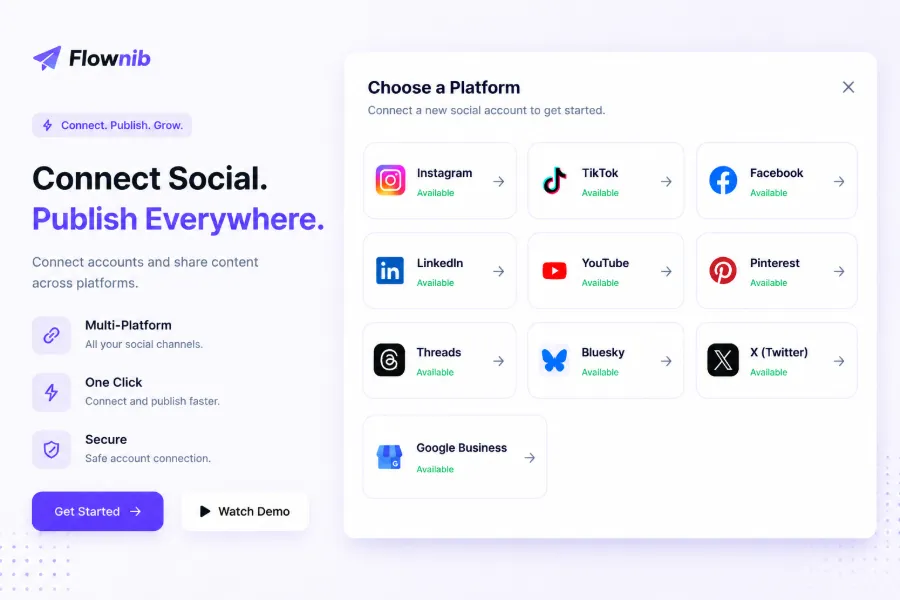
In practice, the team first saves an immutable brand claim, then lets AI rewrite the opening, structure, call‑to‑action, and media description for each platform. The same product facts can become an Instagram scene description, an X question response, a LinkedIn operational observation, a TikTok short‑video script, a YouTube description, or a Google Business local update. When supporting ten platforms, the review focus shifts from word‑by‑word copying to checking whether each platform introduces new facts, tone shifts, or promise deviations.
When the team places trend discovery, content rewriting, and multi‑platform publishing in a single workflow, Flownib appears at the tool‑integration points: operators input keywords to view candidate conversations, generate drafts for the chosen angle, preview each platform version, and finally schedule via authorized accounts. It reduces tab‑switching and duplicate copying, but brand review must still be completed before publishing.
| Platform | Suitable Trend Content Angle | Common Rewriting Focus | Pre‑Publish Checklist |
|---|---|---|---|
| Usage scenario, visual experience | Image caption, short intro, hashtags | Image rights, link placement | |
| X | User question, controversy response | Character limit, reply thread, tone | No out‑of‑context quotes, fact source |
| Industry observation, experience summary | Background structure, professional phrasing | Commercial claim, data source | |
| TikTok | Pain‑point demo, quick answer | Video opening, subtitles, pacing | Visual promise, subtitle translation |
| YouTube | In‑depth explanation, review scene | Title, description, chapters | Specs, demo results |
| Google Business | Local event, service description | Regional info, call‑to‑action | Address, time, promotion validity |
Media format also changes factual risk. An explanation suitable for a long YouTube video may, reduced to a conclusion on X, omitting limiting conditions; an exaggerated TikTok opening may appear as an unverified industry claim on LinkedIn. Official platform resources should be treated as publishing‑rule references, e.g., YouTube’s official content resources (https://blog.youtube/) help confirm video and channel changes, while Meta’s account permissions and API differences require checking the Meta Developer Platform (https://developers.facebook.com/).
Multilingual rewriting is not sentence‑by‑sentence translation. Product facts can stay, but tone must be market‑adjusted; currency, dates, promotion deadlines, size units, and after‑sales promises must be re‑checked. An English version saying “Ends this weekend” may have different effective dates for Australian versus U.S. readers across time zones. Official APIs, platform permissions, and character limits should be verified in the preview stage; after a failed publish, retain error info, retry time, and final status instead of assuming the content went live silently.
Turn Hot‑Content Publishing into a Traceable Operational Process
A complete loop should start with keyword discovery, then trend filtering, brand‑aligned rewriting, platform preview, scheduled publishing, and finally publishing records. A content calendar should not only show what is posted on which day but also link back to the original trend source and the corresponding content version. Otherwise, a month later, when a post’s engagement is high, the team cannot tell whether the result stemmed from the topic angle, language version, timing, or the platform itself.
Multi‑account management reduces manual copying and tab switching, but it also hides a problem: bulk publishing makes errors spread simultaneously. The team must specify during scheduling which accounts belong to which market, which allow automatic publishing, and which require local operator confirmation. Content involving price, inventory, regulations, after‑sales, or sensitive topics should not share the same release permissions as ordinary content.
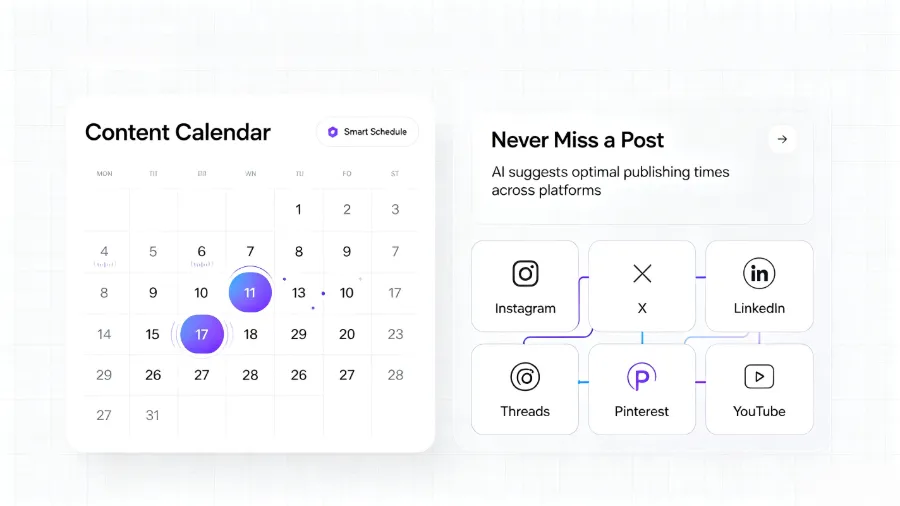
When integrating tools, an average two‑minute account setup only shows that the connection flow is short; it does not mean brand rules are fully configured, nor that content review is complete. When scheduling hot content, the team must still view it alongside regular product, promotional, and after‑sales content to maintain balance. If most posts in a week chase external topics, the account may gain short‑term engagement but leave consumers unable to find product information or after‑sales answers.
In a friction‑reduced multi‑platform workflow, Flownib’s content calendar, multi‑account management, and publishing records can serve as a middle layer: operators view each platform version, confirm language‑account mapping, then decide which content to schedule automatically and which to hand over for manual publishing. It solves duplicate work and scattered record issues but cannot replace the team’s judgment on whether a hot topic is worth pursuing.
Publishing records should retain the original trend source, publish time, platform version, language version, interaction metrics, and subsequent iterations. Platforms like Threads may change content format and interaction methods; teams can verify actual entry points via the Threads platform resources and log failed publishes, retry counts, and manual edits in the same content file. An API success does not guarantee that images, links, or videos display as expected on every platform.
Use Outcome Reviews, Not Hotness, to Prove Content Effectiveness
Trend hotness, exposure, engagement, click‑through, product visits, and conversion rates should be examined separately. A hot conversation may generate massive exposure but no product visits; a niche language version may have lower exposure yet higher click‑through and conversion. Review should compare platform version, language version, content angle, and timing—not just a single aggregate metric.
Attribution is usually more complex than publishing. A user may see a TikTok trend video, search the brand on Google, then click an email link to the product page; if the team counts only the final visit as content contribution, earlier touchpoints are underestimated. Cross‑border teams should standardize UTM naming, market codes, and content version IDs, and keep the differences between platform native data and internal analytics.
Hot content can also bring brand‑safety issues: contextual misinterpretation, over‑leveraging, inaccurate product promises, and cultural sensitivities across markets. One team once posted a product response to a public event on a Wednesday night; the English version passed review, but the Spanish version turned a cautious tone into a definitive statement. Two hours later, comments questioned whether the brand was exploiting the event; the team paused remaining versions and re‑tracted published content, completing a manual rewrite the next day. In this case, the API worked fine; the problem was language‑specific context and review boundaries.
Infrastructure uptime can be measured by a 99.99 % API success rate, but system availability does not replace trend judgment, content review, or conversion attribution. Teams still need stop, modify, and amplify conditions: if engagement is high but clicks remain low, first check content angle and call‑to‑action; if comments contain factual corrections, pause amplification and verify product info; if conversion rates improve across multiple markets, consider expanding versions and timing tests. Human review must always retain veto power, especially for content involving regulations, health, safety, or public events.
Long‑term reusable assets are not the final posts themselves but the original context, selection rationale, brand constraints, platform versions, and publishing outcomes. By preserving these records, the team can, when a similar trend appears, know which angles previously worked, which translations altered meaning, and which platforms only yielded superficial interaction.
AI is suitable for shortening discovery and adaptation time; the team decides whether the brand should participate and whether the content can be published. Not every hot topic must be chased, and not every version must be auto‑launched; the ability to explain every choice and halt when results deviate is what enables sustainable cross‑border content operations.
FAQ
How does AI determine whether a hot conversation is suitable for a cross‑border e‑commerce brand?
AI can rank candidates based on keywords, audience relevance, product relevance, discussion growth, and brand risk, but it cannot make the final judgment alone. The team should, within a few hours of discovery, verify the original source, market regulations, and product facts, and record the reasons for selection or rejection.
How can we ensure AI‑rewritten content still matches brand tone?
First create a brand dossier containing product info, target audience, brand positioning, marketing goals, and prohibited commitments. Then have ops, product, or customer‑service staff review expression and facts. One trend can generate at least three angles, but each version must retain the original context and verifiable facts.
Does the same trend need separate rewrites for each social platform?
Yes, because Instagram, X, LinkedIn, TikTok, and YouTube differ in character limits, media format, and narrative pacing. Even if the core message is the same, the opening, call‑to‑action, subtitles, and links must be re‑checked and previewed per platform before publishing.
What is the most important thing to check before publishing multilingual trend content?
The most critical checks are product facts, tone, cultural context, currency, dates, and promotion deadlines. For cross‑time‑zone publishing, the team should re‑verify local time at least once before scheduling and keep modification logs for each language version.
Which metrics should be examined after hot‑content publishing?
Look at exposure, engagement, click‑through, product visits, and conversion rates together, and compare platform version, language version, content angle, and timing. It’s recommended to review at 24 hours and 72 hours post‑publish, avoiding reliance on a single high‑exposure metric to judge business impact.
Share Article