One Person Is a Marketing Department: After AI Takes Over the Execution Layer, What Is the 2026 Content Team Hiring?

A cross‑border seller’s manager flips through a week’s work log and sees more than ten hours spent manually pushing the same post to six or seven platforms—changing word count, tone, and scheduling. Those execution tasks are now being handled by AI, and with the job list emptied, she feels even more confused: where should people go? This article starts from the job restructuring of a 2026 content studio and discusses the three truly valuable types of talent in the AI era: curatorial, editorial, and strategic.
Bottom line first: The disappearance of execution roles does not mean the disappearance of positions; it shifts to “upstream selection” and “downstream quality control.” In the past, the busiest people in a team were responsible for “getting content out.” That part is now automated, and the truly scarce talent are those who decide “what to publish, whether it’s right, and why.” In 2026, content teams hire for judgment, not typing speed.
After AI Takes Over the Execution Layer, the Manual Checklist for Content Teams Shortens
First, define what “execution layer” means. Writing, formatting, scheduling, publishing to each platform, and recording feedback—these actions used to consume most of a content operator’s time. A cross‑border seller of home goods calculated that more than 10 hours per week were spent manually posting, half of which was copying, pasting, and adjusting formats. After automation, connecting an account and setting it up takes about two minutes, API availability is 99.99 %, and publishing essentially disappears from the to‑do list.
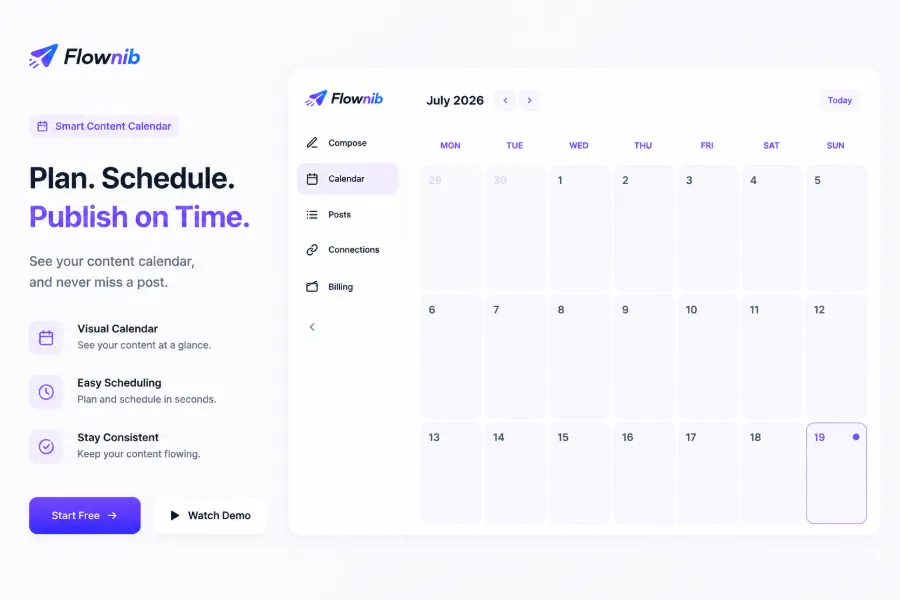
Manual scheduling also retreats. Previously, teams used spreadsheets to note each platform’s publishing time; now the content calendar shows all published and pending posts, and multi‑account, multi‑platform unified management is the norm. One or two accounts can be monitored manually, but with five or more, missed, duplicate, or wrong posts become almost inevitable. Terms like multi‑platform sync publishing, scheduled publishing, and Social Scheduling have moved from feature descriptions to daily operations.
What truly confuses teams is the definition of roles. When execution tasks are taken over, what do the original people do? The answer isn’t layoffs; it’s an overall upward shift of job content. Below is a snapshot of three common role profiles in a 2026 content studio:
| Role Type | Core Question | Daily Deliverables | Key Ability | Evaluation Metric |
|---|---|---|---|---|
| Curatorial | What to publish | Topic and content pool selection | Filtering & judgment | Content adoption rate |
| Editorial | Is it right | Draft review checklist | Tone sensitivity | Error‑post rate |
| Strategic | Why publish | Scheduling & retrospective reports | Data analysis | Interaction & conversion |
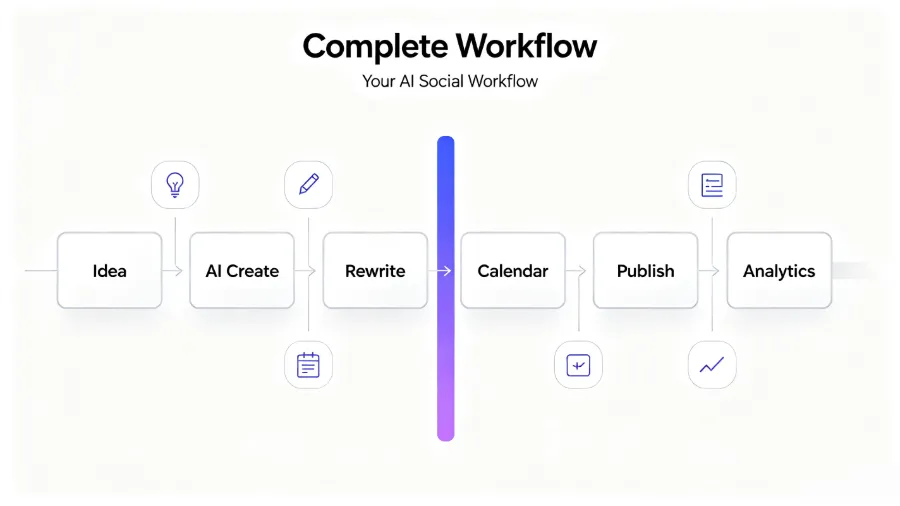
None of these roles now require manual posting of each item. After multi‑platform publishing is automated, tools like Flownib handle account connections, rewriting, scheduling, and record‑filling. Humans only need to make judgments at key points. If you still use n8n or Zapier for automation, you’ll notice that social publishing is often the most overlooked link in the chain—see the discussion about the missing social media step in automation workflows: The Missing Social Media Step in Automation Workflows.
Curatorial Talent: From “I’ll Write It” to “I Decide What to Publish”
When production capacity is no longer scarce, the value of curation emerges. Curation’s core is “what to select, what not to select.” A product selling point can be broken into an Instagram visual post, a LinkedIn industry perspective, a short tweet on X, and a chatty Threads expression—each preserving platform attributes and character limits. Rewriting a piece of content and syncing it to ten platforms sounds like a capacity issue, but it’s really a selection issue—what material is worth breaking down, into how many angles, and which angle for each platform.

A pet‑product operations manager selects material daily from customer service chats, return reasons, and repeat‑purchase feedback. She doesn’t write long originals; she rewrites real user questions into posts for each platform. After three months, Instagram interaction rates are higher than those of carefully formatted content before. Here, content repurposing isn’t laziness; it’s allocating limited energy to judgment—AI generates the content, she decides which pieces enter the content pool.
Typical workflow for curatorial talent: gather scattered material, break it into multi‑channel content, then distribute according to platform characteristics. The prerequisite for a “create‑once‑publish‑everywhere” approach is solid upfront selection. Choosing the wrong material wastes even the fastest publishing. The case study “How Pet‑Product Sellers Use Automation to Build Loyal Fans” shows a complete material‑selection workflow. AI makes “what to select” rarer than “what to write,” which is the most noticeable shift for 2026 content teams.
Editorial Talent: After AI Drafts, Who Owns the Tone?
AI‑generated rewrites bring a hidden risk: tone loss of control. A cross‑border e‑commerce brand ran a test last year, letting AI rewrite a promotional message for each platform and publishing it directly. The Instagram version deviated from the brand’s consistently gentle tone, sounding overly harsh; the comment section filled with negative feedback, and a minor PR crisis followed. The team spent three days handling complaints and deleting posts; the offending post was eventually taken down. The timeline is clear: posted Monday, complaints concentrated Tuesday, takedown and apology Wednesday.
After this mishap, the team added a human editorial checkpoint between “AI draft” and “publish.” The process got longer, but the error‑post rate dropped. The trade‑off is between efficiency and risk—full AI saves time but is uncontrolled; manual review of every post is safe but reverts to the old way. Editorial talent’s value lies in finding the middle ground.
Editorial responsibilities are broader than traditional editing: brand voice consistency, platform context adaptation, fact‑checking promises. AI‑generated posts may misstate discount dates or turn “free trial” into “permanent free,” both needing human oversight. The value of previewing before publishing and reviewing records afterward also lies here—post‑publish record‑filling is not just archiving but a clue to issues. A brand manager reported that the team saved about 15 hours per week thanks to the editorial step, provided it wasn’t skipped. Buffer’s Social Media Resources Library contains many practical brand‑tone assets worth using to build a own checklist. When reviewing platform publishing records, tools like Flownib’s calendar view save a lot of work, but editorial judgment still relies on people.
Strategic Talent: Before Publishing, Decide “Why Publish”
Strategic talent does work before publishing that small teams often overlook. Setting goals, choosing timing, and pacing—these decisions impact results more than the publishing action itself. Whether a post drives traffic to an independent site or stays on social media, whether it’s scheduled for a weekday noon or a weekend night, whether the cadence is daily or weekly—all point to the same question: what is the purpose of this publish?
Interaction data feeding back into the next round of topic selection is the core loop of this role. Which post had the highest interaction last week, what questions are appearing in comments, which platform has the shortest conversion path—these data compiled into a retrospective report directly determine next week’s content pool. The content calendar and retrospective process form a loop; strategic talent translates data into actionable topics. Platforms with over 500 k published posts have validated the scalability of “create once, publish everywhere”; a free tier supporting three accounts and six posts is enough for a small team to run the workflow.
A one‑person team breaks strategy into executable actions by slicing big goals into small judgments. For example, if the monthly goal is to boost Instagram interaction, the team might test two content formats each week, review data every two weeks, and adjust publishing times monthly. Smart scheduling and data analysis are aids; decision authority stays with people. Omnichannel marketing isn’t about copying the same content to every channel; it’s about giving each channel a distinct role. Later’s Best Times to Post Guide offers empirical data on optimal posting times per platform, serving as a starting reference for scheduling. The article “How One Team Manages 50 Client Brand Voices” illustrates how strategic roles operate at scale.
FAQ
Q1: After AI takes over the execution layer, which type of person should a small team hire first?
Hire curatorial talent first. Once execution is automated, the biggest need is someone who decides “what to publish.” An operator who can filter material and judge platform fit is more valuable than three people who only write drafts. Editorial and strategic roles can be added later; curatorial ability is the hardest to acquire quickly.
Q2: How do editorial talent differ from traditional content editors?
Traditional editors focus on the textual quality of a single piece. Editorial talent oversees cross‑platform consistency. The same content appears in different versions on Instagram, LinkedIn, and X; the editor must ensure each version matches the brand voice while fitting the platform context. The key metric is error‑post rate, not typo count.
Q3: Can curatorial skills be self‑taught, or do they require experience?
They can be self‑taught but need deliberate practice. Pick three pieces of material daily from customer service logs, comment sections, or industry news, and rewrite them for different platforms. After a month, you’ll develop basic judgment. Experience mainly enhances sensitivity to platform context, which only time can build.
Q4: When a single person handles content, how can they tell if they need a role restructure?
Look at time allocation. If more than ten hours a week are spent copying, pasting, and adjusting formats, execution is consuming too much energy. Automate publishing and shift the saved time to topic selection and retrospectives. Role restructuring isn’t about adding people; it’s about reallocating your own time.
Share Article