
One‑Time Creation, Multi‑Platform Publishing: Breaking Down the Cost‑Effectiveness of AI Social Media Distribution

Anyone who has done cross‑border operations has probably seen this scene: a product launch post is first trimmed on X to fit the character limit, then rewritten for Instagram with hashtags, re‑toned for LinkedIn, captioned for Pinterest, and formatted separately for Google Business. After posting on five platforms, forty minutes have vanished. This isn’t a one‑off; it happens at least two or three times a week.
Treat “one‑time creation, multi‑platform publishing” as a cost‑benefit calculation, and the conclusion is more straightforward than imagined: manual distribution consumes 10–15 hours per week, a tool subscription translates to about $0.08 per post, and the biggest return comes from the compound exposure of continuous publishing. To decide whether to adopt a tool, you only need to tally three accounts: time, subscription, and consistency.
Manual Multi‑Platform Distribution: An Under‑Estimated Hidden Cost
Manual distribution looks like simple copy‑and‑paste, but it is a complete pipeline: write the draft, copy it to the next platform, adjust according to rules, re‑format, copy again, and finally schedule each post. Every time you switch platforms, context is broken, and you have to redo character counts, line breaks, and link formats.
Platform differences fragment these actions even further. X has a character limit; Instagram hashtags often belong in the first comment; LinkedIn requires a more formal business tone; Pinterest is sensitive to caption length; Google Business has its own format. Each platform alone isn’t complex, but together they become a fixed weekly hidden labor hour—hence why many teams eventually turn to mainstream social media scheduling tools (see industry research). The cost of manual scheduling has been repeatedly measured.
Using a bookkeeping mindset: a single full‑platform distribution takes 40 minutes; six posts per week equal a fixed loss of four hours each week; multiply by the number of brands or stores when running in parallel. After summing two months of manual distribution time, I realized the problem wasn’t “slow posting” but that the process couldn’t scale with content volume. A similar post‑mortem in a social‑media team workflow upgrade confirmed this isn’t an isolated case.
Even more hidden than time is the loss of consistency. The same promotional message is truncated on X, becomes casual on Instagram, and overly colloquial on LinkedIn—each platform tells its own story, diluting the campaign. The most expensive part of manual distribution isn’t the copying itself, but the cross‑platform consistency loss. It doesn’t appear in any hour‑tracking report, but it shows up directly in conversion data.
Maintenance costs also count: multiple logins, plugin switches, rework after scheduling errors—each consumes attention. Some tool vendors have published user feedback: e‑commerce teams saved about 15 hours per week after adopting a distribution tool, agencies about 10 hours. Back‑calculating, this is the actual weekly labor lost to manual distribution, far higher than most teams estimate.
Cost Structure of AI Distribution Tools: What Does the Subscription Actually Buy?
The subscription isn’t for “a single publish button”; it replaces several manual steps: AI rewriting replaces per‑platform rewrites, official APIs replace third‑party plugins, and a content calendar replaces spreadsheet scheduling. The fee eliminates three types of labor: adaptation, integration, and scheduling.
Using Flownib’s pricing tiers as an example: the Growth plan costs $23 / month and includes 300 posts, which works out to roughly $0.08 per post. This number only makes sense alongside labor costs—manual distribution per post is usually far more expensive. The Starter plan is $11 / month for about 100 posts (~$0.11 per post); the Agency plan targets managed‑service agencies. The main differences are posting volume and AI credits; you need to pick the tier that matches your posting frequency.
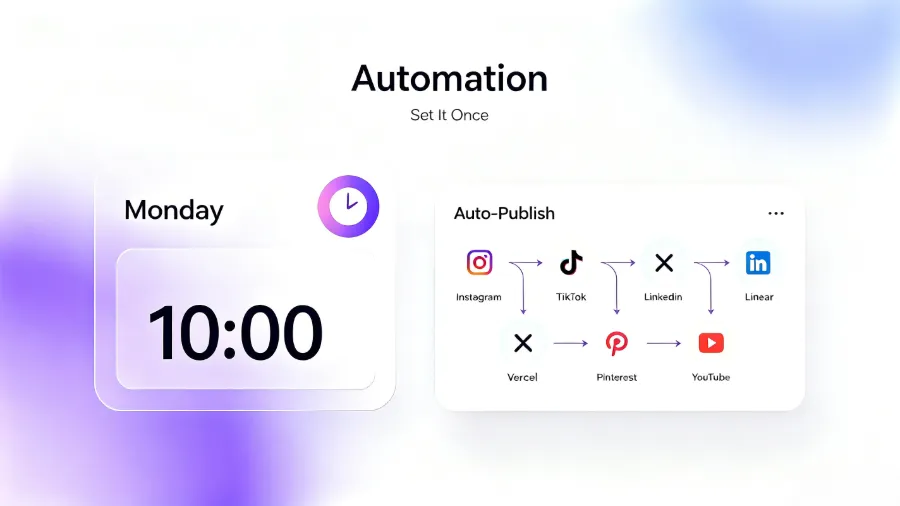
Scheduled publishing is another often‑overlooked element. In manual workflows, scheduling relies on spreadsheets and alarms, and content is missed when volume grows; tools bring scheduling into a content calendar, and bulk adjustments require only a single rule change.
| Comparison Dimension | Manual Distribution | AI Distribution Tool |
|---|---|---|
| Time per post for full‑platform adaptation | 40–60 minutes | ~2 minutes |
| Weekly time saved | Baseline | 10–15 hours |
| Monthly cost (by posting tier) | Labor hours | $11–$47 |
| Consistency of platform adaptation | Depends on individual state | Template‑based rewriting |
| Multi‑platform management method | Multiple tabs | Unified dashboard |
| Marginal cost of adding a new platform | Linear increase | Almost zero |
However, AI rewriting is not fully automatic; a preview and review step remains necessary, and that time must be counted in total cost. I know a cross‑border team that, in the first week, used a distribution tool to rush a promotion, skipped the preview after AI rewriting, and published directly. X’s character limit truncated the promotional link, resulting in noticeably lower conversion data for the first three days. The team spent two days manually comparing each platform’s post to locate the issue; by the third week, metrics normalized. The conversion loss over those two weeks far outweighed the time saved on posting.
For detailed workflow, the “One‑Click Multi‑Platform Publishing Tutorial” breaks preview, rewrite, and publish into granular steps that you can compare against your own process.
Cross‑Border E‑Commerce Scenario: Where the Benefits of One‑Time Creation, Multi‑Platform Publishing Lie
For cross‑border sellers, the cost problem of manual distribution is amplified: stores target North America, Europe, and Southeast Asia, spanning dozens of time zones; during big promotions, weekly content volume triples; multiple stores mean the same assets must be distributed across different account matrices. In this scenario, the bottleneck isn’t “slow” but the inability to keep up.
The first benefit comes from expanding the platform matrix. Moving from a couple of platforms to ten spreads a single piece of content across many traffic sources. For e‑commerce accounts, Pinterest and Google Business often deliver more organic traffic than expected—Pinterest captures long‑tail search, Google Business drives local exposure. Shopify sellers frequently encounter “content without channels”; the “Full‑Platform Distribution Guide for Shopify Sellers” discusses channel selection and pacing in detail.
More critical is marginal cost. With manual distribution, each additional platform linearly increases workload; with a tool, adding a platform adds virtually no labor, so marginal cost approaches zero. This difference is negligible up to five platforms but becomes pronounced at eight to ten platforms.
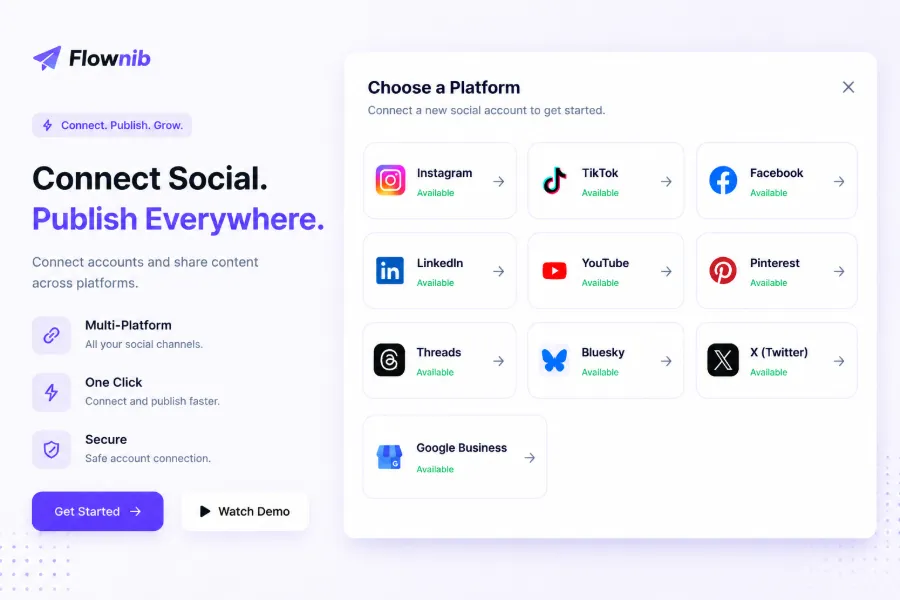
In practice, tools like Flownib make this logic work by using official APIs—none of the ten platforms rely on third‑party plugins, resulting in more controllable stability and account security. Unified multi‑account management solves the switching issue for multiple stores, and the content calendar aligns exposure windows across time zones in a single view, allowing a two‑week promotional cadence to be planned in advance.
When teams actually onboard, authorizing a single account takes about two minutes on average, and the cumulative posts published on the platform side have already exceeded 500 k. These numbers show that the workflow can handle the scale required for cross‑border scenarios. For an architectural overview, the “Cross‑Border AI Full‑Traffic Closed‑Loop Application Architecture Case Study” analyzes the end‑to‑end chain from content generation to distribution and recovery.
Long‑Term Ledger: The Turning Point Is Not Savings but Continuous Publishing
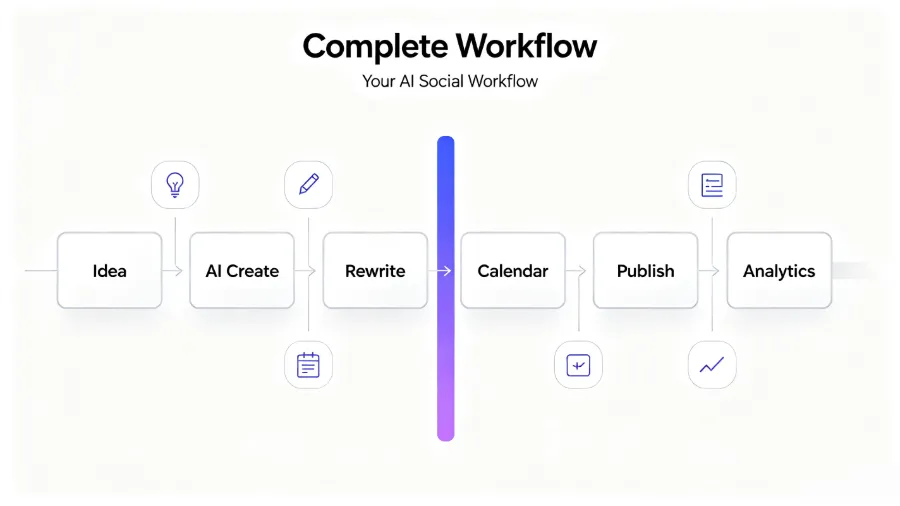
Extending the ledger to a year, the saved labor is limited—10–15 hours per week translates to roughly 500–750 hours annually, which is significant but not decisive for a team. The real payoff is the compound exposure from continuous multi‑platform publishing: as content accumulates, each new post leverages existing account authority and content assets, and the effect becomes noticeable after the third month. The biggest benefit of AI distribution isn’t “saved posting time,” but making publishing frequency predictable.
Stable frequency drives simultaneous growth in account activity and content depth. Platform algorithms favor consistently updated accounts; accounts that produce a fixed weekly output typically achieve higher organic reach after three months than those that post intermittently. This process can’t be rushed; it relies on a scheduling system that turns “should post” into “will post.” For a detailed cost comparison at different posting volumes, see the “Feature and Pricing Analysis for Cross‑Border Newbies.”
The long‑term ledger also includes risk items: tool dependency, migration cost, platform risk‑control policies, and API availability. Distribution tools claim 99.99 % API uptime, which translates to about 52 minutes of unplanned downtime per year; in practice this usually means occasional platform‑specific failures that require a retry mechanism. For determining optimal publishing times, the “Content Calendar and Best Publishing Times Practical Guide” offers a ready‑to‑apply method.
Place all items into a single annual estimation framework: time saved converted at team hourly rates, reach expansion estimated by additional platform traffic, consistency gains measured by conversion rate changes, and subscription cost taken directly from the tier. Most teams find that subscription fees represent only 10–20 % of total savings; the bulk comes from time freed and new traffic sources.
When is it not worth it? If posting frequency is low (≤ 4 posts per month), platform count is small (2–3), and content is managed personally, manual distribution remains sufficient, and there’s no need to pay for extra subscriptions or review steps. Conversely, when posting exceeds 10 posts per week, platforms exceed five, or multiple stores/accounts run in parallel, the tool’s cost‑benefit becomes genuine. You don’t need to pay first to test fit—free plans support three accounts and six posts, providing the cheapest entry point to validate the workflow.
FAQ
How much cost can an AI social‑media distribution tool save in a year?
Saving 10–15 hours per week amounts to roughly 500–750 hours annually. Using average cross‑border team labor rates, that translates to a few thousand to ten thousand dollars. Subscription cost at the Growth tier ($23 / month) is under $300 per year. The key variable is posting frequency; teams publishing more than ten posts per week see a markedly higher savings ratio than low‑frequency teams.
Does AI rewriting make content lose its “human touch” and brand personality?
Yes, if you skip the editing step entirely. AI rewriting excels at character limits, tone, and format adaptation, but brand‑specific phrasing and precise product messaging still need human verification during the preview stage. Treat the AI output as a draft, not a final version, to retain most of the brand’s personality.
Is the free plan suitable for evaluating the tool’s cost‑benefit?
Absolutely, and it’s the lowest‑cost way to validate. The quota of three accounts and six posts is enough to run a full‑cycle test: rewrite quality, preview experience, publishing stability, and multi‑account management can all be assessed within two weeks. Focus on whether per‑post operation time truly drops, not on the number of features.
Will synchronized multi‑platform publishing trigger platform rate limits?
Synchronized publishing itself doesn’t directly cause rate limiting, provided the content is posted via each platform’s official API and the account shows no abnormal behavior. The actions more likely to be flagged are the high‑frequency copy‑and‑paste and frequent login switches typical of manual distribution. The impact of multi‑platform publishing on reach depends more on content quality and account history than on the publishing action itself.
How can a cross‑border seller determine if they need this kind of tool?
Look at three metrics: weekly post count > 10, number of platforms > 5, and management of multiple store accounts. If two or more criteria are met, manual distribution costs already exceed the subscription fee. If you only operate on two or three platforms with a low posting cadence, manual distribution remains more economical.
Share Article