
Make AI-Generated Content Sound Like Your Brand

Cross‑border e‑commerce brands often have to prepare product pages, Instagram posts, X short posts, and promotional copy at the same time. AI can quickly produce a piece of information‑complete content, but after the team reads it they usually still need to rewrite it: discount terms are over‑stated, sentences sound generic, and the after‑sales tone is completely different from the product page. The problem is usually not that the model can’t write, but that the brand hasn’t organized its own expression style into actionable rules.
To make AI content sound like the brand, the team must first fix product facts, target audience, brand positioning, and marketing goals, then extract sentence patterns, vocabulary, tone intensity, and prohibited expressions from historical content. After that, AI can only rewrite within these boundaries per platform; humans are responsible for checking facts, context, and risk, rather than re‑editing adjectives from scratch each time.
A brand voice isn’t just a collection of words like “professional, friendly, premium.” It’s more like a set of editorial judgments that can be reused across different scenarios.
Break the Brand Voice into Actionable Rules First
Brand voice, brand positioning, target audience, and product selling points are intertwined. A skincare brand for sensitive skin can’t just be described as “gentle and professional”; it must also explain how it handles uncertain ingredients, usage frequency, and allergy concerns. A brand selling outdoor gear can’t simply be “reliable”; it must decide whether to emphasize durability testing, after‑sales guarantees, or lightweight and storage convenience.
When the brand team does the first round of organization, they should prepare at least four core types of material:
- Product information: specifications, materials, applicable scenarios, price, inventory, and restrictions;
- Target users: purchase motivations, common doubts, familiar terminology, and expressions that are unacceptable;
- Brand positioning: how they want to be understood, and which competitors they will not imitate;
- Marketing objectives: acquisition, repeat purchase, market education, inventory clearance, or pushing a specific product bundle.
These four categories are best kept in a single brand‑voice document rather than scattered across product spreadsheets, customer‑service docs, and a single operator’s memory. Product information determines what can be said; target audience determines what to explain first; brand positioning determines tone and trade‑offs; marketing objectives determine whether the ending invites the reader to learn more, add to cart, or contact support.
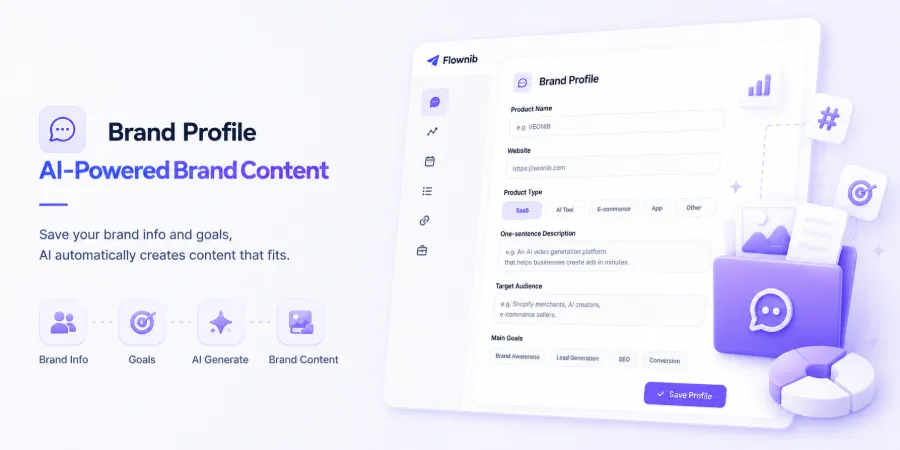
The brand team can extract concrete patterns from already published content. Instead of writing “the tone should be warm,” record whether the brand habitually first acknowledges the user’s trouble before providing product info; whether it uses short sentences; whether it changes “Buy now” to “View applicable specs”; whether it avoids exclamation marks; and whether it explains handling time before assigning responsibility when dealing with complaints.
A one‑page brand‑voice guide should usually contain: common sentence structures, tone range, priority vocabulary, prohibited expressions, product‑fact boundaries, call‑to‑action styles, and the differences across product pages, social media, and after‑sales communication. This document is not a temporary prompt for a single post; it is a base draft used by prompts, human review, and AI rewriting together.
Some elements must stay consistent, such as brand name, product specs, price conditions, after‑sales stance, and basic promises to users. Markets, languages, and platforms can change the opening, information order, sentence length, examples, and interaction style. A discount description for the UK market may need to spell out eligibility more clearly, while a Southeast Asian social post may start with a usage scenario, but product facts must not be altered by translation.
If the team is organizing cross‑department content and publishing workflows, they can refer to the Cross‑Border Business Automation Operations Framework. The brand‑voice guide should be part of this workflow, not just a shared document in the marketing team.
Calibrate AI with Real Samples, Not Just Add Adjectives
The brand team does not need to collect dozens of pages of copy at the start. The first calibration can pick 5–10 pieces of historical content covering product descriptions, promotional info, after‑sales communication, and educational material. Too few samples cause AI to treat a random expression as a fixed style; too many samples mix tones from different stages and markets.
Each sample can be broken into observable parts: content intent, information order, sentence length, tone intensity, word choice, and closing action. For example, an after‑sales reply might be “first confirm the issue → explain handling time → give next steps → avoid shifting blame,” while a product description could be “first state usage scenario → then mention restrictions → finally add specs.” AI learns the sequence of content decisions, not just a few fancy sentences.
“Don’t sound too much like an ad” cannot be directly audited. “Don’t exaggerate” is also too vague. The team can turn them into checkable constraints: no unverified absolute promises, no “suitable for everyone,” no hiding shipping fees or discount eligibility, no presenting predicted outcomes as guaranteed results, and no “leading,” “first,” etc., without supporting data.
When rules are too few, AI output drifts toward generic e‑commerce copy; when rules are too many, content becomes stiff, even holiday greetings feel like compliance documents. One brand team locked sentence length, required words, and punctuation for every paragraph; the draft was stable, but social interaction dropped dramatically, and operators later removed half the constraints. Brand voice needs boundaries, but not every natural‑language variation should be treated as an error.
Cross‑border e‑commerce also faces distortion from literal translation. The Chinese phrase “闭眼入” cannot be directly translated into the typical purchase expression of the target market; “五折” may need clarification that it’s 50 % off the original price or a 50 % reduction, depending on the region. Promotional copy especially tends to lose product conditions: AI kept “limited‑time offer” but omitted that it applied only to certain inventory or regions.
Platform context also needs separate sampling. Instagram’s commercial content relies more on images, carousels, and short captions. The team can use Instagram’s official Business Guidance as a reference for format and audience expectations, rather than past a product‑page paragraph verbatim.
When documenting the workflow, the team should keep four versions: “Original brand content → AI draft → Human revision → Final version,” and label each change as fact correction, tone adjustment, or platform adaptation. After a few weeks, operators can see where AI consistently errs instead of adding adjectives based on intuition. To link these records to the publishing workflow, see the Cross‑Border Newcomer Feature & Price Analysis, but no tool can replace the samples themselves.
Adapt the Same Brand Message to Different Platforms, Not Copy‑Paste Word‑by‑Word
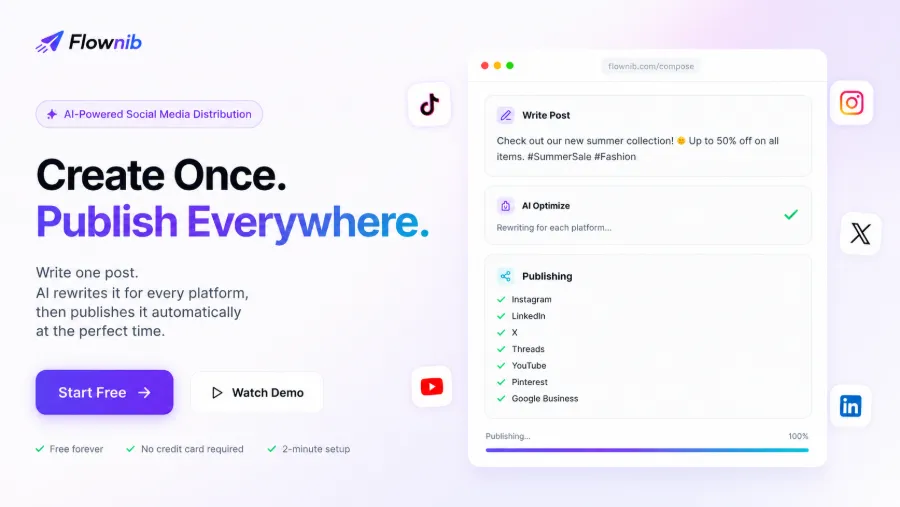
Cross‑platform content is not about copying a sentence to more accounts. Product facts, audience promises, and brand stance should stay stable; the opening, length, interaction style, visual explanation, and call‑to‑action can change. Consistency across platforms should not be interpreted as “publish the same sentence on every platform,” which usually results in a compromise version that fits none.
Instagram often needs an opening that sets the visual and usage scenario before a short product blurb; X (formerly Twitter) favors short sentences, clear opinions, and replyable questions; LinkedIn may require a fuller background, industry explanation, and experience sharing. YouTube’s official content observations can also help the team understand differences between video titles, descriptions, and community interaction; related guidance can be found in the YouTube Official Content Observations.
In the actual rewriting workflow, the team first locks immutable information, then inputs platform, audience, content goal, word count, and prohibited expressions. For example, AI needs to “keep the campaign theme and discount terms, but make the Instagram version start with a usage scenario; make the X version short and leave a reply‑able question; add industry background behind product choice in the LinkedIn version.” This is far more stable than simply asking “make each version more suitable for its platform.”
In a single content planning session, check at least three platforms for “core information consistency” and “expression suitability.” When the team wants to reduce copy‑pasting, tab‑switching, and repeated platform‑version work, Flownib can serve as a tool node in the content rewriting and publishing process; however, each platform still needs a final preview, especially for image ratios, link displays, and character truncation.
| Platform | Main Expression Style | Immutable Content | Pre‑publish Checklist |
|---|---|---|---|
| Visual scene, short caption, interactive question | Product facts, campaign conditions, brand stance | Image order, hashtags, link entry | |
| X | Short‑sentence opinion, instant response, hashtag interaction | Price, discount, time limit | Character truncation, tone, reply space |
| Background explanation, professional info, experience sharing | Product specs, audience promises, factual basis | Paragraph length, professional context, call‑to‑action |
When a promotional campaign is launched in different markets, the same theme—e.g., “Summer Light Travel”—can be retained, but there’s no need to translate sentence by sentence. One market may highlight portability in heat, another may stress weekend trips and storage space. As long as price, inventory, timing, and eligibility aren’t rewritten, changing the expression style does not weaken brand consistency; it actually aligns better with local reading habits.
The biggest risk isn’t tone but seemingly minor fact changes. After AI output, the brand team must verify brand name, price, discount, specs, links, campaign timing, and inventory. In practice, discount numbers are often kept while eligibility conditions are omitted; links may point to an old page after a rewrite. The smoother the content, the easier humans become to let their guard down.
Establish a Pre‑ and Post‑Publish Brand‑Voice QA Process
Brand‑voice QA should not only happen next to the publish button. Cross‑border teams can split a piece of content into six nodes: drafting, AI adaptation, preview, scheduling, publishing, and recording. Leaving minimal necessary records at each node reduces the “everyone assumes someone else checked” gap.
The recommended pre‑publish check order is fixed: first verify factual accuracy, then brand tone, then platform adaptation and linguistic naturalness, followed by compliance risk, and finally the call‑to‑action. The order must not be reversed. If the team first polishes sentences, they often discover price or inventory errors only at the end, forcing a full redo.
A fixed brand‑voice checklist can include: use of prohibited expressions, clear handling of customer concerns, absence of unverified promises, retention of necessary product conditions, alignment with target‑market language habits, and avoidance of platform‑incompatible openings. Different markets still require human judgment because the same word may carry different politeness levels, purchase implications, or legal risks across regions.
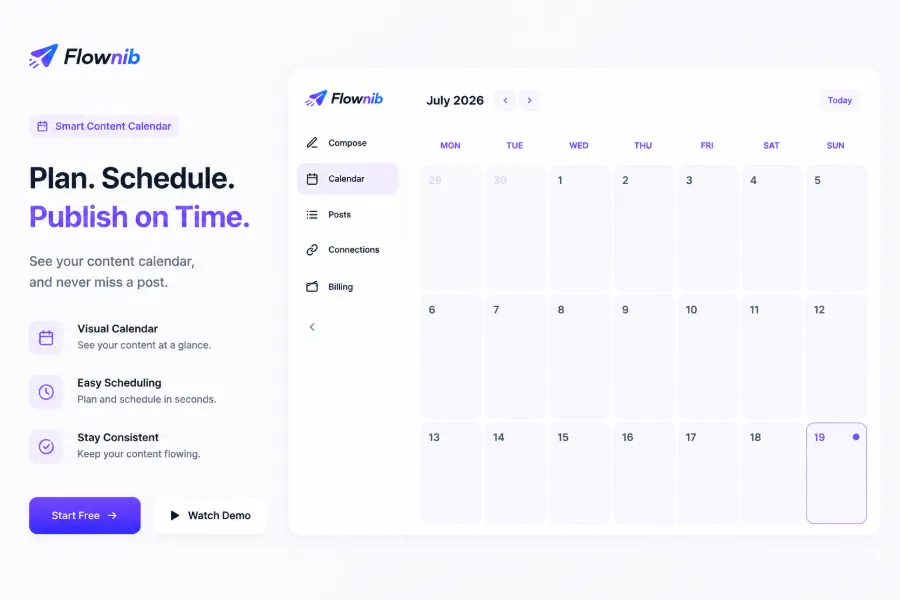
Content calendars and publishing records help teams spot repeated themes, overly dense promotional cadence, inconsistencies between versions, and already‑run campaigns. Scheduling does not equal completed review; the team should still confirm the final version before scheduling and check the actual display after publishing. To verify Instagram scheduled content status, View Instagram Scheduled Posts is more reliable than an internal spreadsheet because schedule status and final publishing status are not always synchronized.
Automation reduces repetitive work and missed‑post risk but cannot replace product‑fact verification. Bulk distribution especially creates the illusion that a single piece of content correctly posted to multiple accounts means all versions are correct. In reality, an image may be cropped on one platform, a link preview may not update, or a market’s discount conditions may need separate supplementation. For the boundary between bulk publishing and manual review, see the Cross‑Platform Distribution Guide.
One cross‑border brand, without first establishing brand‑voice rules, generated and published a batch of new‑product promotional content. On launch day, the product page said “some colors eligible for discount,” while social posts claimed “all series 50 % off”; Instagram used enthusiastic exclamation sentences, LinkedIn still read like a sales flyer; the after‑sales team kept using old return‑policy wording. The team didn’t notice until that evening, then had to rework, delete, and repost each piece, erasing almost all the time saved by automation.
During retrospectives, teams can look at saved clicks, comments, conversions, and other business metrics to see which expressions resonate with the target audience. However, these data points should not be taken as universal industry benchmarks. Google Search Console impressions and clicks may be delayed; social platform interactions are influenced by assets, timing, inventory, and ad spend; a single well‑performing piece does not prove that a particular adjective is the reason for brand voice success.
A more reliable approach is to review published versions every two to four weeks, or conduct a focused retrospective after a complete promotional campaign. Teams can categorize frequent manual edits and then update the brand‑voice guide—for example, adding “first write the target audience, then the product function,” or replacing “Buy now” with a call‑to‑action that better fits the brand stance. Brand‑voice maintenance is not a one‑time setup; it evolves with product lines, markets, and user concerns.
FAQ
Why does AI‑generated content, while factually correct, still not sound like the brand?
Because correct facts only solve the “what to say” part, not the “how to say it.” If AI doesn’t see the target audience, sentence‑pattern habits, tone intensity, and prohibited expressions, it will usually generate generic marketing language. The team can calibrate with 5–10 historical pieces and perform a human check before publishing.
What should be included in a brand‑voice guide?
At a minimum, include product information, target users, brand positioning, and marketing objectives (the four categories). Also add common sentence patterns, priority vocabulary, prohibited expressions, and call‑to‑action styles. Keep AI drafts and final versions after each publish; after 2–4 weeks you’ll usually see which rules need to be added.
How to adapt a single cross‑border e‑commerce piece to different social platforms?
First lock brand facts, campaign conditions, and audience promises, then specify platform, content goal, length, and interaction style. In one planning session, check at least Instagram, X, and LinkedIn versions, avoiding word‑by‑word translation that makes tone and information order unnatural.
Which information must be manually verified after AI rewriting?
Brand name, price, discount, specs, link, campaign timing, and inventory must all be manually checked. The team should also verify image cropping, character truncation, and market‑specific expression risks, as these issues are often missed when the content looks smooth.
How often should brand‑voice rules be updated?
A lightweight check every 2–4 weeks is recommended, with a full retrospective after new product launches, market shifts, or major promotional campaigns. If a certain type of edit repeatedly appears across several publishes, it should be codified into a rule rather than left to ad‑hoc operator fixes.
Share Article


