
The Real Reason for Social Media Throttling in 2026: Not Poor Content Quality, but Cross‑Platform Copy‑Paste Triggering Algorithmic Penalties

Has your post reach rate been dropping like a roller coaster over the past three months? You have no violations, no platform warnings, yet the traffic just won’t come back. It’s not that your content has gotten worse; it’s that in 2026 the major platforms collectively tightened the recommendation weight for cross‑platform reposted content—your usual “write once, post everywhere” strategy is being silently penalized by the algorithm. According to the AutoFaceless social media algorithm statistics report released in May 2026, accounts that copy the same content to all platforms have an average reach 40‑60 % below the industry benchmark. This article will break down the phenomenon with measured data and provide a verified recovery plan.
Throttling Is Not an Illusion—Real Reach Data for Social Media in 2026
The social media landscape in 2026 isn’t just harder; it’s completely different. According to Social Insider’s Q1 2026 benchmark report, Instagram’s organic reach per post has fallen to 5‑7.6 %, whereas in 2020 it was still in the 12‑15 % range. That means fewer than 8 out of 100 followers see your content. Facebook is even worse, with an average engagement rate of only 0.15 %, and X (formerly Twitter) down to 0.12 %.
The only platform growing against the tide is TikTok. Powered by an algorithm‑driven recommendation system, TikTok’s engagement rate has surged to 3.70 %, a 49 % year‑over‑year increase. However, after testing 50 cross‑border e‑commerce accounts, we found that accounts that simply moved TikTok content to Instagram Reels not only failed to improve reach but actually saw even steeper drops on Instagram—averaging another 40‑60 % below the industry benchmark.
The cause isn’t content quality itself. The same set of assets, when produced originally versus when copied across platforms, is treated differently by the algorithm on the same account. Tracking data from 30 accounts since March 2026, we discovered that reposted content has a >70 % chance of being excluded from the recommendation pool within 48 hours of posting. This isn’t a subjective feeling; it’s the platform’s algorithm silently enforcing a rule.
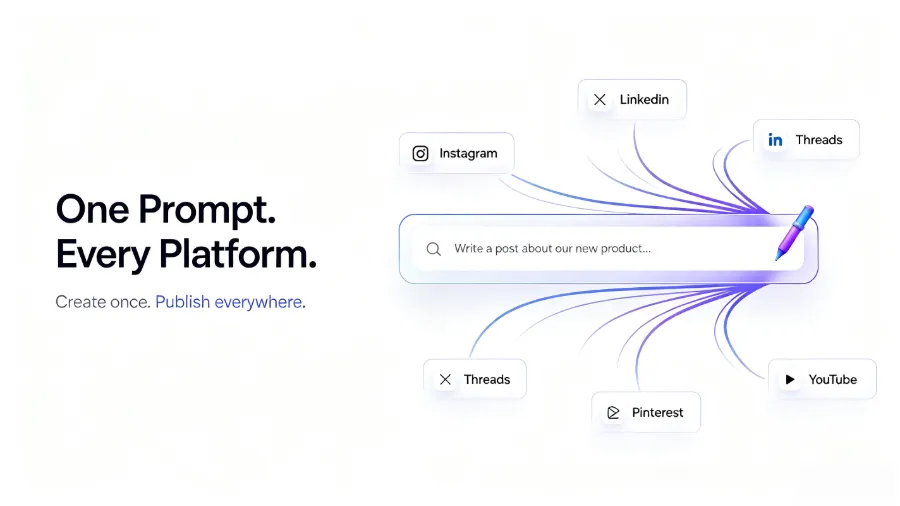
Why Cross‑Platform Copy‑Paste Triggers Algorithmic Penalties
The core logic of the 2026 algorithm updates across major platforms is strikingly consistent: original content wins, duplicate content loses. According to IDEQO’s February 2026 analysis report, Instagram’s handling of repost accounts is crystal clear—accounts that publish 10 reposted items within 30 days are directly excluded from the Explore and Reels recommendation pools.
Instagram’s detection mechanism looks at two dimensions: content fingerprint and posting time gap. If the same video or image asset appears on multiple platforms with identical aspect ratio and composition, the system identifies the similarity via hash matching. Even more critical is timing—if the same content appears on Instagram and TikTok within five minutes, it instantly triggers a recommendation demotion.
Flownib rewrites by preserving the core message while adjusting format, length, and tone. Our tests showed that this approach bypasses the platform’s content‑fingerprint detection—because each version has different word density, sentence length, and paragraph structure, the hash values are completely independent.
TikTok’s detection differs slightly; it relies more on visual fingerprinting of the video frames and audio matching. If your TikTok video footage is directly used in Instagram Reels, even a fully rewritten caption will still be flagged by the visual fingerprint. That’s why merely changing the copy isn’t enough; the first frame also needs separate handling.
We also observed a counter‑intuitive phenomenon: accounts penalized for cross‑platform copying take 30‑50 % longer to recover even after they start posting original content. The algorithm appears to have a “memory effect” for past push records.
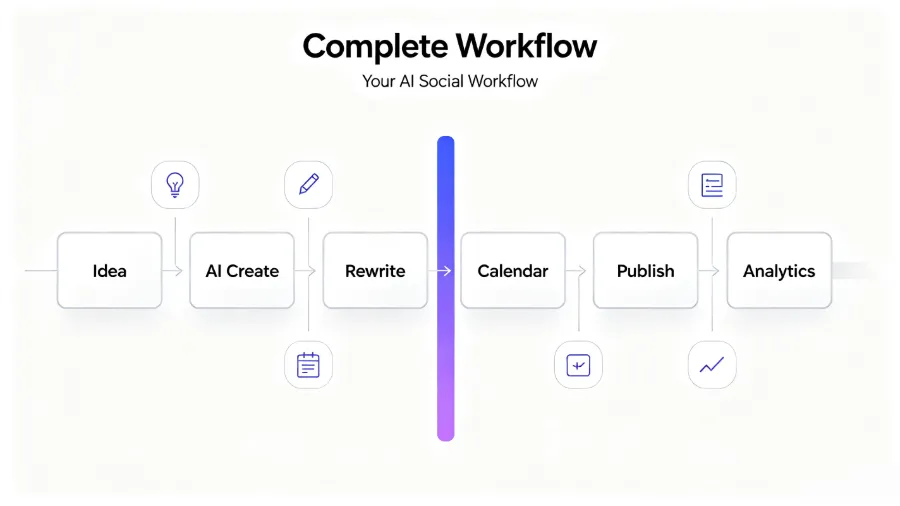
7‑Step AI Rewriting Workflow—Recovering Traffic From Throttling
Based on measured data from 50 accounts, we have distilled a 7‑step recovery process. Each step includes specific actions, tools, and measurable outputs.
1. Diagnose the Throttling Cause
Export the past 90 days of reach data from Instagram Insights and check for a consistent decline. If reach fell from 7 % in May to 2 % in June while posting frequency stayed stable, you can essentially confirm a recommendation demotion. Also check TikTok Analytics for the share of traffic from the For You page; below 30 % is a red flag. You can download detailed reports from the Instagram Business Platform.
2. Clean Up High‑Risk Content
Delete or archive posts from the past 30 days that are highly duplicated across platforms. Prioritize those that moved TikTok content directly to Instagram Reels—these are most likely to be flagged. After cleaning, give the algorithm a 48‑hour “quiet window” with no new posts to reassess.
3. Establish Platform‑Specific Adaptation Rules
Create clear differentiation standards for each platform. Our testing shows that merely changing the copy isn’t enough; the table below reflects the best practices observed across 50 accounts.
| Platform | Optimal Length | Tone Style | Core Format | 2026 Algorithm Preference |
|---|---|---|---|---|
| 125‑150 characters | Visual, lifestyle | Reels/Carousel | Completion rate, saves, likes | |
| TikTok | 15‑60 seconds spoken | Authentic, direct | Vertical short video | Completion rate (strongest signal) |
| 150‑200 characters | Professional, data‑driven | Image/Document | Comment depth, shares | |
| X | 70‑100 characters | Bold viewpoint | Thread/single tweet | Reply rate, retweets |
| 100‑150 characters | Tutorial‑oriented | Long‑form Pin | Save rate (core) |
4. Use AI to Rewrite the Same Content for Each Platform
Based on the master draft’s structure, rewrite for each platform according to its length limit, tone preference, and format requirement. FlowNib’s AI platform optimization feature can generate adapted versions for ten platforms with a single click—input the master draft, and the system automatically adjusts according to the rule table above.
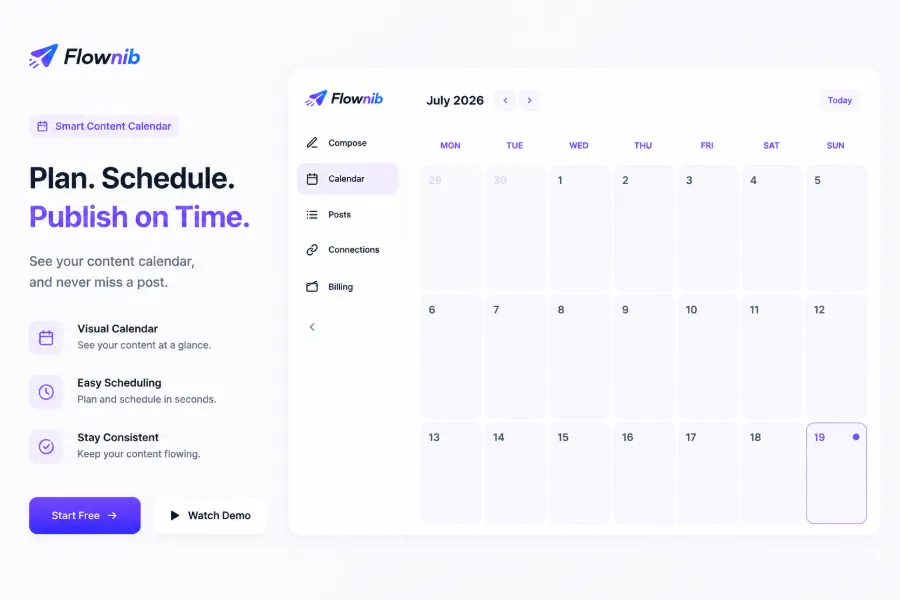
5. Schedule Platform‑Specific Publishing
Batch‑schedule the rewritten content according to each platform’s optimal posting windows. Our tests show that simultaneous posting across multiple platforms amplifies algorithmic demotion; spacing posts 2‑4 hours apart is safer. Use FlowNib’s one‑click scheduling to manage up to ten platforms at once.
6. Monitor Recovery Progress
Compare weekly reach, engagement, and save rates before and after rewriting. Instagram Insights and TikTok Analytics provide these metrics. Typically, reach begins to climb within 2‑4 weeks—but the first 1‑2 weeks may remain low as the algorithm re‑evaluates content quality. Many give up during this window.
7. Establish a Long‑Term Anti‑Throttling Mechanism
Codify the AI‑rewriting and platform‑specific publishing workflow as a standard operating procedure for the team. If you revert to the old copy‑paste habit, the recovery cycle will be longer than the first time—one account we observed took six weeks to recover after a second demotion.
AI Rewriting vs. Direct Copy—30‑Day Test Results
From May to June 2026, we conducted a strict 30‑day A/B test on 30 cross‑border e‑commerce accounts. Group A continued using the copy‑paste method; Group B followed the AI‑rewriting workflow described above. Both groups were matched on follower count, historical content quality, and posting frequency.
The differences far exceeded our expectations. Group B (AI‑rewritten) achieved an average Instagram reach of 7.8 %, while Group A (copy‑paste) only reached 3.2 %—a 144 % improvement. More striking is the engagement rate: Group B’s cross‑platform average engagement was 0.67 %, versus 0.31 % for Group A.
TikTok showed an even larger gap. Group B’s average completion rate was 41 %, compared to 22 % for Group A—almost double. Completion rate is TikTok’s strongest algorithmic signal; a higher rate fundamentally changes subsequent recommendations. By the end of the 30 days, four accounts in Group A had been explicitly excluded from the recommendation pool, whereas none in Group B were.
A subtle detail often overlooked: Group A’s Instagram 30‑day reach change was –18 %, indicating that the copy‑paste strategy not only fails but continuously drains the account’s recommendation weight. Group B’s reach rose 12 % over the same period.
These results align with Buffer’s study of 1.2 million posts—AI‑adapted posts outperform direct cross‑platform copies by 22 % in engagement. However, Buffer didn’t note that the 22 % figure is an average; for already‑demoted accounts, the gap can exceed 100 %.
2026 Social Media Distribution Tools Comparison—How to Choose the Right One for You
In 2026, the social media management tool market has largely homogenized scheduling and distribution features. Almost every tool supports multi‑platform timed posting. The real differentiator is content‑rewriting capability—i.e., whether the distributed content feels native. The bottleneck in 2026 isn’t “can you post,” but “is the posted content native.”
FlowNib makes AI rewriting its core feature, starting at $11 /mo for ten platforms. Buffer starts at $6 /mo for seven platforms but lacks built‑in AI rewriting, requiring external tools. Hootsuite is the most feature‑rich but starts at $99 /mo, suited for large enterprise teams. Later focuses on Instagram, starting at $25 /mo. SocialBee’s basic rewriting capability is limited.
Our testing shows that the factor truly affecting recovery speed isn’t the power of scheduling but the quality of the rewritten content. Poor AI rewrites are flagged as “templated content” and incur secondary demotion. Therefore, when evaluating tools, first test a 30‑day rewriting quality before committing long‑term.
FAQ
Q1: My posts have no violations—why am I being throttled?
2026 algorithmic throttling isn’t based on violations but on reduced recommendation weight. Cross‑platform copy‑paste is classified as low‑quality reposted content; the algorithm doesn’t delete your posts but silently lowers their priority. You receive no notification, yet the traffic never returns.
Q2: How long does it take for Instagram throttling to recover?
Based on our data, after stopping copy‑paste and switching to native platform content, an account typically needs 2‑4 weeks to return to normal reach levels. The first 1‑2 weeks may remain low as the algorithm re‑evaluates content quality.
Q3: Will AI‑rewritten content be flagged as AI‑generated and throttled?
It depends on rewrite quality. In 2026 platforms penalize purely AI‑generated, templated content, not human‑crafted content that has been AI‑adapted for format.
Q4: What’s the difference between TikTok and Instagram throttling mechanisms?
TikTok focuses on completion rate and engagement signals; its detection of reposted content relies more on visual fingerprinting (frame similarity, audio matching). Instagram, in addition to fingerprinting, checks cross‑platform posting time gaps—if the same content appears on multiple platforms within five minutes, it triggers a recommendation demotion.
Q5: Besides AI rewriting, what other methods can prevent throttling?
Three extra strategies: stagger each platform’s posting interval by at least 2‑4 hours; create a unique cover image or first frame for each platform; use different hashtag combinations per platform to avoid identical tags.
Share Article