
Why Small Cross‑Border Teams Need an Integrated AI Social Tool

A five‑person cross‑border team manages six accounts across four platforms. The first thing they do each workday is log into Instagram to reply to last night’s comments, then switch to TikTok to check video views, open Facebook Business Suite for any new messages, and finally glance at channel data in YouTube Studio. That loop alone takes forty minutes. Then the real publishing work begins—write a piece of content, copy it to TikTok and adjust the format, copy it to Instagram and resize it, copy it to Facebook and change the hashtags. Publishing the same content on four platforms can be done in twenty minutes if everything goes smoothly; if a platform’s character limit trips them up, they have to redo it. This was the real situation I observed last year in a small cross‑border team. The team leader ran the numbers: the time spent on cross‑platform repurposing each week accounts for almost 70 % of a full‑time operations role. Small teams already have thin manpower; one person ends up doing the work of two, and most of that effort is wasted on repetitive tasks with no technical value. Therefore, AI distribution tools like Flownib have caught the attention of frontline operations teams—they aim not at feature bloat but at directly replacing that 70 % of mechanical work.
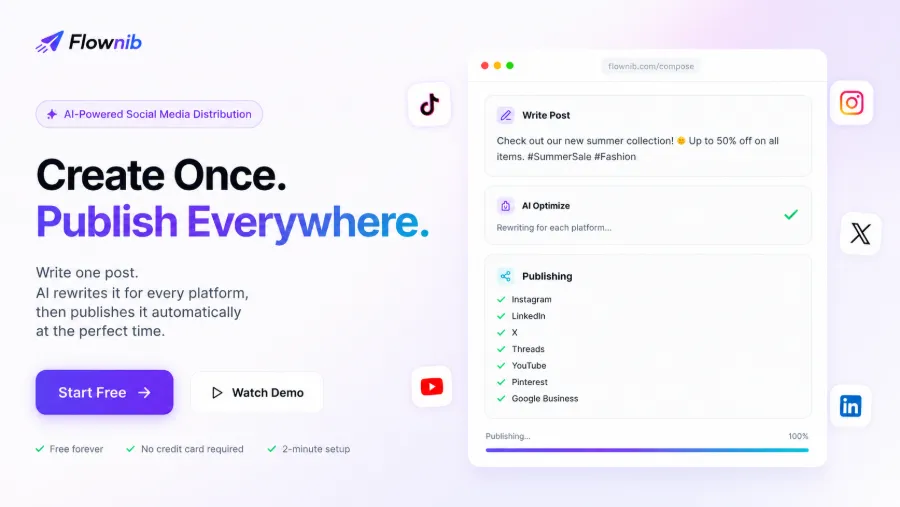
Labor Cost: How Multi‑Platform Publishing Can Overwhelm a Team
The first hurdle a small cross‑border team faces isn’t creative ideas; it’s execution. Suppose you need to publish 14 pieces of content each week across Instagram, TikTok, Facebook, and YouTube. Each piece requires: checking image dimensions (Instagram 1080×1080, TikTok 1080×1920, Facebook 1200×630), adjusting copy length (Instagram captions can be long, TikTok text is limited, Facebook posts benefit from links), re‑selecting hashtags (each platform has its own popular‑hashtag logic), and confirming that links work. Individually these steps aren’t hard, but multiplied by 14 pieces, four platforms, and five workdays, the total time consumption becomes substantial.
A hidden cost is the attention loss from context switching. After working on one platform for twenty minutes, the brain adapts to that platform’s tone and layout logic. Switching to another platform requires a few minutes to re‑orient. Four or five switches per day translate to a twenty‑to‑thirty‑minute daily recovery period. Those fragmented minutes add up enough to complete a competitor analysis or write a long copy.
The five‑person team hired a dedicated operations intern for publishing and formatting at a monthly salary of $4,500. After three months the intern left, a new person took over and spent two weeks learning each platform’s account passwords and scheduling habits. The leader later counted seven incidents in six months where publishing errors caused content delays or wrong‑platform posts, each resulting in direct traffic loss for the day. By using the approach described in How Flownib Enables One‑Click, Cross‑Platform Publishing and automating adaptation and distribution, the team can free that labor to focus on content strategy and data analysis—activities that truly drive growth.
Manual Distribution vs. AI‑Automated Distribution Efficiency Comparison
Take a single piece of content and break down the manual workflow for four platforms: write the copy → open Instagram, paste and adjust → add hashtags → publish → open TikTok, shorten copy → add hashtags → publish → open Facebook, adjust format and add link → publish → open YouTube, write description and tags → publish. Each step takes one to two minutes, and pop‑ups or double‑verification prompts can interrupt. Four platforms finish in half an hour. If the content includes images or videos, additional time is needed for size adaptation. If a platform glitches or the network fails, you must troubleshoot the failed post again.
AI‑automated distribution follows a completely different logic. Write the content once in an editor, and the system automatically rewrites it according to each platform’s character limits, format, and recommended hashtag rules, sets the schedule, and a single confirmation closes the page. Switching between platforms, format adaptation, and hashtag selection all happen in the background. Flownib’s official data show an average setup time of two minutes and a 99.99 % API uptime, meaning that system‑related publishing failures never exceed fifty minutes per year. For small teams publishing multiple pieces daily, this is not only time‑saving but also transforms publishing from “must be monitored constantly” to “set and forget”.
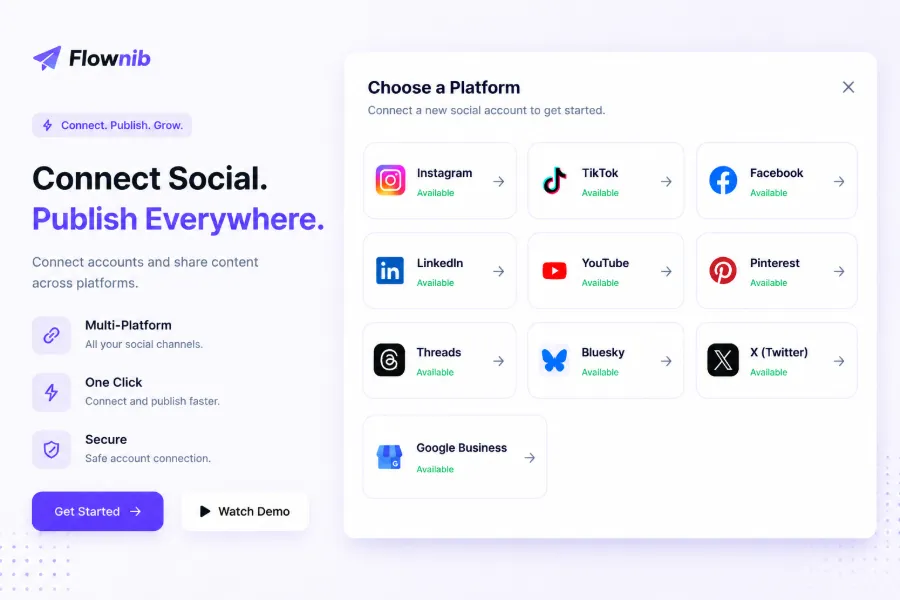
A clear difference lies in error rate. Manual publishing can lead to inconsistencies across platforms due to copy‑paste omissions or formatting errors—Instagram might read “Summer Sale Limited to Three Days”, while TikTok says “Limited to Three Days”. Such inconsistency erodes user trust once noticed. AI rewriting allows you to set brand‑tone rules, ensuring key messages are identical across all platforms. Of course, AI‑generated text isn’t perfect every time and still needs human preview, but it eliminates about 90 % of the grunt work. Many tools on the market only address a single step—some are scheduling tools, others analytics dashboards. Few provide a full‑stack solution covering creation, rewriting, distribution, scheduling, and publishing records. For teams of three to five people, a full‑process tool is far more suitable than stitching together multiple single‑point tools.
How Integrated Tools Break Information Silos in Cross‑Border Teams
Cross‑border teams inherently have a structural issue: members are not in the same office, time zones differ, and each person may be responsible for different platforms. Operator A handles Instagram and TikTok, Operator B handles YouTube and Facebook. Each logs into their own backend accounts, unaware of what the other posted that day, and there’s no unified content schedule. At the weekly review, they discover two pieces of content on the same day clashed in theme, diluting traffic.
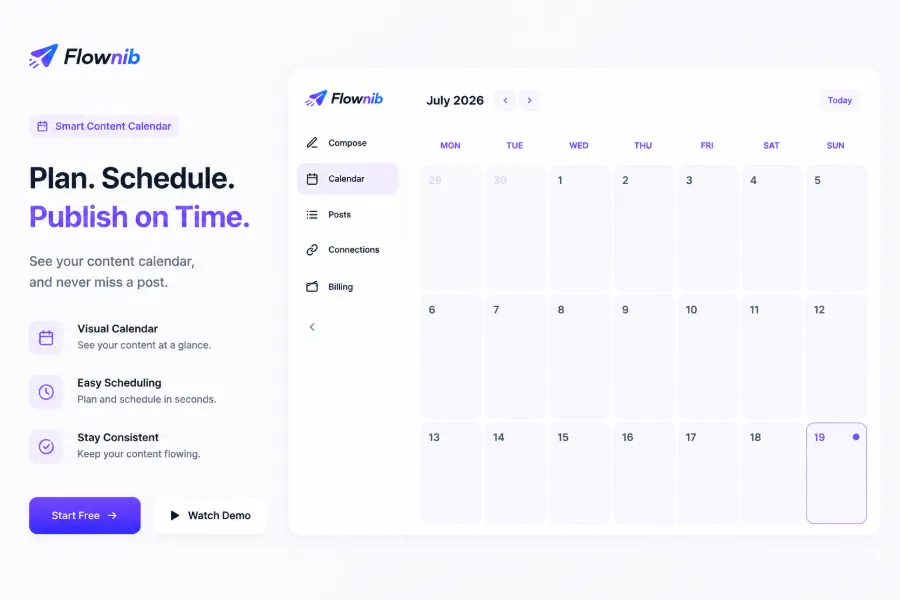
An integrated tool solves this with a content calendar and multi‑account dashboard. All members see the weekly publishing plan in a single backend: which day’s content, which account it’s assigned to, and whether it’s published or pending review. Editors can collaborate on copy, and AI‑generated versions preview side‑by‑side in the same interface.
Content reuse is another often‑overlooked benefit. A long article can be split into multiple posts; a video script can be rewritten as a text post. Humans often skip reuse because it feels tedious—rewriting one post can take as long as creating a new one. AI rewriting lowers the decision barrier: feed the original content, automatically generate platform‑specific versions, and the operator only needs final approval. This ensures brand tone stays consistent across platforms, avoiding the split feeling of “playful on Instagram, formal on YouTube”. For a detailed comparison of multi‑platform adaptation efficiency, see the FlowNib, Later, Sprout Social Multi‑Platform AI Adaptation Benchmark, which breaks down the performance differences of several tools in real publishing scenarios.
How to Choose the Right Integrated AI Social Tool
Before adopting an integrated tool, a friend from a cross‑border team warned me about pitfalls they encountered. They bought a professional‑level package from a major platform, which listed 30‑plus features such as A/B testing, deep audience analysis, and multi‑dimensional reporting. After purchase, they spent two weeks just getting the backend configurations running, and no one on the team could interpret the reports. In the end they only used scheduling and publishing, paying nearly $500 extra per month. Three months later they canceled the contract and returned to manual publishing, treating the subscription fee as a sunk cost.
For three‑to‑five‑person cross‑border teams, the selection should focus on three dimensions. First, platform coverage breadth: your target market determines which platforms you need; you don’t need many, but the tool must include the ones you use. Second, API stability: publishing tools rely on official platform APIs; frequent outages or high latency make timing unreliable, and missed or duplicate posts become serious issues. Flownib supports 10 official API platforms with 99.99 % uptime. Third, learning curve: if a tool requires a dedicated training session before the team can use it, it’s unlikely to survive past the first month in a small team. A free trial without a credit‑card requirement is a good way to gauge onboarding difficulty.
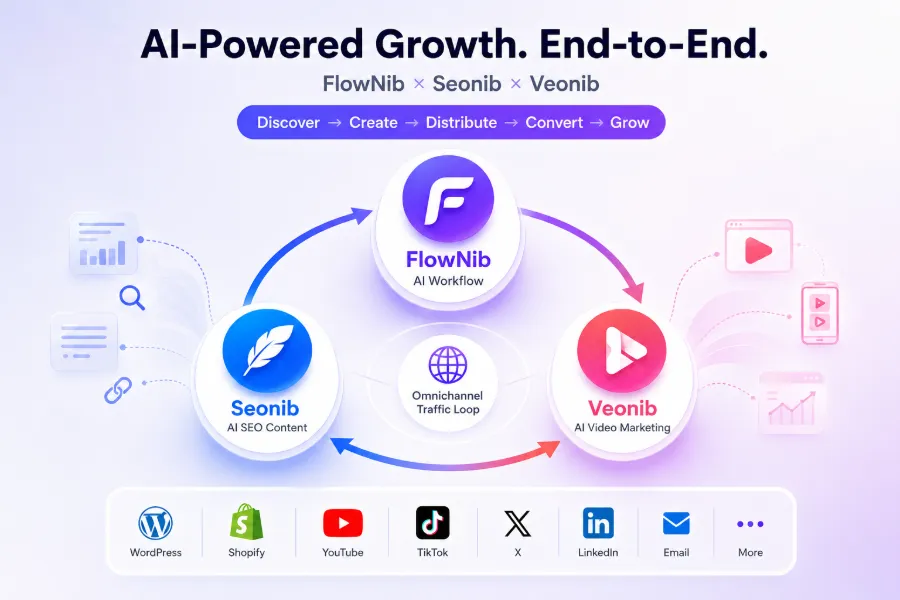
Another often‑overlooked dimension: what happens after you publish? Many tools only handle publishing and then disappear, leaving you to pull separate reports for analysis. If you already use a tool like Flownib, the backend publishing records and content calendar can be used directly for post‑mortems—what was posted when, each platform’s performance, and any scheduling conflicts are all visible in one interface. This avoids the fragmented workflow of “publish with one tool, analyze with another, schedule with a spreadsheet”. For a full‑traffic‑closed‑loop architecture, see the article Cross‑Border AI Full‑Traffic Closed Loop: Collaborative Architecture of FlowNib, Seonib, and Veonib, which explains the design from creation through distribution to data feedback.
One final reminder: many cross‑border teams, after acquiring a tool, rush to push content to every platform, believing broader coverage is always better. In practice, start by deepening engagement on two or three target platforms, gather user data and refine content tone, then use the tool to expand horizontally to other platforms. This staged approach yields far better results than a one‑time blanket rollout. For a detailed breakdown of AI rewriting and distribution mechanisms, read How Flownib Automatically Rewrites and Redistributes Content to 10 Platforms.
Frequently Asked Questions
What size of team is an integrated AI social tool suitable for?
Based on real cases, teams of three to ten people benefit the most. Fewer than three people have limited content volume, so manual publishing is manageable; more than ten usually have dedicated operations staff, turning the tool into a pure efficiency enhancer rather than a labor substitute. Small cross‑border teams sit in the sweet spot where time savings are most tangible.
Will AI‑rewritten content lose brand voice?
It depends on whether the tool lets you set brand‑tone rules. Most integrated tools support defining tone, keywords, and prohibited words, and AI rewrites stay within those constraints. It’s advisable to test with three to five pieces first, confirm the rewritten tone matches expectations, then roll out fully.
Are free plans sufficient?
Using Flownib as an example, the free tier includes three social accounts and six posts. This is enough for a startup or a team still evaluating the tool’s value. Once publishing volume stabilizes, you can upgrade to a paid plan, avoiding premature expenditure.
Do these tools support all languages and regions?
As long as the target platform supports a language, the tool generally can handle it. AI rewriting adapts to language specifics, such as Japanese or Arabic layout direction and character limits. The tool itself doesn’t restrict target markets; the key is whether your platform accounts cover those regions.
What happens to existing content and schedules when switching tools?
Most integrated tools support account migration and schedule import, though formats vary. Export your current schedule and content records before switching, then run parallel publishing for a week or two on the new tool to verify everything works before decommissioning the old one. Avoid switching all accounts on the same day to prevent missing already‑scheduled posts.
Share Article