
From Chasing Trends to Protecting the Brand: How Cross‑Border E‑commerce Uses AI to Say Goodbye to Cookie‑Cutter Content

Cross‑border e‑commerce teams often face two problems in the same afternoon: a market’s discussion suddenly heats up, but the only content they have is a short Chinese promotional copy; the team translates it into English, German or Japanese, then copies it to Instagram, TikTok and the standalone site, only to discover after publishing that the platform tone, regional pricing and the scenarios users care about don’t match.
Trend‑driven AI content isn’t about generating more text; it’s about first deciding whether a topic fits the brand, then preserving product facts, tweaking local expression, and generating different versions for each platform and publishing time. The output may be smaller, but content relevance, engagement rates, and downstream conversion signals are usually easier to interpret.
The real hassle isn’t “can we write it,” but that trend assessment, brand constraints, platform context, and publishing validation must all be linked together. If a cross‑border team only pursues one‑click generation, they’ll quickly end up with a batch of uniformly formatted, uniformly toned content that sounds like no real market is speaking.
Why “General‑Purpose AI Copy” Is Becoming Ineffective
In internal workflows, “general” usually means convenient copying. An operator prepares a new‑product promotional copy, a translation team handles the languages, and social‑media staff post it separately to Instagram, TikTok, Pinterest and Facebook. On the surface this looks like a single creation with multi‑channel publishing, but in reality it treats audiences from different countries as if they were the same person.
Reddit users might discuss product durability, YouTube comments focus on installation, news sources talk about policy changes, and Hacker News may only care about technical costs. Trend‑discovery must cover these four discussion sources; it can’t rely on a single platform’s hot‑search list. A hotspot only tells you that discussion volume has increased—it doesn’t tell you that the topic suits a particular product, let alone that users are willing to accept an ad.
Template and machine‑translation issues go beyond stiff phrasing. A regional promotion might emphasize delivery speed in the UK, packaging and gifting in Japan, and specifications, returns and compliance in Germany. If the same copy merely swaps currency symbols, the product positioning collapses into a set of selling points detached from the purchase context.
The team once copied and translated the same copy before a regional promotion. On launch day, Instagram needed a shorter visual caption, TikTok required an opening that matched video rhythm, and the standalone site still displayed inventory and pricing for another region. Only after publishing did they realize regional restrictions weren’t updated, some links pointed to the wrong pages, and rework took hours—by then the few‑hour trend window had passed.
This incident exposed a frequently underestimated trade‑off: the faster the automation, the faster errors spread. If manual review happens after each platform’s publishing, costs suddenly rise; if review is eliminated altogether, price, inventory, regional restrictions and brand‑sensitive expressions can all be pushed out together. For foundational discussions on content planning, audience and channel mix, see this marketing content strategy guide, but cross‑border teams still need to map abstract principles onto their own publishing records.
More content does not equal higher relevance. Generating 100 similar promotional copies in a week may just keep the team busier; finding a moderately hot topic that aligns closely with product seasonality and target users can bring higher‑quality comments and clicks. When doing global social‑media distribution, trend assessment must simultaneously consider topic growth, audience discussion direction, product seasonality and brand positioning.
How AI Turns Trend Signals Into Brand‑Ready Content
The actual workflow can start with a keyword, but it must not stop there. After an operator inputs “summer outdoor storage,” the system needs to identify rising discussions and then distinguish whether users are complaining about lack of space, looking for travel solutions, or comparing material durability. Hot words are just entry points; discussion angles decide the topic.
A content brief that can be handed to an editor should clearly state the target user, region, product facts, brand tone, marketing goal, prohibited claims, and desired user actions. If the brand dossier lacks this information, AI‑generated content will chase the hottest phrasing and end up turning a reliability‑focused brand into an account full of exaggerated discounts.
Trend filtering can retain three levels: topic popularity, audience relevance, brand fit. The first level answers “is anyone talking about it?” the second “are the target users talking about it?” and the third “does the brand have the right to participate?” The hottest topics are often not the most worth pursuing; topics with moderate popularity but higher relevance may more easily drive effective conversion.
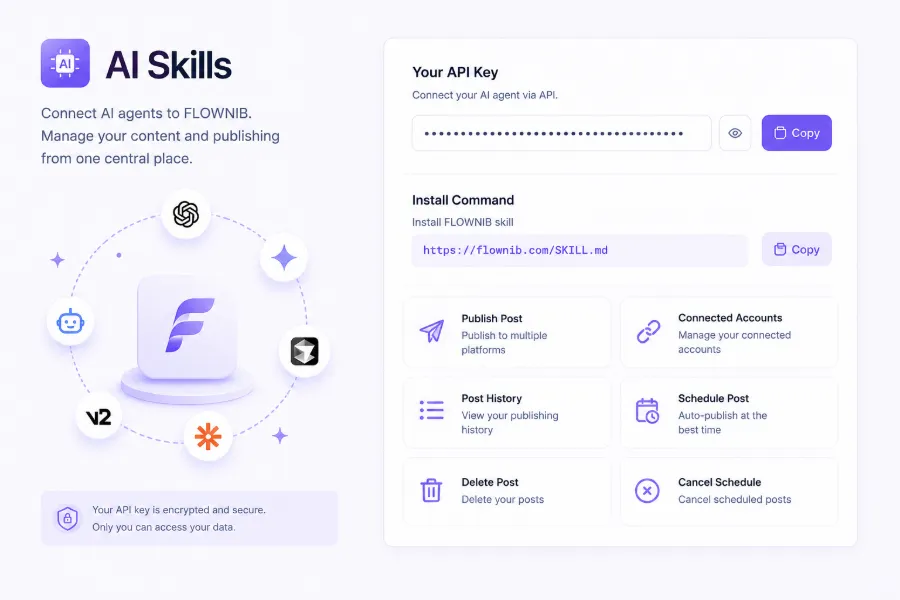
When moving from keyword discovery to content production and publishing, tools like Flownib place trend angles, brand information and platform rewrites into a single operation chain. Operators still decide which angles can be published, but they no longer have to scatter briefs, drafts, platform versions and scheduling info across multiple documents. If a team wants to connect external AI agents to social automation, the workflow for connecting AI agents also reduces duplicated handling.
After trend content is generated, editors must check at least three things:
- Verify core facts, adjust phrasing, and ensure no over‑leveraging of the trend.
These three items look simple but are often squeezed out by publishing deadlines. A discussion about heavy rain, for example, can be answered with travel and storage scenarios if the product is a waterproof bag; if the product isn’t related to disaster relief, it should not exploit the crisis to create purchase urgency. Cultural topics, accidents and political events especially should not be left to model judgment alone.
The same trend should not be repeatedly turned into promotional copy. It can first become educational content explaining the user’s problem, then a product‑scenario piece showing how the product handles one step, and finally a community‑engagement post inviting users to share experiences. New product launches, seasonal events and regional needs should be decided jointly by trend angle and product positioning, not solely by a hot word.
When a team needs to prepare a week’s worth of content in bulk, a single command to generate a week’s content can cut initial drafting time, but bulk generation should not equal bulk approval. The closer the content is to sensitive regions or short‑term promotions, the closer manual review should be to publishing, not postponed to the next day.
From One Brand Narrative to Multi‑Platform Expressions
One creation does not equal one copy. The team should first define a brand narrative, such as “making weekend travel prep easier for small‑apartment families,” then re‑express it according to platform features, user expectations and content length. Instagram relies on visuals and short context, X (formerly Twitter) suits quick opinions and replies, LinkedIn leans toward industry explanations, TikTok needs a fast entry into the scene, Pinterest favors savable inspiration, and YouTube can host full demos.
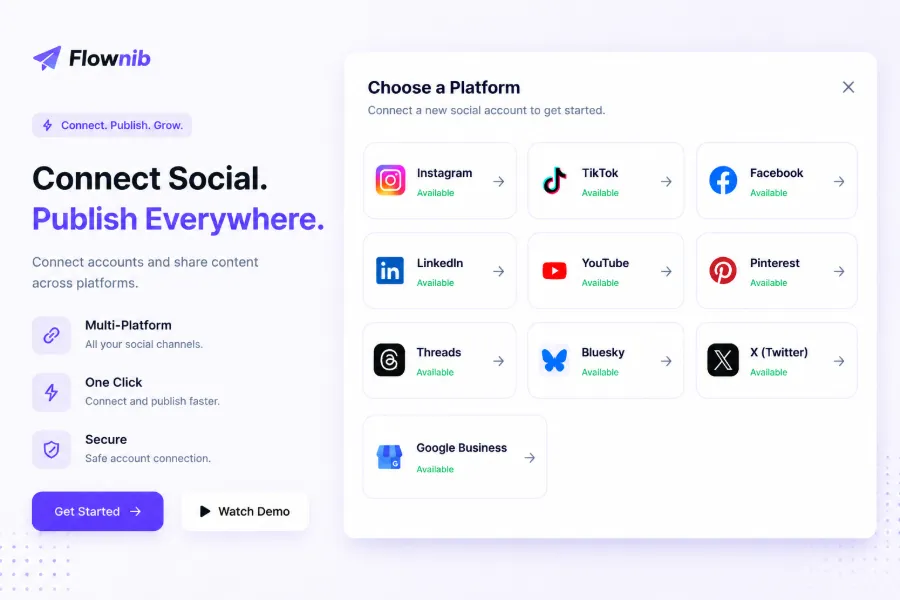
The same narrative can cover Instagram, X, LinkedIn, TikTok, Facebook, Threads, Pinterest, YouTube, Bluesky and Google Business—10 social platforms—but each requires a fresh handling of opening, length, visual reliance and call‑to‑action. Platform APIs, character limits, media formats and review rules differ, so “one‑click publishing” only reduces the number of operations; it cannot replace the editor’s judgment.
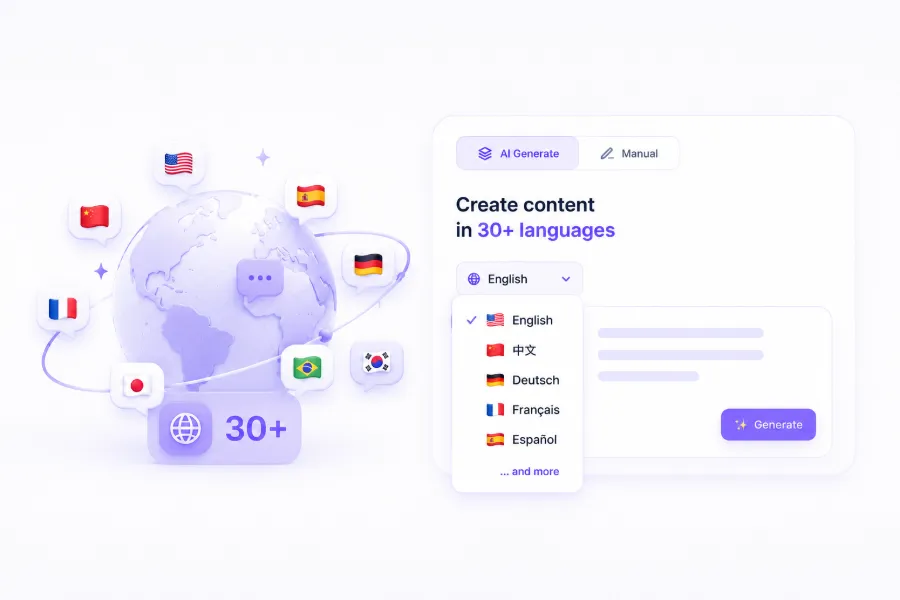
Cross‑language publishing is the same. Word‑for‑word translation may preserve sentences but loses market context. Product facts, brand tone and regional promises must stay stable; examples, humor, action verbs and purchase reasons should be allowed to vary. German markets may prioritize specifications, Japanese copy may need more restrained expression, and English copy can present scenes more directly. This is not language swapping but rewriting to meet audience expectations.
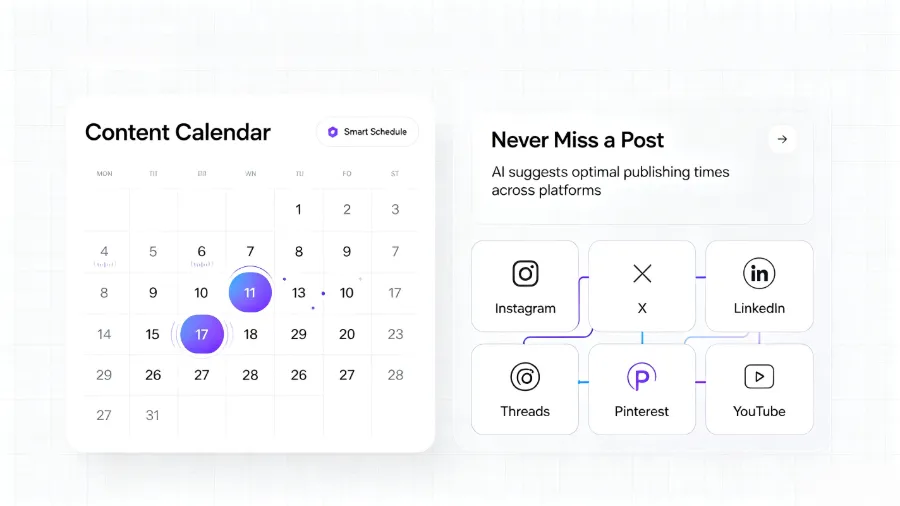
The adaptation process can be summarized as six steps: “Write → AI Adapt → Preview → Schedule → Publish → Record.” The most commonly missed steps are preview and record: the former catches link, price, image‑ratio and regional‑info errors; the latter lets the team know which version actually went live. For a concrete workflow of automatic multi‑platform adaptation after a single creation, see the 10‑Platform Adaptation Tutorial.
When content volume rises, Flownib acts more like a friction‑reducing middle layer: it puts multiple accounts, content calendars, scheduled publishing and publishing records into one workflow. It does not confirm whether a country’s inventory is sufficient, nor does it automatically know if a phrase is offensive locally; those responsibilities remain with the operators. Video‑platform recommendation mechanisms and trend changes can be checked via the Video Platform Trend Reference, but platform trends should not be taken directly as brand topics.
Automation truly saves time not by reducing writing, but by cutting the maintenance cost of missing versions, mis‑timed publishing and scattered records. Switching a few tabs isn’t a big deal until a promotion requires tracing “which language version, on which account, at what time, using which link.” At that point, scattered records turn a minor tweak into a half‑day investigation.
Building a Reusable Trend‑Content Operations Mechanism
A reusable mechanism doesn’t require tracking every hotspot daily. Cross‑border e‑commerce teams can break a week into a fixed rhythm: collect trends, filter brand‑relevant signals, form topics, create platform versions, and finally review performance. The benefit isn’t a fuller calendar; it’s that abandoning a hotspot leaves a traceable record.
Each piece of content should retain at least: trend source, theme, platform, language, publish time, click‑through rate, engagement rate and conversion‑related signals. High click‑through doesn’t guarantee sales; low engagement doesn’t necessarily mean failure; educational content may first bring bookmarks and comments, influencing return visits weeks later. If a team only looks at same‑day exposure, they’ll keep amplifying high‑visibility but low‑conversion content.
A review cycle can be set to seven days, comparing at least three categories each time: trend topic, platform version and actual performance. When comparing, don’t just ask “which one blew up?” also check whether the same theme shows deviations across languages, platforms and publishing times. Some content may get massive play on TikTok but never reach the standalone site; other pieces may have modest Pinterest interaction yet consistently drive stable auxiliary traffic.
Automation boundaries also need to be written into the process, not left to a veteran’s memory. When trends shift quickly, human confirmation is required; sensitive events, cultural topics, regional phrasing, price and inventory information cannot be fully delegated to models. Keep a final check before publishing to confirm links, regions, assets, promotion timing and platform compliance. This check may take only five minutes but can prevent a wrong version from appearing on multiple accounts simultaneously.
Teams should also retain failed content, not just the successful cases. Failure records reveal which topics, despite high heat, are irrelevant to the brand; which seemingly ordinary topics consistently drive clicks because the user scenario is clear. Over the long term, brand consistency doesn’t come from using the same sentence structure every time, but from consistently choosing what not to say, when not to chase, and which markets need slower rollout.
When the content calendar, manual review and publishing records form a closed loop, teams will still encounter trend latency, incomplete attribution and differing platform data definitions. These issues don’t disappear with automation; they shift from “repetitive copying” to “judgment and maintenance.” Reducing duplicated labor while preserving editorial judgment is the sustainable state for cross‑border content operations.
FAQ
How does trend‑driven content differ from ordinary hotspot marketing?
Trend‑driven content checks popularity, audience relevance and brand fit simultaneously, while ordinary hotspot marketing often only looks at whether a topic is rising. Teams can compare sources, platforms and conversion signals in a 7‑day review to avoid continuously chasing a high‑exposure but low‑conversion hotspot.
How does AI avoid turning an unsuitable hotspot directly into an ad?
AI must first read a brand dossier containing product info, target users, brand positioning and marketing goals, then generate a brief according to prohibited claims and sensitive‑topic rules. Keeping a manual review before publishing—especially checking regional culture, price, inventory and event context—usually intercepts most obvious errors within minutes.
Do cross‑border e‑commerce teams need to create content separately for every country?
Not from scratch for every country, but each key market must separately confirm purchasing context and compliance information. Product facts can be shared; expression, examples, currency, delivery promises and calls‑to‑action should be market‑adjusted, then observed for a week to see if they truly bring higher clicks or conversions.
When creating a single piece of content for multiple platforms, which parts must be manually reviewed?
Price, inventory, regional restrictions, links, image ratios, promotion dates and sensitive phrasing must be manually reviewed. Preview should happen before scheduling, and after publishing the team should check records that day to ensure none of the ten platforms missed, mis‑posted or mistimed content.
Which metrics should be used to judge whether trend content is truly effective?
Look at exposure, click‑through rate, engagement rate and conversion‑related signals together; don’t rely solely on view counts. Educational content can be evaluated by bookmarks, comments and return visits; product‑scenario content should continue to be tracked for landing‑page visits, add‑to‑cart and purchases, ideally making a full assessment seven days after publishing.
Share Article