
How to Create Content Timely Without Losing Brand Voice

Cross‑border e‑commerce brands often spot a trend in the afternoon and must catch the promotion window by evening: the UK market needs English posts, the Japanese market requires adjustments to politeness distance, and the German market must verify discounts and delivery promises. Operators switch between Instagram, X, TikTok, and email back‑ends, and the most likely thing to lose isn’t speed but how the same brand should speak in different markets.
Timely content does not mean cutting all review steps. A safer approach is to lock down brand expressions that cannot be decided ad‑hoc, then split time‑sensitive content into versions suitable for different channels; this compresses rewrite and coordination time, not fact‑checking time.
Timely content should first lock in the brand’s value proposition, tone, prohibited expressions, product facts, and audience relationship, then adjust the opening, length, examples, call‑to‑action, and visual format per platform. This way, even if several markets publish within hours, the content won’t become contradictory brand statements in the chase for trends.
First Break Down Brand Voice into Executable Boundaries
“Young”, “Warm”, “Premium” can’t directly guide an editor checking a promotion copy at ten at night. Brand voice needs to be broken into sentence‑by‑sentence checkable boundaries, especially for cross‑border e‑commerce brands facing multiple target markets, where ad‑hoc copywriters, designers, and customer‑service staff can’t all rely on intuition to understand the brand brief.
A one‑page brand expression checklist can fix five boundaries: value proposition, tone, prohibited expressions, product facts, and audience relationship. The value proposition answers why the brand exists; tone dictates whether it’s direct, restrained, or casual; prohibited expressions list exaggerated promises, fear‑mongering, or culturally inappropriate phrasing; product facts record price, inventory, specifications, and after‑sales conditions; audience relationship describes whether the brand treats consumers as new customers, peers, or professional users.
Among these five, product facts and the strength of promises should not be generated ad‑hoc by trend templates. For example, “Order today and we guarantee delivery by Friday” may only apply to parts of the US, yet it could be automatically rewritten into an absolute global promise. Editors must be able to confirm within seconds which sentences need to be removed, rather than re‑discuss brand positioning.
The checklist can be split into two columns. The left column contains brand core information that must be retained across all markets; the right column contains parts that can be adjusted per channel and region. The fixed column includes product promises, facts, value proposition, tone baseline, and audience relationship; the adjustable column includes opening style, content length, examples, call‑to‑action, and visual expression. Thus, editors are not writing ten pieces from scratch but handling ten communication environments within the boundaries.
The content checklist should also record the responsible person, target market, campaign deadline, and fact source for each version. For routine batch production, the team can refer to the Cross‑border Content Batch Generation Process, but batch generation does not equal batch approval. Each version must still correspond to a clear product fact and a clear communication goal.
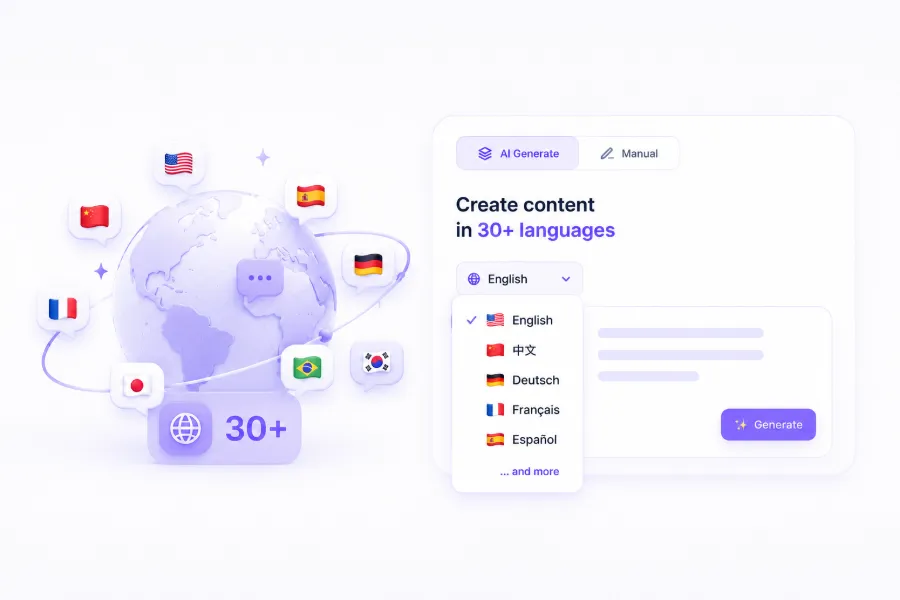
Multilingual localization is not sentence‑by‑sentence translation. A naturally direct call‑to‑action in English may sound overly pushy in Japanese; the Chinese phrase “抓紧入手” (grab it quickly) can amplify pressure in some markets; German users may care more about delivery conditions and return policies than a lively promotional slogan. Translators need to preserve the original intent, trust, and purchase scenario while re‑evaluating promise strength, politeness distance, and call‑to‑action.
SEO, short videos, and social media distribution share the same product facts but not the same narrative rhythm. For this kind of coordination, see the Cross‑border Content Collaboration Method, but the brand checklist should still reside in the team’s own content calendar and approval workflow, not rely solely on external templates.
Use “Core Information + Channel Versions” to Handle Trend Timeliness
Trend content is suitable for a two‑layer structure. The first layer is core information: only facts, brand perspective, and what the audience can get, unchanged across platforms; the second layer is the channel version, responsible for adjusting the opening, rhythm, media format, and interaction style. A cross‑border e‑commerce brand can first write “New items restocked in the North America warehouse, existing colors back in stock this week, specific regions as shown on the checkout page,” then adapt it into short copy, video narration, carousel image description, or professional update.
This approach also applies to inventory changes, limited‑time discounts, user discussions, and sudden industry topics. Core information must not omit regional restrictions just because X requires brevity, nor change “may” to “guarantee” just because TikTok needs a stronger opening. AI rewriting can handle format conversion, but cannot decide facts and responsibility boundaries for the brand.
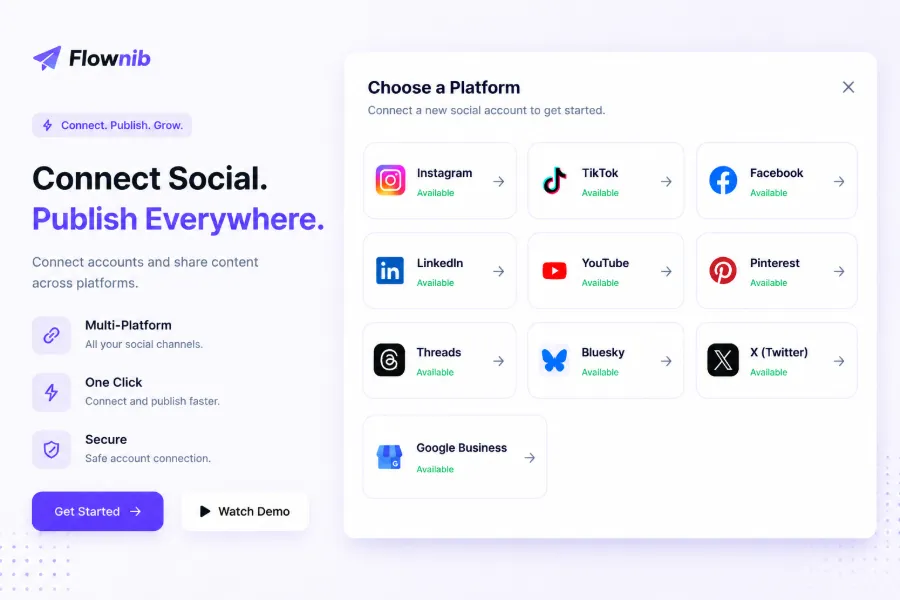
Content distribution can cover ten platforms, but each platform should retain only one primary communication goal. Instagram can handle visual showcase and bookmarking; X is suitable for joining ongoing discussions; LinkedIn fits industry background and corporate viewpoints; TikTok relies on video demos or narration; Pinterest leans toward long‑term search and inspiration saving. Threads and YouTube can also reuse the same core information, but not all channels should carry the four goals of “exposure, interaction, clicks, conversion.”
| Channel | Suitable Content Actions | Adjustable Parts | Must‑Retain Brand Elements |
|---|---|---|---|
| Showcase product and usage scenarios | Visual order, title length, tags | Product facts, visual tone, promise boundaries | |
| X | Participate in real‑time discussions | Opening, sentence length, reply style | Brand stance, fact source, prohibited expressions |
| Publish industry observations or brand updates | Background explanation, argument sequence | Value proposition, professional tone, data accuracy | |
| TikTok | Demonstrate or explain with short video | Narration rhythm, visuals, subtitles | Product features, audience relationship, action boundaries |
The same fact with different expressions, and the same copy copied to different platforms, are not the same thing. Differences in character limits, media formats, interaction mechanisms, and audience expectations across platforms can change how users perceive tone. For the boundaries of automatic rewriting, see the Multi‑Platform Adaptation Comparison, especially checking whether the rewrite adds promises not present in the original.
Timely topic posting on X also needs to consider the account’s historical statements. If a brand rarely discusses industry controversies but suddenly uses a sarcastic tone to chase a trend, platform interaction may rise, and customer‑service explanation requests will also increase. Account operation rules and publishing permissions can be verified via X Business Resources, but whether to post ultimately depends on whether the brand has a genuine viewpoint and concrete information.
Compress Trend Assessment, Review, and Publishing into a Single Workflow
A trend workflow should not jump directly from “seeing a hot search” to “generating a post.” A more controllable sequence is: discover the topic, confirm relevance, extract brand angle, generate channel versions, manual review, schedule publishing. The four traceable nodes can be labeled “Discover—Review—Publish—Record,” with a responsible person and timestamp at each step.
After discovering a topic, editors ask three questions: Is it related to the product or consumer? Does the brand have a genuine viewpoint? Can the content provide concrete information? If the answer is only “everyone is talking about it” without linking to product usage scenarios, inventory, after‑sales, or industry changes, the brand should not chase the hype. This is especially true for cross‑border markets, where a regional holiday may be a buying window for one market but irrelevant for another.
When the number of accounts grows, manual copy‑paste creates a subtle error: every platform appears to have published successfully, but the versions become inconsistent. Using publishing tools like Flownib, the tool can handle channel rewriting, scheduled publishing, and logging, but editors still need to verify market, price, inventory, language, and sensitive topics before publishing. Account connection setup takes about two minutes, but the real time consumption is usually permission checks and version confirmation, not clicking the button.
For multi‑account, multi‑timezone publishing, the content calendar should at least record market, timezone, platform, campaign deadline, original fact link, and final version. UK daylight‑saving changes, simultaneous promotions across US time zones, and an Australian warehouse ending an event early can all turn a “single global publish time” into a mis‑schedule. Official APIs can reduce some manual steps but cannot determine whether a market has stopped accepting discounts.

Once, a cross‑border e‑commerce brand discovered a hot topic related to its category in the afternoon and wanted to capture the discussion window within hours, directly copying the same promotion copy to multiple markets. That evening, the tone on X appeared overly harsh to local users, the Instagram version still displayed inventory information for another market, and TikTok subtitles used a discount deadline that had already ended. After publishing, the team found that customer service in several regions were explaining differing delivery and price conditions, so they had to retract, rewrite, and reschedule each version.
This release didn’t completely miss the trend, but the timely window was offset by subsequent rework costs. Worse, the team initially only saw a successful publish status and didn’t immediately notice the regional information mismatch; it wasn’t until the next morning, when reviewing comments and customer‑service logs, that they realized the issue had spread. Afterwards, they added “market, price, deadline, promise strength” to a mandatory pre‑publish checklist and kept each platform’s final text instead of a single master draft.
Content tools, content calendars, and a unified dashboard can reduce tab switching, duplicate publishing, and version loss. For how standalone site content connects with ads, social media, and conversion paths, see the Standalone Site Omnichannel Collaboration Case Study. However, tools are only suitable for rewriting, scheduling, and distribution; when it comes to product facts, tone, and sensitive topics, manual review cannot be cancelled just because the trend leaves only an hour.
The final pre‑publish check is usually brief but cannot be omitted. Operators need to confirm the target account, market, and timezone, then verify price, inventory, landing page, image text, and call‑to‑action item by item. Scheduling steps for platforms like Facebook can be documented as a standard operating procedure; the team can also refer to Facebook Scheduled Posting Steps to avoid ad‑hoc staff operating from memory.
Post‑Publish Signals to Check Whether Brand Voice Is Diluted
After publishing, don’t look at likes first. A review should cover at least three types of signals: brand consistency, audience reaction, and business results. First check whether the content has factual errors, tone drift, or inconsistent regional promises, then look at engagement rate, click‑through rate, conversion rate, and comments and private messages from different markets.
The purpose of publishing records is more than proving “it was posted.” They also help the team retrieve which version was finally used in a market, who altered the price, which timezone’s schedule succeeded, and the original copy corresponding to a comment. Scheduled content needs to be double‑checked before going live, and after publishing the actual display should be verified; Instagram’s scheduled content can be viewed via View Instagram Scheduled Content to reduce version‑tracking omissions. Flownib here functions more as an operation log; its value lies not in replacing judgment but in allowing post‑mortems without relying on chat logs and memory.
Short‑term exposure and brand expression often fall out of sync. A post with strong controversy may achieve high interaction within three hours, but many users in the comments may misunderstand product limits, requiring customer service and sales teams to spend two days explaining. Conversely, a product description with average click‑through may reduce refund inquiries and improve purchase expectations in a market. If you only look at a single platform’s data, the latter change is easily misinterpreted as “poor performance.”
Deviations in multilingual voice are often not translation errors. Different markets have varying acceptance ranges for promise strength, politeness distance, and call‑to‑action; comments, private messages, customer‑service feedback, and sales team feedback reveal these differences. A market’s interaction rate not dropping does not mean users fully understood the copy; sometimes they simply didn’t raise questions publicly.
A content calendar is suitable for recording which versions can be reused and which sentences must be re‑reviewed. The team can distill stable core information, compliant calls‑to‑action, and FAQs into brand templates, while preserving space for market editors to modify. For calendar and post‑publish review, see the Social Media Content Operations Reference, but templates should not be endlessly automated, otherwise old inventory, old prices, and old holiday contexts will be copied together.
During review, operators can separate the “effect of timeliness” from the “effect of the content itself.” The former includes whether the discussion window was caught and whether it launched in the target timezone; the latter includes whether users understood the product, clicked, purchased, and whether customer service received fewer misunderstandings. Neither can be replaced by a single engagement metric, especially when content targets multiple markets simultaneously.
FAQ
How to determine if a trend is worth timely follow‑up for a cross‑border e‑commerce brand?
First check whether the trend is directly related to the product, consumer, or an ongoing purchase scenario, then confirm whether the brand can provide facts or a clear viewpoint. If the team cannot verify market, inventory, and promise conditions within 30 minutes, even a high‑heat trend should not be rushed out.
When brand voice conflicts with platform-specific content style, what should be prioritized?
Prioritize product facts, value proposition, tone baseline, and audience relationship; platform style only adjusts the expression. Instagram can emphasize visual showcase, X can shorten sentences, but you cannot change “may” to “guarantee” for interaction, nor omit regional restrictions.
Should multilingual content be directly translated, or should each market have a newly created version?
Retain the same core information, then reorganize the expression for each market rather than translating sentence by sentence. Checking comments, private messages, and customer‑service issues within 24–48 hours after publishing usually reveals issues with promise strength or politeness distance more easily than merely checking grammar.
Before publishing AI‑rewritten content, which parts should humans check most?
Humans should first verify facts such as price, inventory, timing, region, and product functionality, then check tone, cultural context, sensitive expressions, and over‑promising. AI can generate multiple channel versions in minutes, but cannot bear the rework and customer‑service burden caused by factual errors for the brand.
How to increase publishing speed while preventing information inconsistencies across markets?
Place market, timezone, campaign deadline, price, and final version into a single content calendar, and leave a trace at the four nodes “Discover—Review—Publish—Record.” After multi‑market publishing, at least once verify the actual displayed result; don’t rely solely on backend success status.
Share Article